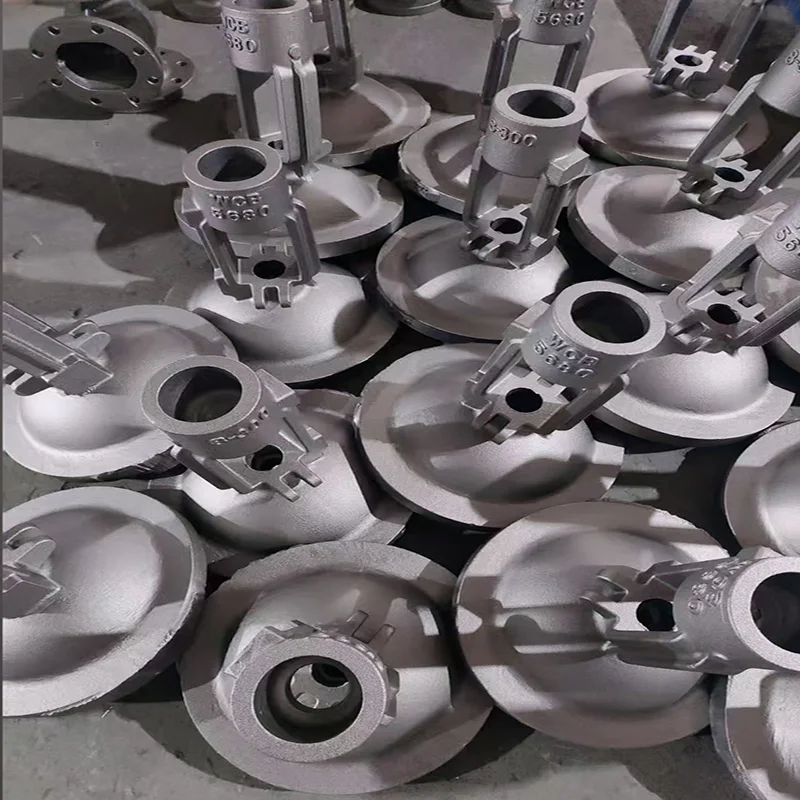
Meta Description: A complete technical guide to casting high-pressure pump casings and pipeline components in Duplex (2205 / CD3MN), Super Duplex (2507 / CD3MWCuN), and austenitic stainless alloys. Learn phase balance control, solution annealing, hydrostatic testing, and NACE compliance.
High-pressure fluid handling systems in offshore oil & gas, seawater reverse osmosis (SWRO) desalination, geothermal power, and chemical processing subject cast components to severe synergistic degradation. A single centrifugal slurry pump casing or high-pressure subsea valve body must concurrently resist cavitation erosion, localized chloride pitting/crevice attack, intergranular corrosion, and high hydraulic cyclic fatigue loads exceeding 150 bar (Class 900 to 2500).
Under these aggressive fluid dynamics, standard austenitic stainless steels (such as 304 or 316L) suffer catastrophic pitting or stress corrosion cracking (SCC). Solving these critical operational challenges demands the specification, precision casting, and strict metallurgical processing of Duplex Stainless Steels (2205 / CD3MN) and Super Duplex Stainless Steels (2507 / CD3MWCuN).
This engineering guide provides an exhaustive technical analysis of duplex alloy metallurgy, ferrite-austenite phase balance control, precision sand and investment casting techniques, solution annealing heat treatment, CNC pressure-boundary machining, and non-destructive quality verification.
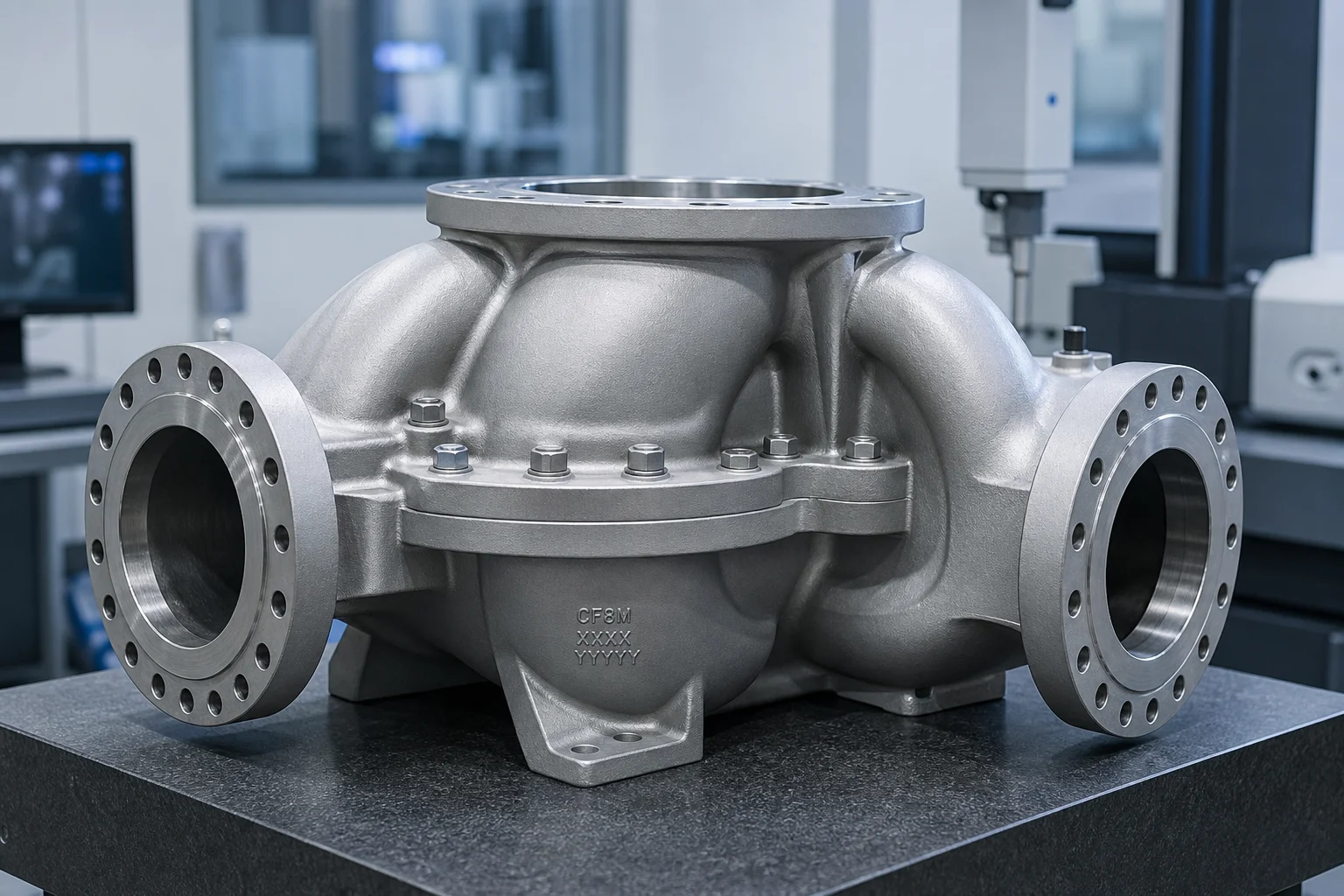
Cast pump casings, impellers, diffusers, and pipeline manifolds operate in severe multi-phase environments:
                            ┌────────────────────────────┐
                            │ Multi-Phase Fluid Attack   │
                            └─────────────┬──────────────┘
                                          │
            ┌─────────────────────────────┼─────────────────────────────┐
            ▼                             ▼                             ▼
┌───────────────────────────┐ ┌───────────────────────────┐ ┌───────────────────────────┐
│ Cavitation Erosion        │ │ Chloride Pitting & Crevice│ │ Sulfide Stress Corrosion  │
│ (Imploding Vapor Bubbles  │ │ ($Cl^-$ Breakdown of      │ │ Cracking (SSCC / NACE     │
│  at High Impeller RPM)    │ │  Passive Oxide Film)      │ │  MR0175 / Sour Oil & Gas) │
└───────────────────────────┘ └───────────────────────────┘ └───────────────────────────┘Selecting casting alloys for aggressive fluids relies heavily on the Pitting Resistance Equivalent Number (PREN):
| Alloy Family | Cast Grade (ASTM A890 / A995) | Wrought Equivalent | PREN Value | Microstructure | Typical Pressure & Fluid Application | Relative Cost Index |
|---|---|---|---|---|---|---|
| Austenitic Stainless | CF8M (ASTM A743) | AISI 316 | ~23 – 25 | Fully Austenitic | Low-pressure industrial water, mild chemicals () | 1.0 (Baseline) |
| High-Alloy Austenitic | CN7M (Alloy 20) | N08020 | ~32 – 35 | Austenitic + Cu | Sulfuric acid pumping, aggressive chemical processing | 2.2x |
| Standard Duplex | Grade 4A / CD3MN | 2205 (UNS S31803) | 34 – 38 | 50% Ferrite / 50% Austenite | Seawater desalination, oilfield water injection, Class 600 pipelines | 1.8x |
| Super Duplex | Grade 5A / CE3MN | 2507 (UNS S32750) | 41 – 44 | 50% Ferrite / 50% Austenite | High-pressure SWRO feed pumps, offshore subsea manifolds | 2.6x |
| Super Duplex + W | Grade 6A / CD3MWCuN | Zeron 100 | 42 – 45 | 50% Ferrite / 50% Austenite + W + Cu | Highly abrasive mineral slurries, hot chlorinated seawater | 3.0x |
| Nickel-Base Superalloy | CW12MW (Hastelloy C-276) | N10276 | Nickel-Moly-Chromium | Wet chlorine gas, extreme sour gas () subsea valves | 7.5x |
Standard Duplex 4A (CD3MN) offers double the yield strength of standard CF8M (316) stainless steel ( vs. ). This allows pump engineers to design thinner, lighter pump casings with higher pressure containment ratings while offering vastly superior resistance to chloride stress corrosion cracking.
The mechanical properties and corrosion resistance of duplex castings depend entirely on maintaining an optimum Ferrite-to-Austenite ratio and completely suppressing dangerous intermetallic secondary phases.
Molten Pour (100% Liquid)
         │
         ▼  Cooling
Ferrite Solidification Range (~1,350 °C - 100% Delta Ferrite)
         │
         ▼  Austenite Precipitation (~1,200 °C - Nitrogen & Nickel Diffusion)
Two-Phase Region: 50% Ferrite (α) + 50% Austenite (γ)
         │
         ▼  CRITICAL ZONE (600 °C – 950 °C)
Dangerous Intermetallic Precipitation: Sigma (σ), Chi (χ), Chromium Nitrides ($Cr_2N$)
         │
         ▼  HIGH-SPEED WATER QUENCH (<60 seconds transfer)
Frozen Optimal Microstructure: Sound Dual-Phase Matrix (Zero Sigma Phase)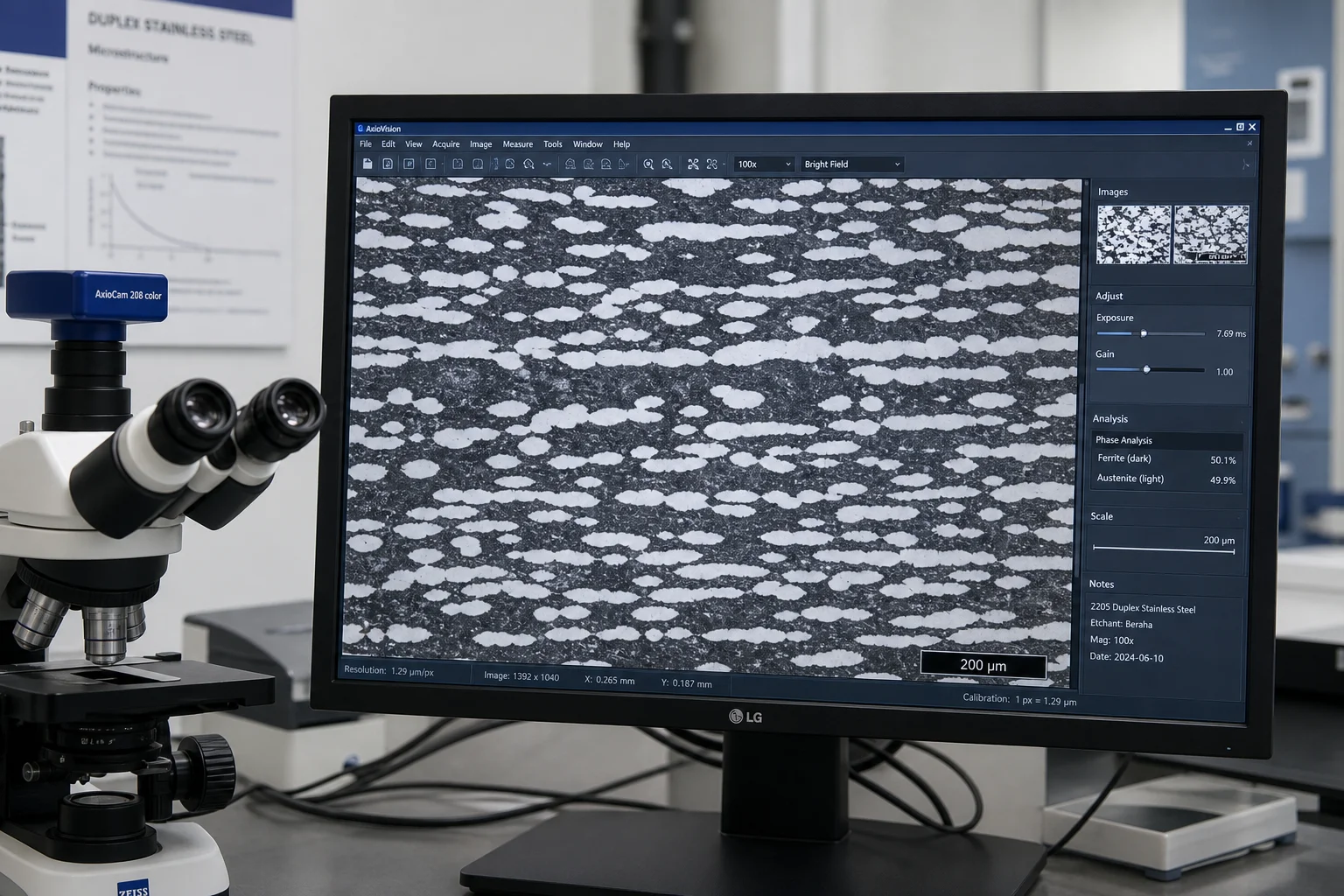
High-pressure pump volutes and multi-stage diffusers have double-curved 3D fluid channels that must be cast ultra-smooth to minimize hydraulic friction losses.
| Foundry Stage | Engineering Implementation | Defect Prevention |
|---|---|---|
| Simulation-Driven Gating | Bottom-pour gating with ceramic swirl filters and insulated risers | Eliminates re-oxidation scum and turbulence inclusions in chromium-rich melt |
| Zircon / Chromite Sand Cores | High-refractory zircon sand facing on internal impeller/volute cores | Prevents thermal burn-in and ensures smooth internal flow passages () |
| Shrinkage Compensation | 2.4% – 2.6% volumetric contraction allowance modeled in CAD | Prevents dimensional distortion on complex double-volute split lines |
| Hot Tearing Prevention | Flexible phenolic no-bake sand systems allowing mold yieldability | Relieves thermal contraction stresses during solid-state cooling |
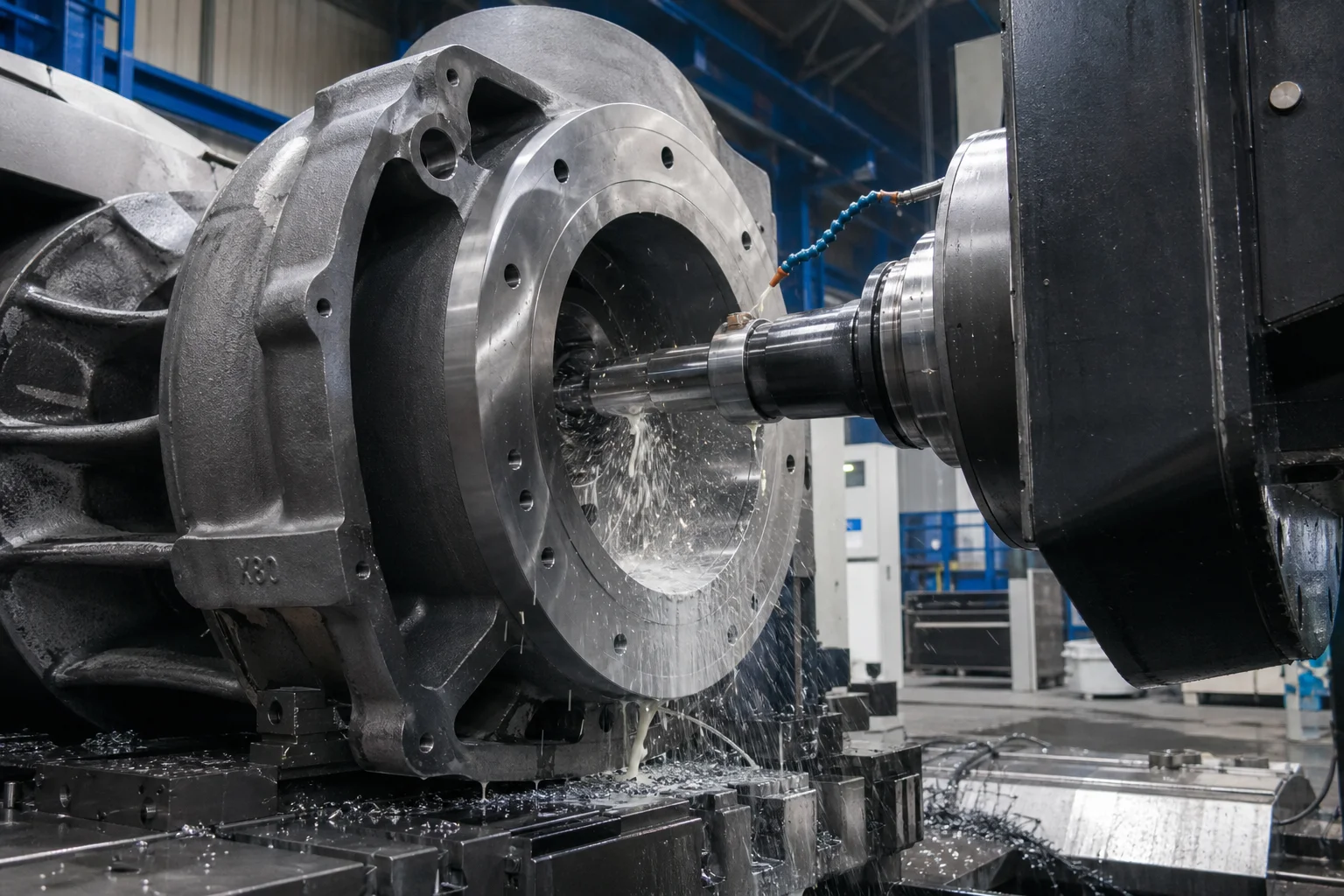
Pump casings and pipeline valves must maintain bubble-tight hydraulic seals across wide temperature and pressure ranges.
| Test Category | Test Standard / Method | Acceptance Criteria |
|---|---|---|
| Chemical Analysis | Optical Emission Spectrometry (OES) per ASTM A751 | Strict compliance with N (), Mo, Cr, Ni; |
| Ferrite Phase Count | ASTM E562 Point Count & ISO 8249 Ferritscope | Ferrite phase fraction throughout casting |
| Pitting Corrosion Test | ASTM G48 Method A (Ferric Chloride 24h at ) | Zero pitting at magnification; mass loss |
| Intergranular Corrosion | ASTM A262 Practice E / ISO 3651-2 | No intergranular cracking after copper-copper sulfate boil and bend |
| Low-Temp Impact Test | Charpy V-Notch (ASTM E23) at | Minimum single value ; average |
| Volumetric Soundness | Radiographic Testing (RT) per ASME Section VIII Div 1 | Level 1/2 in pressure boundaries and critical volute cutwaters |
| Hydrostatic Pressure Test | API 598 / ISO 5208 / ASME B16.34 | design pressure held for ; zero pressure drop/leakage |
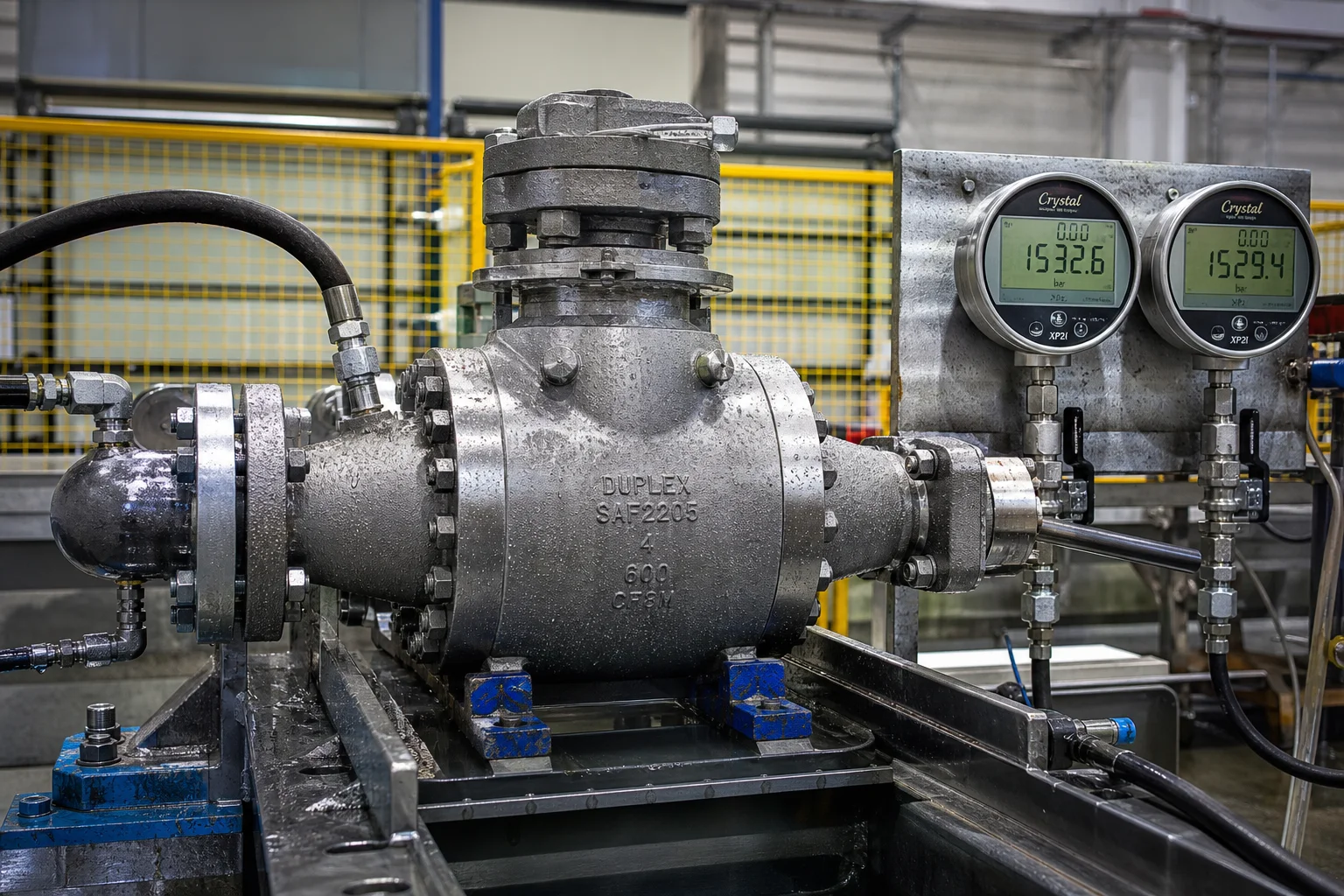
Manufacturing pressure-containing duplex and super duplex castings requires advanced induction melting, certified solution annealing furnaces, precision machining, and strict corrosion laboratory validation.
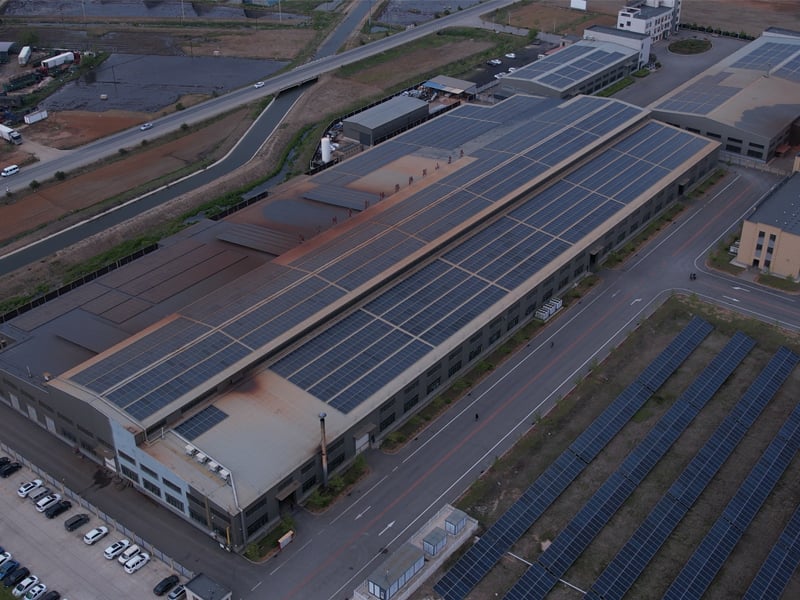
Dandong City Pengxin Machinery Co., Ltd. provides complete turnkey manufacturing of high-pressure pump casings, valve bodies, and pipeline components:
- Comprehensive Material Portfolio: Certified casting of standard Duplex 4A (CD3MN / 2205), Super Duplex 5A (CE3MN / 2507), Super Duplex 6A (CD3MWCuN), CF8M, and nickel-base corrosion alloys.
- In-House Solution Annealing & Hyper-Quench: Computer-controlled heat treatment furnaces with rapid automated tank transfer guaranteeing zero sigma-phase formation and optimal 50/50 phase balance.
- Heavy Multi-Axis CNC Machining: Large CNC horizontal boring and turning centers capable of machining split-case volutes, multi-stage pump bowls, and pipeline valve bodies up to 25 tons.
- Full Testing & Certification: EN 10204 3.1 & 3.2 inspection certificates, ASTM G48 pitting corrosion testing, impact testing, Ferritscope phase verification, and hydrostatic pressure testing.
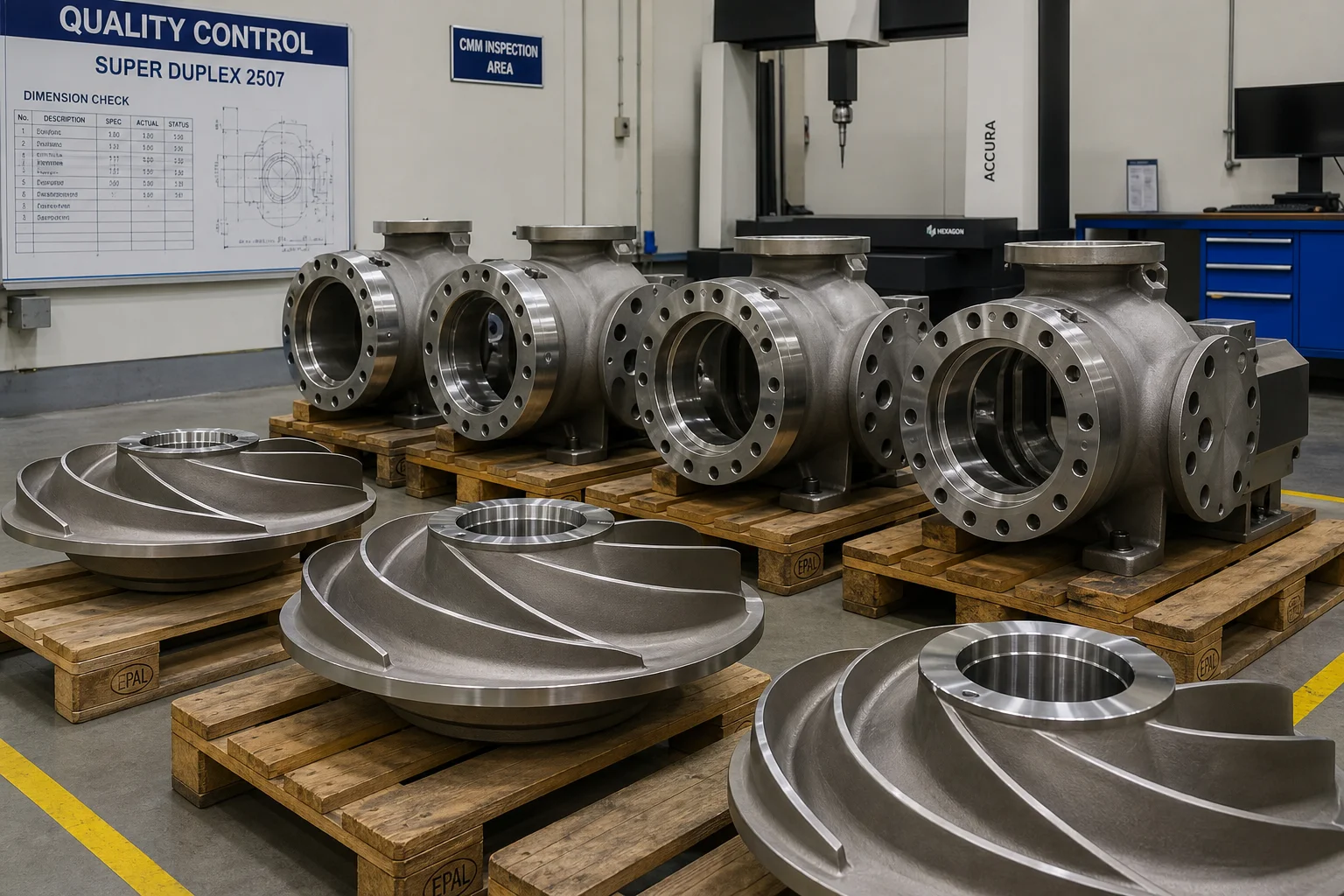
High-pressure pump casings and pipeline castings operating in hostile fluid environments require zero compromise in metallurgy, casting integrity, or machining accuracy. By deploying certified duplex and super duplex stainless steels, rigorous solution annealing with hyper-quenching, hydraulic flow passage optimization, and multi-axis CNC machining, engineers ensure decades of leak-free, corrosion-resistant operation.
Dandong City Pengxin Machinery Co., Ltd. delivers the engineering depth, casting tonnage, and certified quality documentation needed for the world’s most demanding fluid infrastructure projects.
Contact Dandong City Pengxin Machinery Co., Ltd. to submit your pump casing drawings or request alloy compatibility consultations.
Dandong City Pengxin Machinery Co., Ltd. — Heavy Castings and Precision Machining, Since 1958.
 Hot News
2026-10-16
2026-10-09
2026-10-02
2026-09-25
2026-09-18
2026-09-11

Dandong City Pengxin Machinery was founded in 1958, is a set of casting, machining and assembly as one of the private enterprises.
Wangjiapu Group, Xinan Village, Qianyang Town, Donggang City, Dandong City, Liaoning Province, China
Copyright © Dandong City Pengxin Machinery Co.,Ltd. All Rights Reserved Privacy Policy Blog
 EN
EN