Meta Description: Compare sand casting, investment casting, and shell mold casting on cost, accuracy, surface finish, material range, and production volume. A practical selection guide with decision matrix for engineers and procurement professionals.
The casting process you choose determines more than how the part is made — it determines what the part can cost, how accurately it can be produced, what materials are available, and how quickly you can scale from prototype to production. Selecting the wrong process for your component can add 30–50% to unit cost, extend lead times by weeks, or force design compromises that degrade in-service performance.
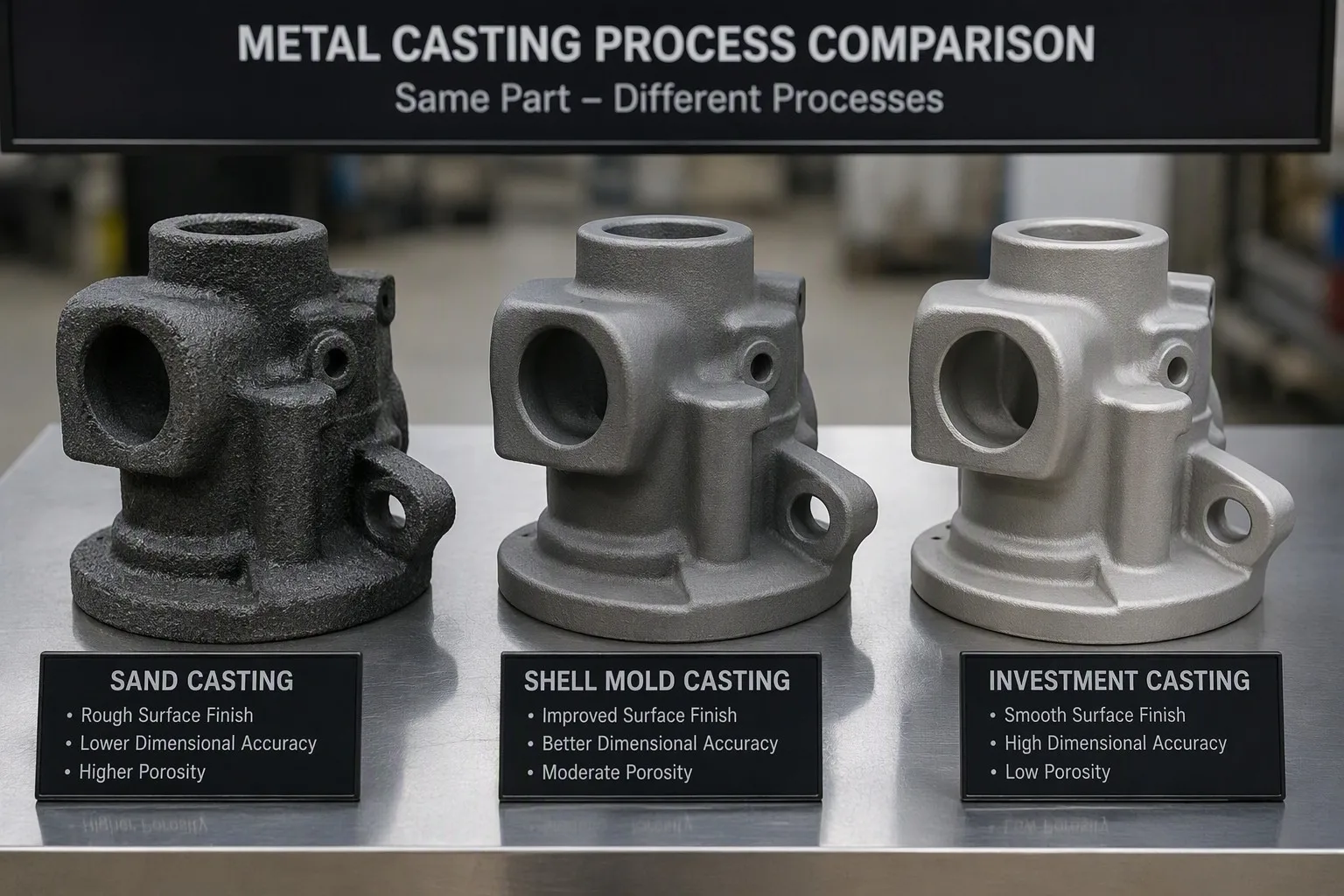
This guide provides a structured comparison of the three most widely used casting processes for industrial components: sand casting, investment casting (lost wax), and shell mold casting. For each process, we examine the technical fundamentals, capability boundaries, cost drivers, and optimal application profiles — culminating in a decision framework that matches component requirements to the right manufacturing method.
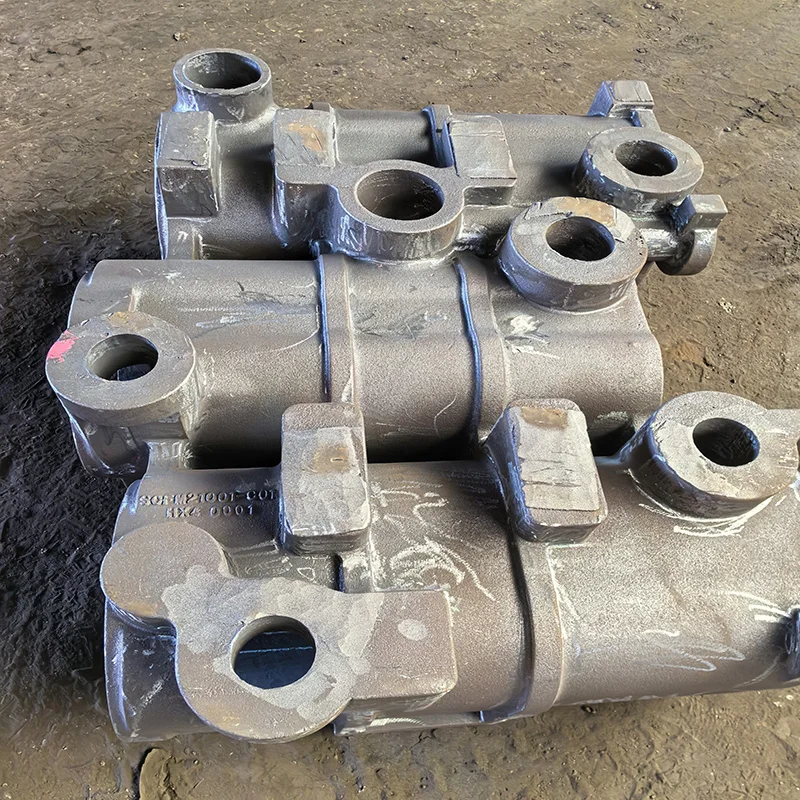
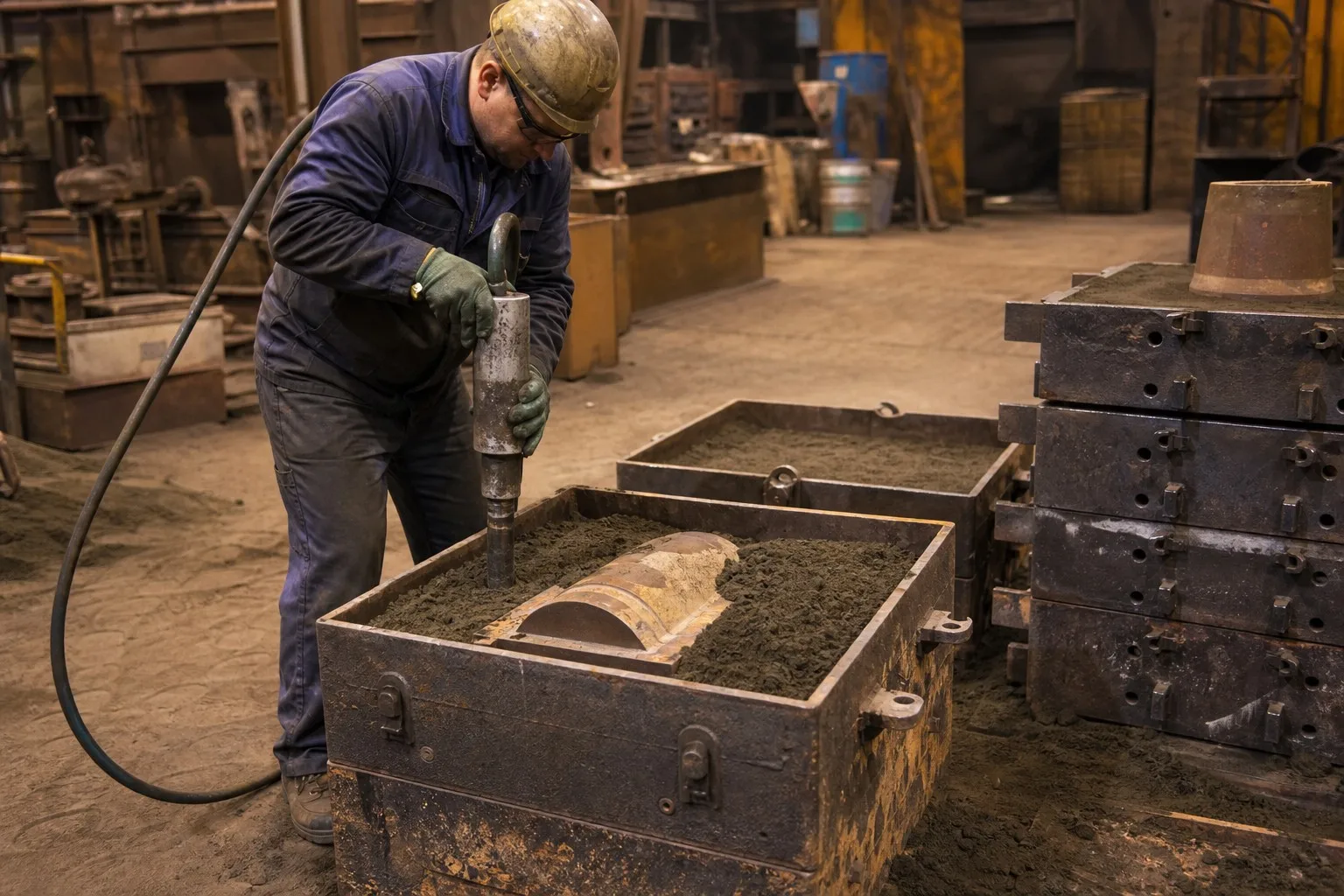
Sand casting is the oldest and most versatile casting process, accounting for approximately 70% of all metal castings produced globally. It uses a refractory sand mold formed around a pattern — the mold is destroyed to remove the casting, making sand casting inherently a one-mold-per-casting process.
| Step | Description |
|---|---|
| 1. Pattern making | A pattern (wood, aluminum, or resin) replicates the part geometry with added draft and machining allowance |
| 2. Mold preparation | The pattern is placed in a flask; molding sand (silica, chromite, or zircon sand bonded with clay, resin, or sodium silicate) is compacted around it |
| 3. Core placement | Sand cores are inserted to form internal cavities and passages |
| 4. Mold assembly | The cope (top half) and drag (bottom half) are closed and clamped |
| 5. Pouring | Molten metal is poured into the mold cavity through a gating system |
| 6. Solidification and cooling | Metal cools and solidifies; cooling time depends on section thickness (hours to days for large castings) |
| 7. Shakeout | The mold is broken apart to retrieve the casting |
| 8. Fettling | Risers, gates, and runners are removed; casting is shot-blasted to remove adhering sand |
| Parameter | Capability |
|---|---|
| Part size | 0.5 kg to 100,000+ kg — virtually unlimited upper bound |
| Wall thickness (minimum) | 4–6 mm (steel); 3–5 mm (iron) |
| Dimensional tolerance (ISO 8062) | CT8–CT12 (typically ±1.0 mm per 100 mm for small parts; ±3–5 mm for large parts) |
| Surface roughness (Ra) | 6.3–25 μm (as-cast); 3.2–6.3 μm with special facing sand |
| Draft angle | 1–3° external; 1.5–5° internal |
| Typical lot size | 1 to 10,000+ pieces |
| Tooling cost | 5,000 (wood pattern); 20,000 (aluminum pattern for higher volumes) |
| Lead time (new part) | 2–6 weeks (pattern fabrication + first article) |
Sand casting accommodates the widest range of alloys of any casting process:
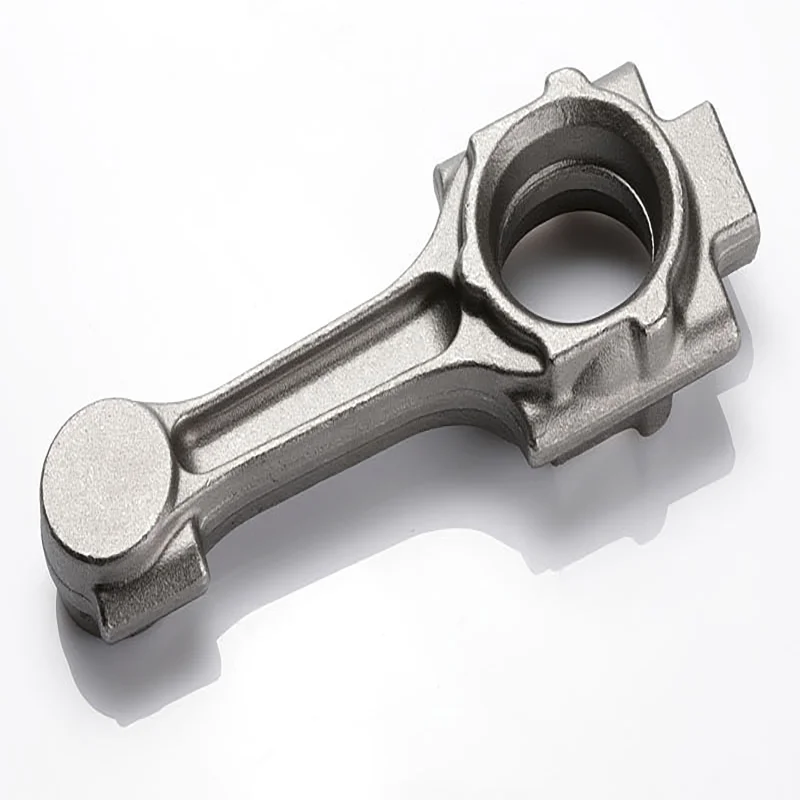
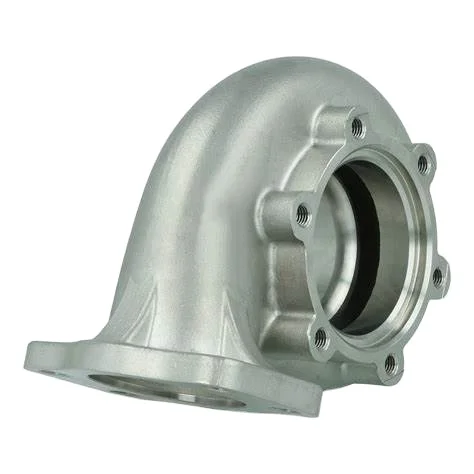
Investment casting produces the highest accuracy and best surface finish among the three processes. It is the method of choice for small-to-medium complex components where near-net-shape production minimizes machining cost.
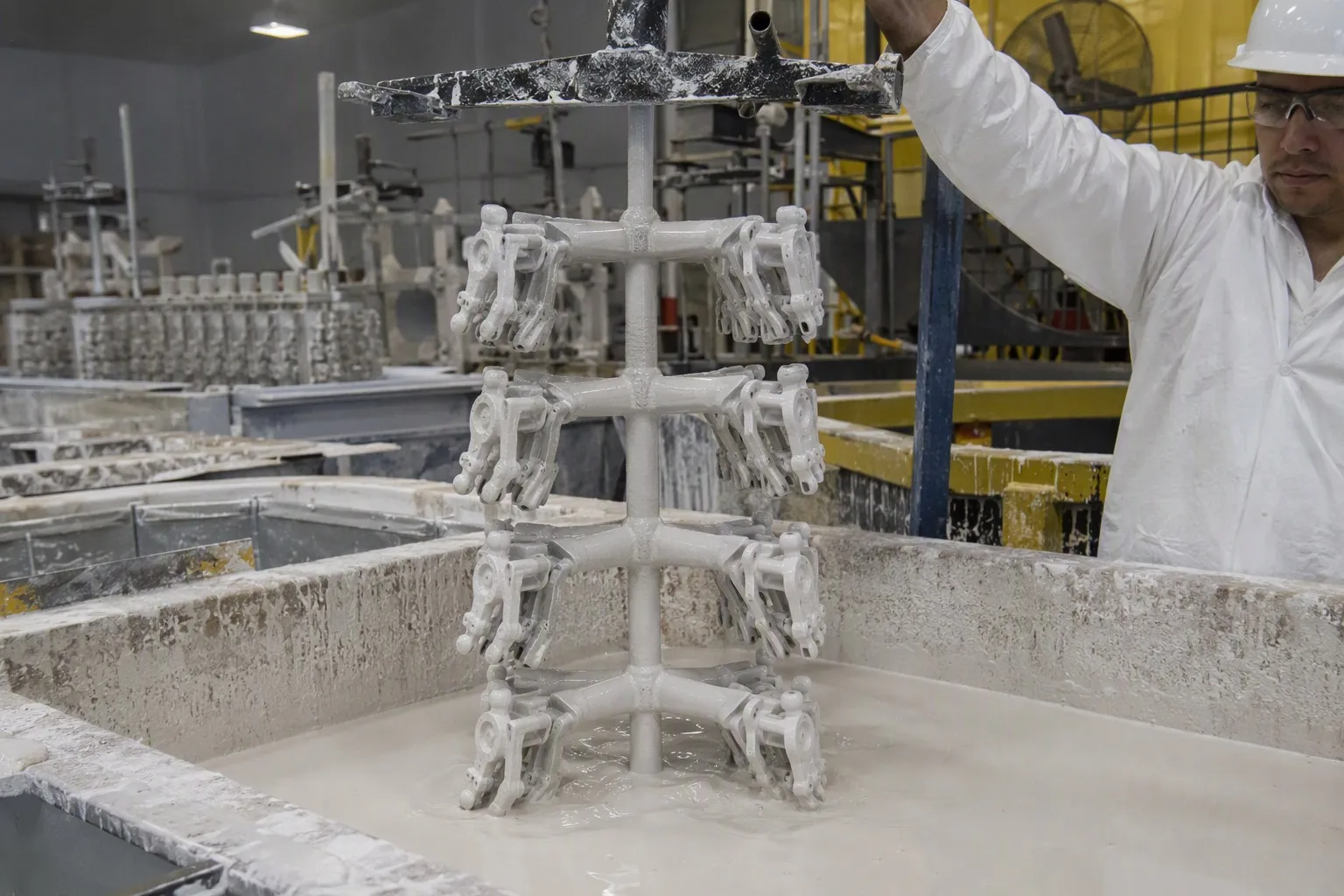
| Step | Description |
|---|---|
| 1. Wax pattern injection | Molten wax is injected into a metal die to create a precise replica of the part |
| 2. Pattern assembly | Multiple wax patterns are attached to a central wax runner (tree assembly) |
| 3. Shell building | The wax tree is repeatedly dipped in ceramic slurry and coated with refractory stucco; each layer is air-dried (6–10 layers typical) |
| 4. Dewaxing | The ceramic shell is heated (autoclave or flash fire) to melt and drain the wax |
| 5. Shell firing | The empty ceramic shell is fired at 900–1,100 °C to strengthen it and remove wax residue |
| 6. Preheating and pouring | The hot shell is filled with molten metal (often under vacuum or centrifugal force for thin sections) |
| 7. Cooling and shell removal | After solidification, the ceramic shell is broken away (mechanical vibration or high-pressure water) |
| 8. Cut-off and finishing | Individual castings are cut from the runner tree; gates are ground flush |
| Parameter | Capability |
|---|---|
| Part size | 0.01 kg to ~100 kg (larger possible but increasingly uneconomical) |
| Wall thickness (minimum) | 1.0–1.5 mm (steel); 0.5–1.0 mm for aluminum |
| Dimensional tolerance (ISO 8062) | CT4–CT7 (typically ±0.15 mm per 25 mm) |
| Surface roughness (Ra) | 1.6–6.3 μm (as-cast); 0.8–3.2 μm achievable |
| Draft angle | 0° (pattern is melted out — no draft required, though 0.5–1° aids shell building) |
| Typical lot size | 100 to 100,000+ pieces |
| Tooling cost | 15,000 (wax injection die) |
| Lead time (new part) | 4–8 weeks (die fabrication + sample qualification) |
Investment casting handles almost all pourable alloys, with particular strength in:
Shell mold casting occupies the middle ground between sand casting and investment casting — offering better surface finish and accuracy than sand casting at lower cost than investment casting, particularly suited to medium-to-high volume production of iron and steel components.
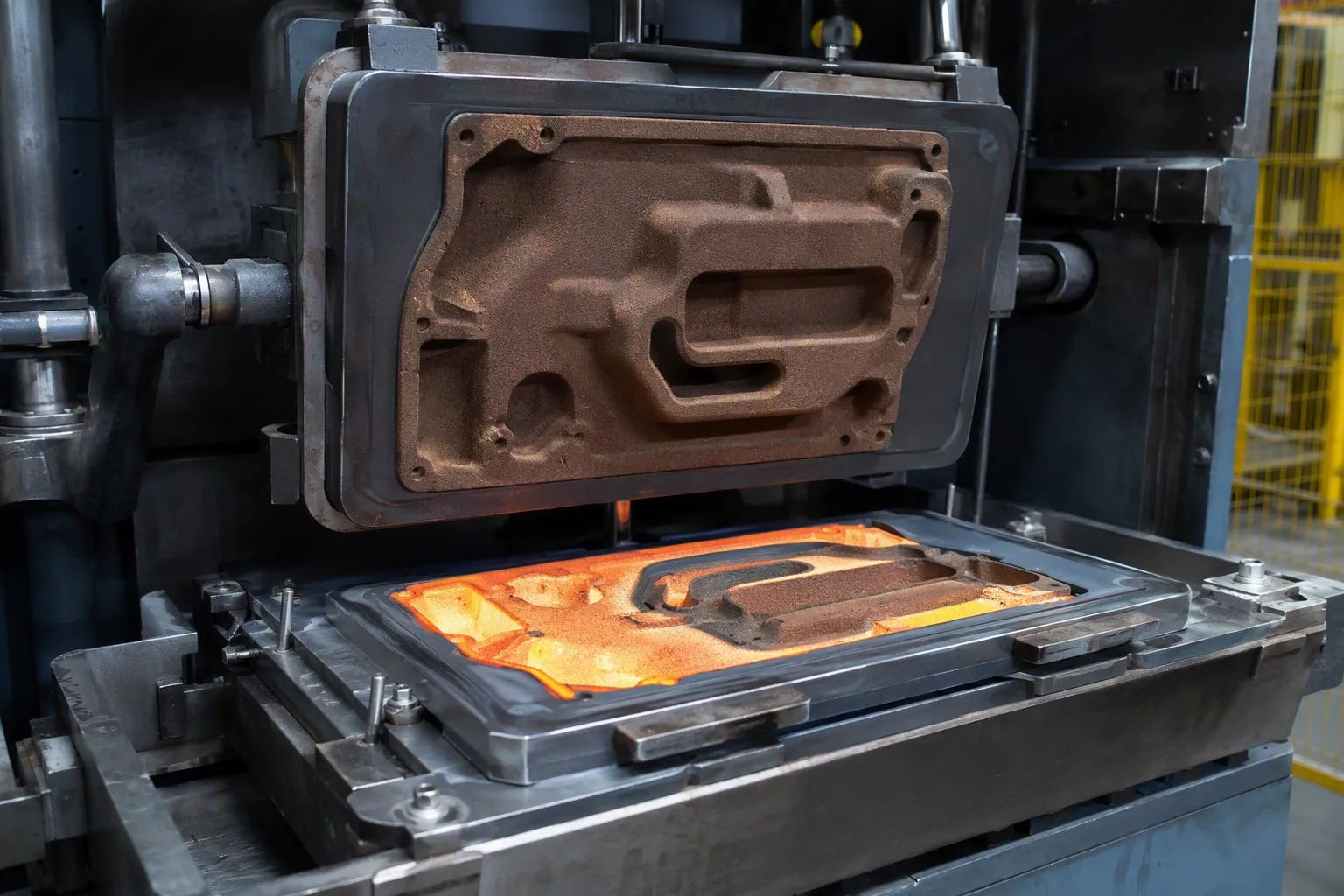
| Step | Description |
|---|---|
| 1. Pattern heating | A heated metal pattern (200–250 °C) is positioned over a dump box containing resin-coated sand |
| 2. Shell formation | The dump box is inverted, depositing sand onto the hot pattern; the resin partially cures, forming a thin shell (6–15 mm) |
| 3. Shell curing | The shell is further heated to fully cure the resin bond |
| 4. Shell ejection | The hardened shell half is ejected from the pattern |
| 5. Shell assembly | Two shell halves are glued or clamped together, with cores inserted if required |
| 6. Pouring | Shells may be backed with loose sand or shot for support; molten metal is poured |
| 7. Solidification and shell removal | After cooling, the thin shell disintegrates — no shakeout force required |
| 8. Finishing | Gate removal and minimal fettling |
| Parameter | Capability |
|---|---|
| Part size | 0.1 kg to ~200 kg |
| Wall thickness (minimum) | 3–4 mm (steel); 2.5–3.5 mm (iron) |
| Dimensional tolerance (ISO 8062) | CT6–CT8 (typically ±0.3 mm per 25 mm) |
| Surface roughness (Ra) | 3.2–12.5 μm (as-cast); 1.6–6.3 μm with fine sand |
| Draft angle | 0.5–1.5° (reduced vs. sand casting because the shell lifts cleanly from the pattern) |
| Typical lot size | 500 to 50,000+ pieces |
| Tooling cost | 25,000 (metal pattern plate with ejection system) |
| Lead time (new part) | 4–10 weeks |
Shell mold casting is predominantly used for iron and steel:
| Dimension | Sand Casting | Shell Mold | Investment Casting |
|---|---|---|---|
| Linear tolerance (≤25 mm) | ±0.5–1.0 mm | ±0.25–0.5 mm | ±0.10–0.25 mm |
| Linear tolerance (25–100 mm) | ±1.0–2.0 mm | ±0.4–0.8 mm | ±0.15–0.40 mm |
| Linear tolerance (100–500 mm) | ±2.0–4.0 mm | ±0.8–1.5 mm | ±0.25–0.75 mm |
| ISO 8062 tolerance grade | CT8–CT12 | CT6–CT8 | CT4–CT7 |
| Achievable flatness (per 100 mm) | ±0.5–1.5 mm | ±0.2–0.5 mm | ±0.10–0.30 mm |
Selection implication: If your component requires machined tolerances regardless of casting process, the accuracy advantage of investment casting may be irrelevant — you will machine critical surfaces anyway. The decision then pivots to other factors: part size, volume, and total cost.
| Process | As-Cast Ra (μm) | Post-Blast Ra (μm) | Best Achievable |
|---|---|---|---|
| Sand casting | 12.5–25 | 6.3–12.5 | 3.2 (with zircon facing sand) |
| Shell mold | 6.3–12.5 | 3.2–6.3 | 1.6 (with fine resin-coated sand) |
| Investment casting | 3.2–6.3 | 1.6–3.2 | 0.8 |
Selection implication: For functional surfaces that remain as-cast (e.g., fluid passages, non-sealing faces, exterior cosmetic surfaces), investment casting's smoother finish can eliminate the need for secondary finishing operations. For surfaces that will be machined anyway, as-cast surface finish is largely irrelevant.
| Process | Typical Range | Practical Maximum | Limiting Factor |
|---|---|---|---|
| Sand casting | 5–5,000 kg | 100,000+ kg | Melting capacity; crane capacity; mold handling |
| Shell mold | 0.5–100 kg | ~200 kg | Shell handling forces during assembly and pouring |
| Investment casting | 0.05–25 kg | ~100 kg | Shell structural integrity during pouring; wax pattern distortion |
Selection implication: For parts above ~100 kg, sand casting is the only viable option among these three processes. For parts above ~200 kg, even shell mold casting becomes impractical. Large slag pots (5–25 tons), heavy valve bodies (>500 kg), and mining equipment components are exclusively sand cast.
| Process | Economic Minimum | Economic Optimum | Unit Cost Trend |
|---|---|---|---|
| Sand casting | 1 piece | 10–1,000 pieces | Cost decreases moderately with volume; tooling amortization is a minor component |
| Shell mold | 500 pieces | 1,000–20,000 pieces | Cost decreases significantly with volume; tooling amortization matters |
| Investment casting | 100 pieces | 1,000–50,000+ pieces | Cost decreases sharply with volume; high tooling cost must be amortized |
The volume crossover: At volumes below ~100 pieces, sand casting is almost always the lowest-cost option because it avoids the tooling investment of investment or shell mold casting. Between 100–500 pieces, shell mold and investment casting become competitive if the improved accuracy reduces machining cost. Above ~1,000 pieces, investment casting often achieves the lowest total cost (casting + machining) for parts under ~25 kg.
| Process | Pattern/Tooling Material | Tooling Cost Range | Tooling Life (Typical) | New Part Lead Time |
|---|---|---|---|---|
| Sand casting — wood pattern | Wood (hardwood, mahogany, pattern-grade plywood) | 5,000 | 50–500 castings | 2–3 weeks |
| Sand casting — aluminum pattern | Aluminum (cast or machined) | 20,000 | 5,000–50,000 castings | 3–6 weeks |
| Shell mold — metal pattern | Cast iron or steel pattern plate | 25,000 | 10,000–100,000 shells | 4–8 weeks |
| Investment casting — wax die | Aluminum or steel (machined) | 15,000 | 10,000–100,000+ shots | 4–8 weeks |
| Design Feature | Sand Casting | Shell Mold | Investment Casting |
|---|---|---|---|
| Internal cavities | Requires cores — adds cost, limits complexity | Requires cores; good core print accuracy | Ceramic core or soluble core — excellent capability |
| Thin walls | ≥4–6 mm | ≥3–4 mm | ≥1.0–1.5 mm — best by far |
| Sharp corners | Minimum radius ≥2–3 mm | Minimum radius ≥1–2 mm | Minimum radius ≥0.25–0.5 mm |
| Undercuts | Requires loose pieces or cores | Loose pieces possible but expensive | Can be formed by collapsible or soluble cores |
| Zero draft | Not possible | Not possible | Possible — pattern is melted out |
| Lettering / logos | Raised or recessed; minimum 2 mm height | Raised or recessed; minimum 1 mm height | Excellent — fine detail, minimum ~0.3 mm height |
| Near-net-shape capability | Moderate — requires machining allowance | Good — reduced machining allowance | Excellent — minimal machining allowance; some surfaces may be used as-cast |
The true cost of a casting process is not the casting price per kilogram — it is the total cost of the finished, inspected part delivered to your dock. This includes pattern amortization, casting cost, machining cost, and scrap/rework cost.
| Cost Element | Sand Casting | Shell Mold | Investment Casting |
|---|---|---|---|
| Pattern/die cost (amortized over 3 years) | 0.60/unit | 4.00/unit | 3.33/unit |
| Casting unit price | 3.00/kg) | 4.40/kg — higher energy and resin cost) | 5.60/kg — higher labor and ceramic cost) |
| Machining cost (estimated) | $35.00 (3 setups; larger allowances) | $25.00 (2 setups; reduced allowances) | $15.00 (1–2 setups; near-net shape) |
| Tooling amortization per unit | $0.60 | $4.00 | $3.33 |
| Total unit cost (1,000 units) | $50.60 | $51.00 | $46.33 |
At 1,000 units/year, investment casting achieves the lowest total cost despite the highest casting price — because the near-net-shape casting dramatically reduces machining cost. This illustrates why comparing only casting price per kilogram is misleading.
| Cost Element | Sand Casting | Shell Mold | Investment Casting |
|---|---|---|---|
| Feasibility | Feasible and standard | Not feasible (size exceeds shell mold capability) | Not feasible (size exceeds investment casting capability) |
| Pattern cost | $5,000 (wood) | — | — |
| Casting unit price | 5.00/kg) | — | — |
| Machining cost | $1,200 (horizontal boring mill) | — | — |
| Total unit cost | $4,200 (including pattern amortization) | N/A | N/A |
For large, low-volume castings, sand casting is the only viable process among the three. This is why heavy industrial components — slag pots, mill housings, large pump casings, turbine components — are exclusively sand cast.
Sand casting is the default choice when:
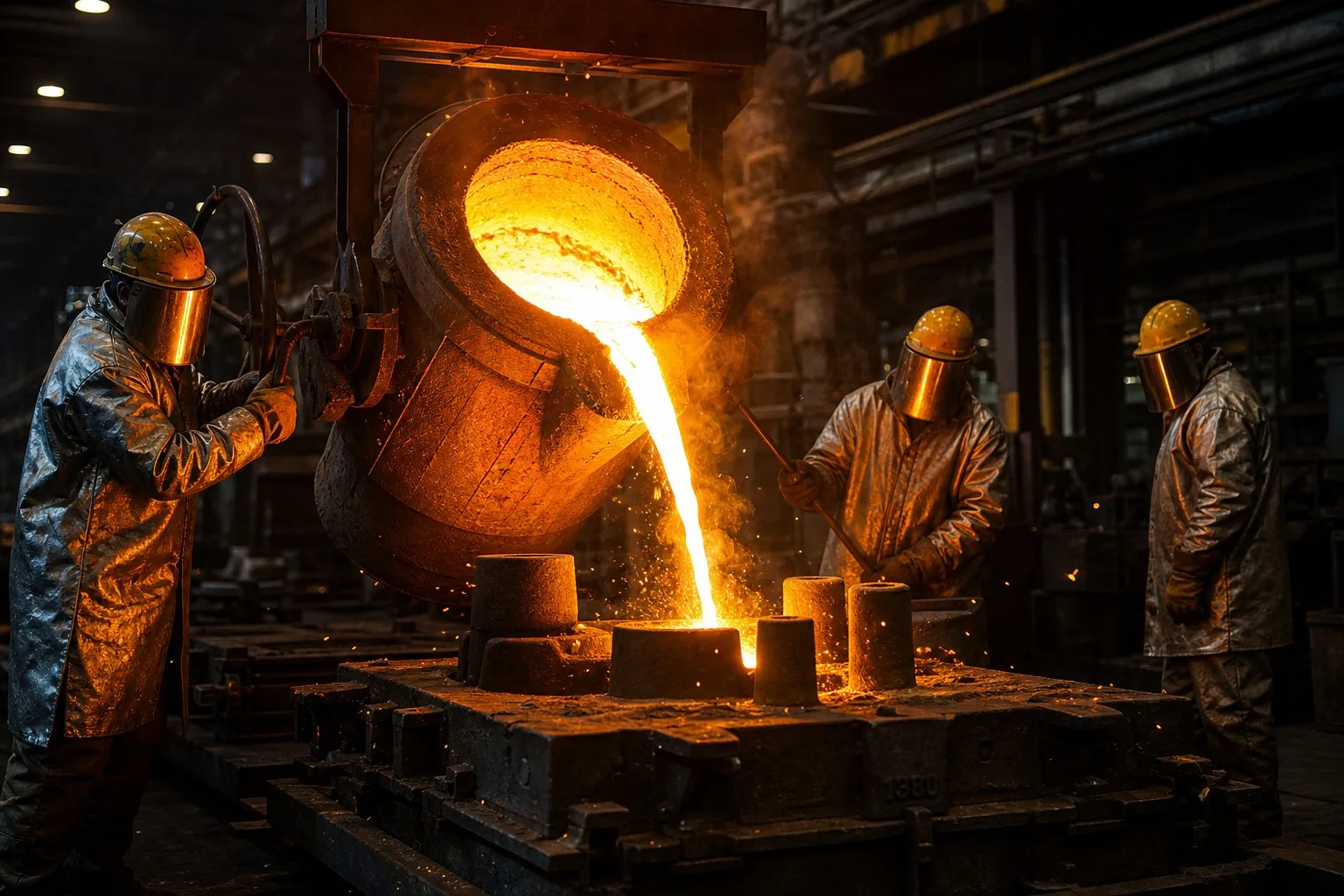
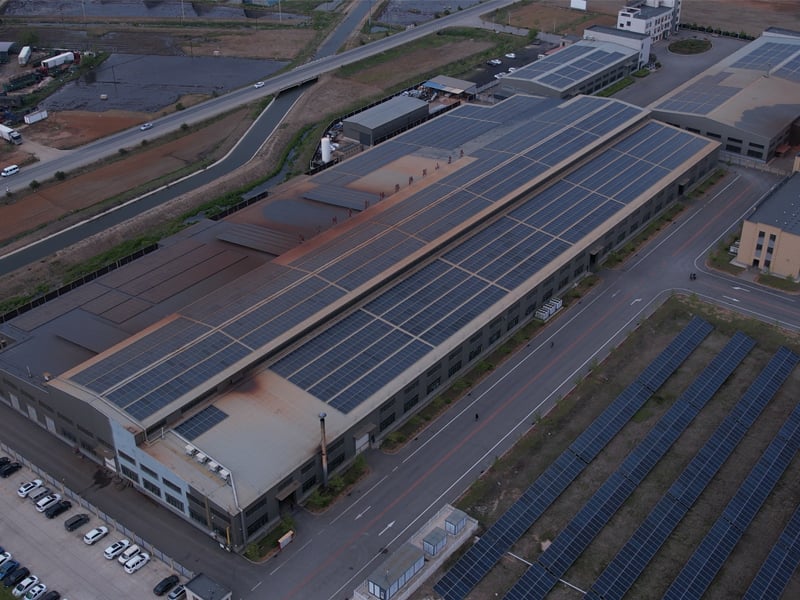
Dandong City Pengxin Machinery Co., Ltd. has built its reputation on large sand castings — slag pots, heavy valve bodies, and mining equipment components up to 25 tons — leveraging over 65 years of heavy section casting expertise and an 80,000 m² production facility.
Investment casting is optimal when:
Shell mold casting occupies the middle ground and is optimal when:
In practice, the casting process selection cannot be separated from the machining strategy. A sand casting with aggressive CNC machining may deliver the same finished-part accuracy as an investment casting with light machining — at lower total cost for medium-to-large parts.
At Dandong City Pengxin Machinery Co., Ltd., the integrated foundry-to-machine-shop workflow enables this optimization: pattern design accounts for machining datum strategy; casting simulation predicts where additional machining allowance is needed; and the CNC programming team designs machining operations that efficiently remove variable casting allowance, achieving precision tolerances regardless of the casting process variability.
A transformative development in sand casting: binder jetting 3D printers can now produce sand molds and cores directly from CAD data — eliminating the pattern entirely. This is disruptive for:
3D printed sand molds do not yet compete with conventional patterns on unit cost for production volumes above ~50 pieces, but for low-volume, high-complexity castings, they are already cost-competitive and significantly faster.
To receive accurate process recommendations — and comparable quotes — your RFQ should include:
| Information | Why It Matters |
|---|---|
| 2D drawing + 3D CAD model | Enables accurate weight estimation, parting line analysis, and machining strategy |
| Material specification (ASTM/EN grade) | Determines pouring temperature, shrinkage allowance, and process compatibility |
| Annual quantity and order frequency | Drives pattern material selection (wood vs. aluminum vs. metal die) |
| Required tolerances and critical features | Identifies whether near-net-shape (investment casting) or post-cast machining is the right approach |
| Surface finish requirements on as-cast surfaces | Determines whether sand casting with facing sand, shell mold, or investment casting is needed |
| NDE and testing requirements | Affects process control and documentation requirements |
| Application context | Service temperature, pressure, environment, and loading inform the foundry engineer's process recommendations |
A professional foundry will not simply quote your drawing — they will recommend a manufacturing approach. If the supplier does not suggest a process or offers to quote all three without guidance, they are not adding engineering value.
| Criterion | Sand Casting | Shell Mold | Investment Casting |
|---|---|---|---|
| Part size capability | ✅ Unlimited | ⚠️ Up to 200 kg | ⚠️ Up to 100 kg |
| Low volume (1–100 pcs) | ✅ Best | ❌ Uneconomical | ❌ Uneconomical |
| High volume (>1,000 pcs) | ⚠️ Higher machining cost | ✅ Good | ✅ Best for small parts |
| Dimensional accuracy | ⚠️ CT8–CT12 | ✅ CT6–CT8 | ✅ CT4–CT7 |
| Surface finish (as-cast) | ⚠️ Ra 6.3–25 | ✅ Ra 3.2–12.5 | ✅ Ra 1.6–6.3 |
| Thin walls (<3 mm) | ❌ Not feasible | ⚠️ Marginal | ✅ Best |
| Zero draft | ❌ Not possible | ❌ Not possible | ✅ Possible |
| Tooling cost | ✅ Lowest | ⚠️ Moderate | ⚠️ Moderate-High |
| Material range | ✅ Widest | ⚠️ Iron/steel focused | ✅ Very wide (incl. superalloys) |
| Large sections (>100 mm) | ✅ Best | ❌ Cooling control issues | ❌ Shell integrity risk |
| Design iteration during development | ✅ Easy (modify pattern) | ❌ Difficult (new tooling) | ❌ Difficult (new die) |
Legend: ✅ Strong candidate; ⚠️ Acceptable with conditions; ❌ Not recommended
The "best" casting process does not exist in the abstract — it is always the process that delivers the required quality at the lowest total cost for the specific part geometry, material, and production volume. The structured comparison in this guide provides the framework for that determination.
Uncertain which casting process is right for your component? Dandong City Pengxin Machinery Co., Ltd. provides sand casting, shell mold casting, and investment casting with integrated CNC machining from our 80,000 m² facility. Our engineering team will review your drawings and recommend the optimal manufacturing approach — contact us to start the conversation.
 Hot News
2026-10-16
2026-10-09
2026-10-02
2026-09-25
2026-09-18
2026-09-11
Dandong City Pengxin Machinery was founded in 1958, is a set of casting, machining and assembly as one of the private enterprises.
Wangjiapu Group, Xinan Village, Qianyang Town, Donggang City, Dandong City, Liaoning Province, China
Copyright © Dandong City Pengxin Machinery Co.,Ltd. All Rights Reserved Privacy Policy Blog
 EN
EN