Meta Description: A comprehensive engineering guide to heat treatment of metal castings. Learn annealing, normalizing, quenching and tempering, solution annealing, stress relieving, and austempering — with temperature ranges, holding times, cooling rates, and microstructure evolution for carbon steel, stainless steel, ductile iron, and more.
Heat treatment is the invisible differentiator in metal casting. Two castings poured from the same heat of metal, with identical chemical composition and identical as-cast geometry, can have completely different mechanical properties — one brittle and prone to cracking, the other tough and fatigue-resistant — based solely on what happens inside the heat treatment furnace.
For engineers specifying cast components, understanding heat treatment is not optional. The heat treatment specification on a drawing directly determines the part's strength, ductility, impact toughness, machinability, and dimensional stability. A poorly specified or incorrectly executed heat treatment is one of the most common root causes of casting failure in service — and one of the most preventable.
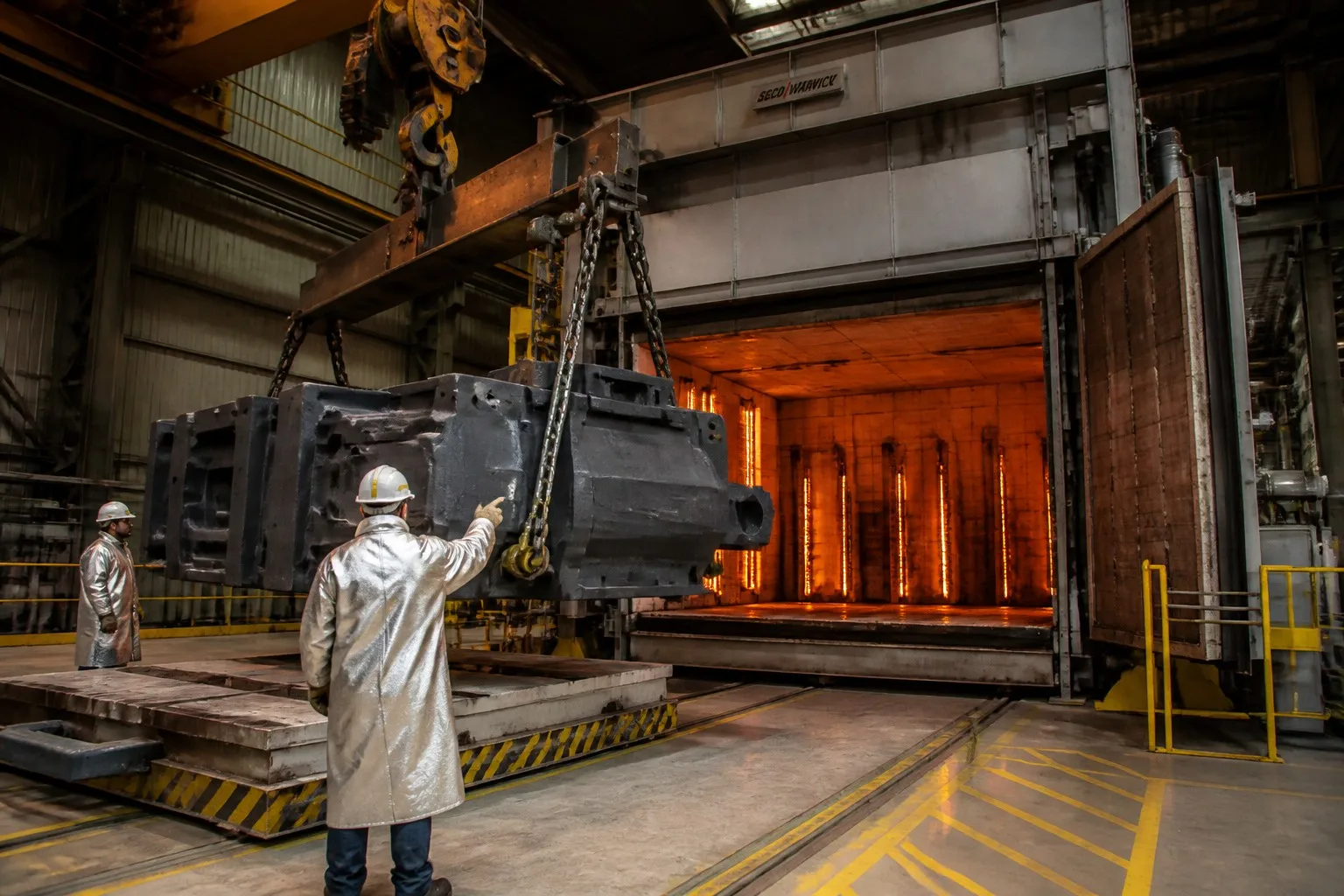
This guide covers the principal heat treatment processes applied to steel and iron castings, with practical parameters, metallurgical explanations, and quality control requirements.
Unlike wrought products (plate, bar, forging) that receive thermomechanical processing during forming, castings solidify in a static mold. The as-cast microstructure is determined entirely by the cooling rate from the pouring temperature — which varies dramatically between thick and thin sections of the same casting.
| Objective | Mechanism | Typical Process |
|---|---|---|
| Relieve residual stress | Thermal relaxation of elastic stresses introduced by differential cooling | Stress-relief anneal |
| Refine grain structure | Recrystallization of coarse as-cast grains | Normalizing |
| Improve machinability | Soften the matrix; spheroidize carbides | Full anneal, subcritical anneal |
| Increase strength and hardness | Formation of martensite, bainite, or fine pearlite | Quench and temper |
| Improve toughness | Tempering of martensite; grain refinement | Normalize + temper, Q&T |
| Restore corrosion resistance | Dissolve chromium carbides that precipitated during casting or welding | Solution anneal (stainless steel) |
| Achieve specific microstructure | Transform matrix to ausferrite for ADI | Austempering |
| Eliminate hydrogen embrittlement | Diffuse hydrogen out of the steel at elevated temperature | Hydrogen bake-out (de-embrittlement) |
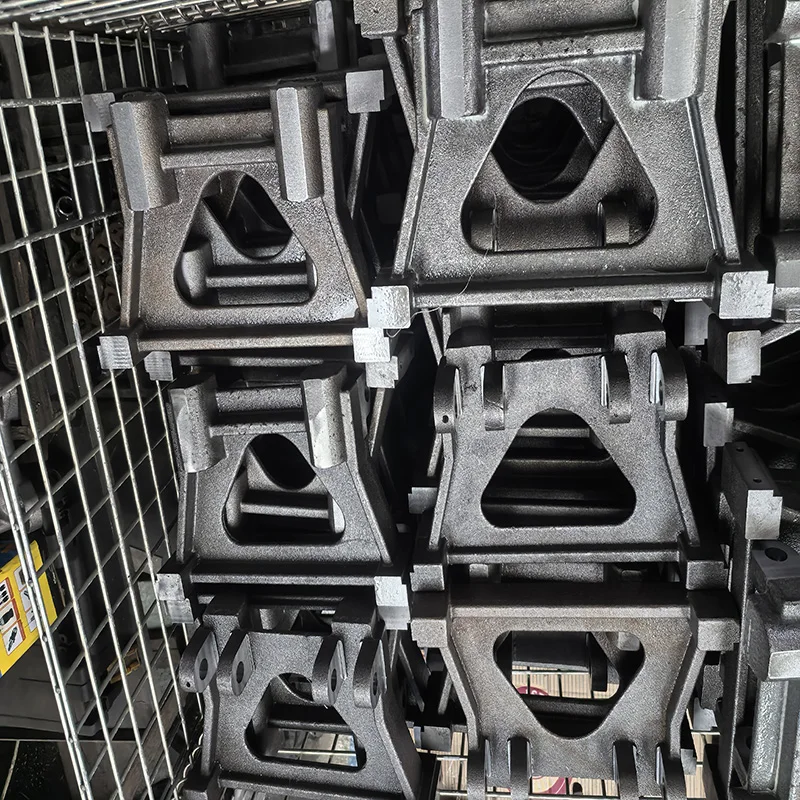
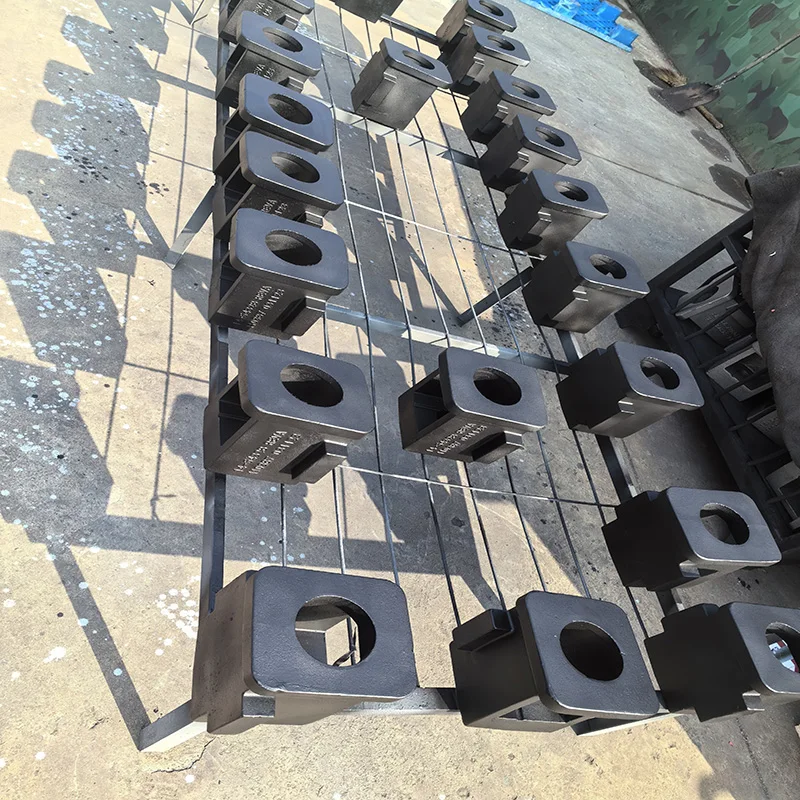
A professional foundry with integrated heat treatment capability — such as Dandong City Pengxin Machinery Co., Ltd., which operates in-house normalizing, quenching, and tempering furnaces with calibrated temperature control and chart recording — ensures that every casting leaves the foundry in the specified heat treatment condition with full traceability.
Purpose: Reduce residual stresses from solidification and cooling without significantly altering the microstructure or mechanical properties.
How it works: The casting is heated to a temperature below the transformation range (typically 550–650 °C for carbon and low-alloy steels), held to allow thermal relaxation of elastic stresses, and slowly cooled. No phase transformation occurs — the process is purely thermal-mechanical.
| Material | Temperature Range | Holding Time | Cooling |
|---|---|---|---|
| Carbon steel (WCB, WCC) | 600–650 °C | 1 hour per 25 mm of section thickness, minimum 2 hours | Furnace cool to 300 °C, then air cool |
| Low-alloy steel (8630, 4130) | 620–680 °C | 1 hour per 25 mm, minimum 2 hours | Furnace cool to 300 °C, then air cool |
| Austenitic stainless steel (304, 316) | Not typically stress-relieved at these temperatures (risk of sensitization) | — | Solution anneal instead (see 2.4) |
| Martensitic stainless steel (410, CA6NM) | 620–680 °C | 1 hour per 25 mm | Furnace cool to 300 °C, then air cool |
When to specify stress relieving:
Quality control: Verify furnace temperature uniformity (±15 °C across the working zone). The cooling rate is as important as the heating cycle — cooling too quickly reintroduces thermal stress, defeating the purpose.
Purpose: Produce a soft, machinable microstructure with maximum ductility. Full annealing completely transforms the as-cast structure to coarse pearlite and ferrite (for hypoeutectoid steels).
How it works: The casting is heated above the upper critical temperature (Ac₃) — typically 850–950 °C for carbon steels — held to fully austenitize the structure, then cooled very slowly (furnace cooling) to produce equilibrium ferrite-pearlite.
| Material | Austenitizing Temperature | Holding Time | Cooling Rate |
|---|---|---|---|
| Carbon steel (WCB) | 870–900 °C | 1 hour per 25 mm | Furnace cool at ≤50 °C/hour to 500 °C, then air cool |
| Low-alloy steel (8630) | 850–880 °C | 1 hour per 25 mm | Furnace cool at ≤50 °C/hour to 500 °C, then air cool |
| High-carbon steel (>0.50% C) | 790–820 °C | 1 hour per 25 mm | Furnace cool at ≤30 °C/hour to 500 °C, then air cool |
Resulting microstructure: Coarse ferrite + pearlite (hypoeutectoid steels); coarse pearlite + cementite (hypereutectoid steels).
Resulting hardness: Carbon steel WCB typically 130–170 HB after full anneal.
When to specify full annealing:
Practical note: Full annealing is the most time-consuming and energy-intensive heat treatment. For most industrial castings, normalizing (see 2.3) provides adequate machinability with shorter cycle time and lower cost. Full annealing is reserved for cases where maximum softness is essential.
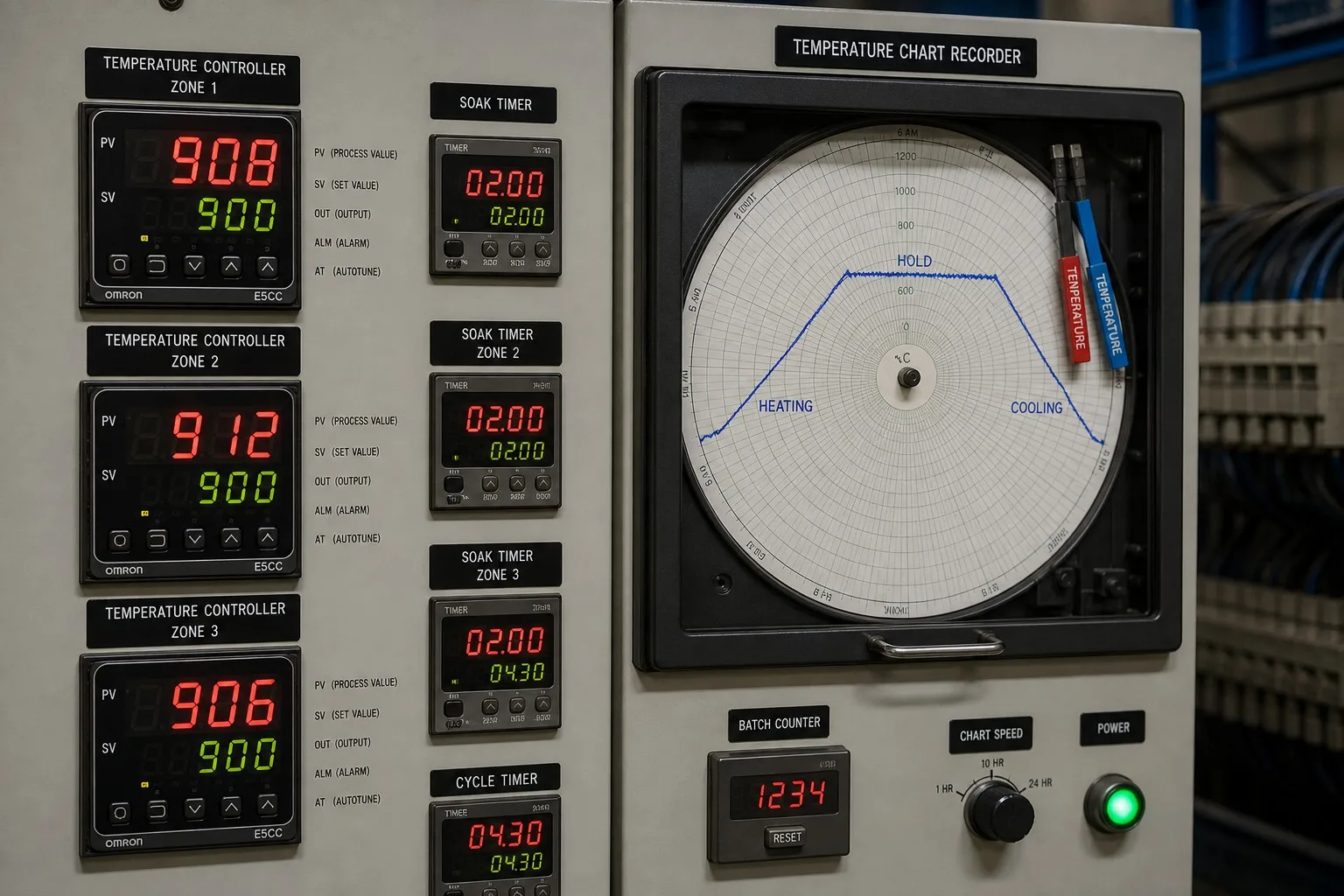
Purpose: Refine the coarse as-cast grain structure, homogenize the microstructure, and produce moderate strength with good toughness. Normalizing is the single most common heat treatment for carbon and low-alloy steel castings.
How it works: The casting is heated above the upper critical temperature (Ac₃), held to fully austenitize, then cooled in still air. The faster cooling rate (compared to annealing) produces a finer ferrite-pearlite microstructure with smaller grain size.
| Material | Normalizing Temperature | Holding Time | Cooling |
|---|---|---|---|
| Carbon steel (WCB, WCC) | 890–920 °C | 1 hour per 25 mm, minimum 1 hour | Still air cool |
| Low-alloy steel (8630, 4130) | 870–900 °C | 1 hour per 25 mm | Still air cool |
| Carbon steel (LCB, LCC — low-temp) | 890–920 °C + temper at 600–650 °C | As above | Air cool + furnace temper |
| Manganese steel (Hadfield) | 1050–1100 °C | 1 hour per 25 mm | Water quench (solution anneal, not normalize — see note below) |
Resulting microstructure: Fine ferrite + fine pearlite. Grain size typically ASTM 5–8 (compared to ASTM 1–3 as-cast).
Resulting properties for WCB (typical):
| Property | As-Cast | After Normalizing | After Normalize + Temper |
|---|---|---|---|
| Tensile strength (MPa) | 450–520 | 500–580 | 490–550 |
| Yield strength (MPa) | 220–260 | 260–320 | 250–300 |
| Elongation (%) | 15–22 | 22–28 | 24–30 |
| Charpy at 0 °C (J) | 8–15 | 15–25 | 20–35 |
| Hardness (HB) | 140–170 | 150–180 | 140–170 |
Hadfield manganese steel note: Austenitic manganese steel (11–14% Mn) is solution-annealed by heating to 1050–1100 °C and water quenching — not normalized. Air cooling causes carbide precipitation at grain boundaries, embrittling the steel. The water quench retains the carbon in solid solution, producing the fully austenitic, tough, work-hardenable microstructure that makes Hadfield steel unique.
When to specify normalizing:
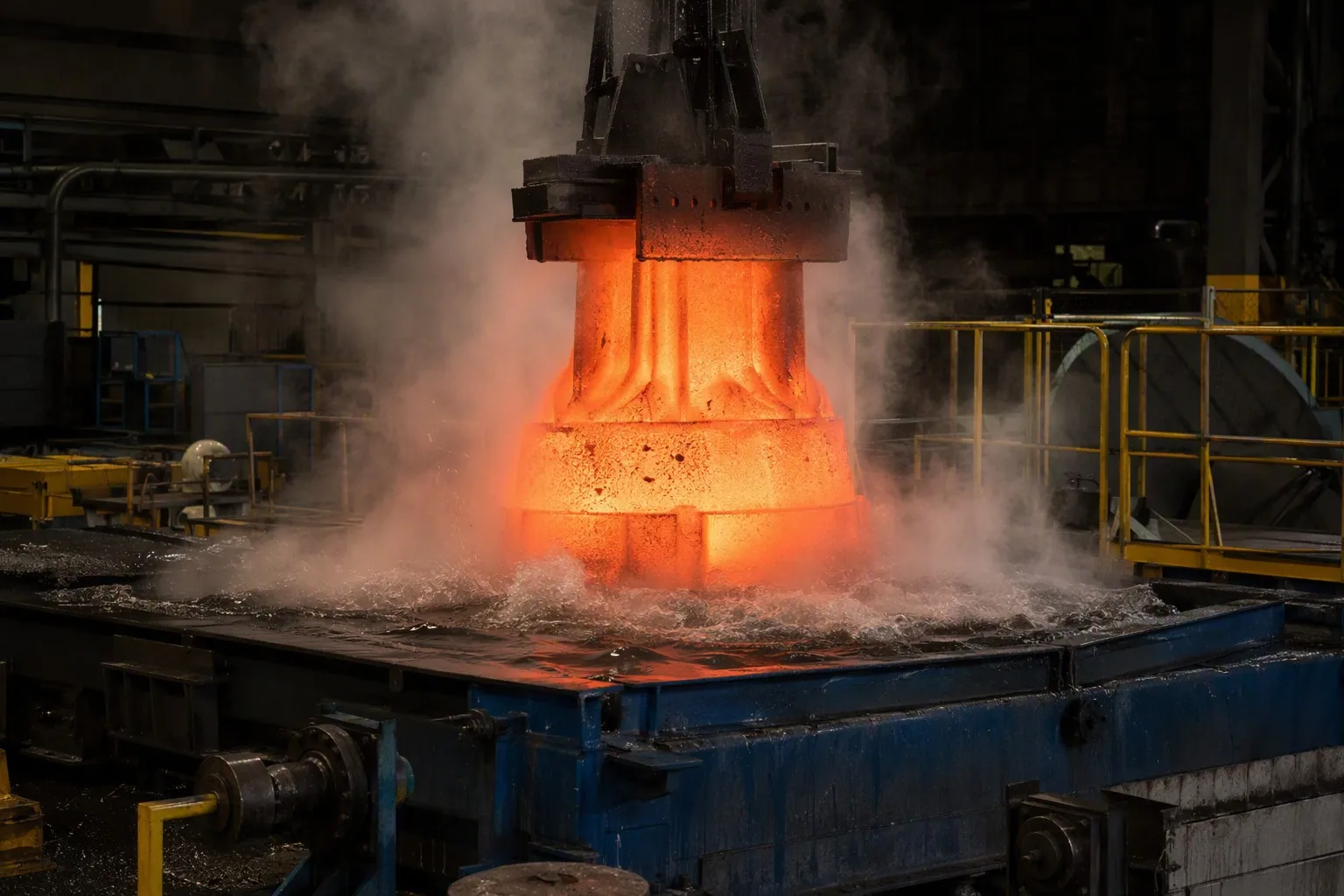
Purpose: Achieve high strength and hardness with controlled toughness through the formation and subsequent tempering of martensite. Q&T produces the highest strength levels achievable in steel castings.
How it works: The casting is austenitized, then rapidly cooled (quenched) in water, oil, or polymer to form martensite — a hard but brittle metastable phase. It is then reheated (tempered) to a temperature below Ac₁ to reduce brittleness while retaining most of the strength gain.
| Material | Austenitizing Temperature | Quenching Medium | Typical As-Quenched Hardness |
|---|---|---|---|
| Carbon steel (WCB, 0.25% C) | 870–900 °C | Water or 10% polymer | 35–45 HRC |
| Low-alloy steel (8630) | 850–880 °C | Oil or polymer | 45–52 HRC |
| Low-alloy steel (4140) | 840–870 °C | Oil | 50–56 HRC |
| Martensitic SS (410/CA15) | 950–1020 °C | Oil or air (air-hardenable in thin sections) | 40–48 HRC |
| Martensitic SS (CA6NM) | 1000–1050 °C | Oil or air | 38–44 HRC |
Quenching severity: The cooling rate must exceed the critical cooling rate of the steel to avoid pearlite or bainite formation. Water quenching is the most severe and produces the highest hardness but also the highest risk of distortion and cracking. Oil and polymer quenchants provide slower, more uniform cooling — preferred for complex geometries and alloy steels.
| Tempering Temperature | Resulting Hardness (WCB, approximate) | Resulting Microstructure | Application |
|---|---|---|---|
| 200–300 °C | 32–38 HRC | Tempered martensite (minimal carbide coarsening) | Wear-resistant parts, cutting edges |
| 400–500 °C | 25–32 HRC | Tempered martensite + fine carbides | High-strength structural, shafts |
| 550–650 °C | 18–25 HRC (220–260 HB) | Coarsened tempered martensite / spheroidized carbides | Pressure vessels, general structural |
| 650–700 °C | 15–20 HRC (180–220 HB) | Fully spheroidized carbides in ferrite | Maximum toughness; low-temperature service |
Temper embrittlement warning: Certain alloy steels (particularly those containing Mn, Cr, Ni) are susceptible to temper embrittlement when slowly cooled through the 375–575 °C range or when held for extended periods in this range. The mechanism is the segregation of impurity elements (P, Sb, Sn, As) to prior austenite grain boundaries. Prevention: temper above 575 °C and cool rapidly from the tempering temperature, or use steels with low tramp element content.
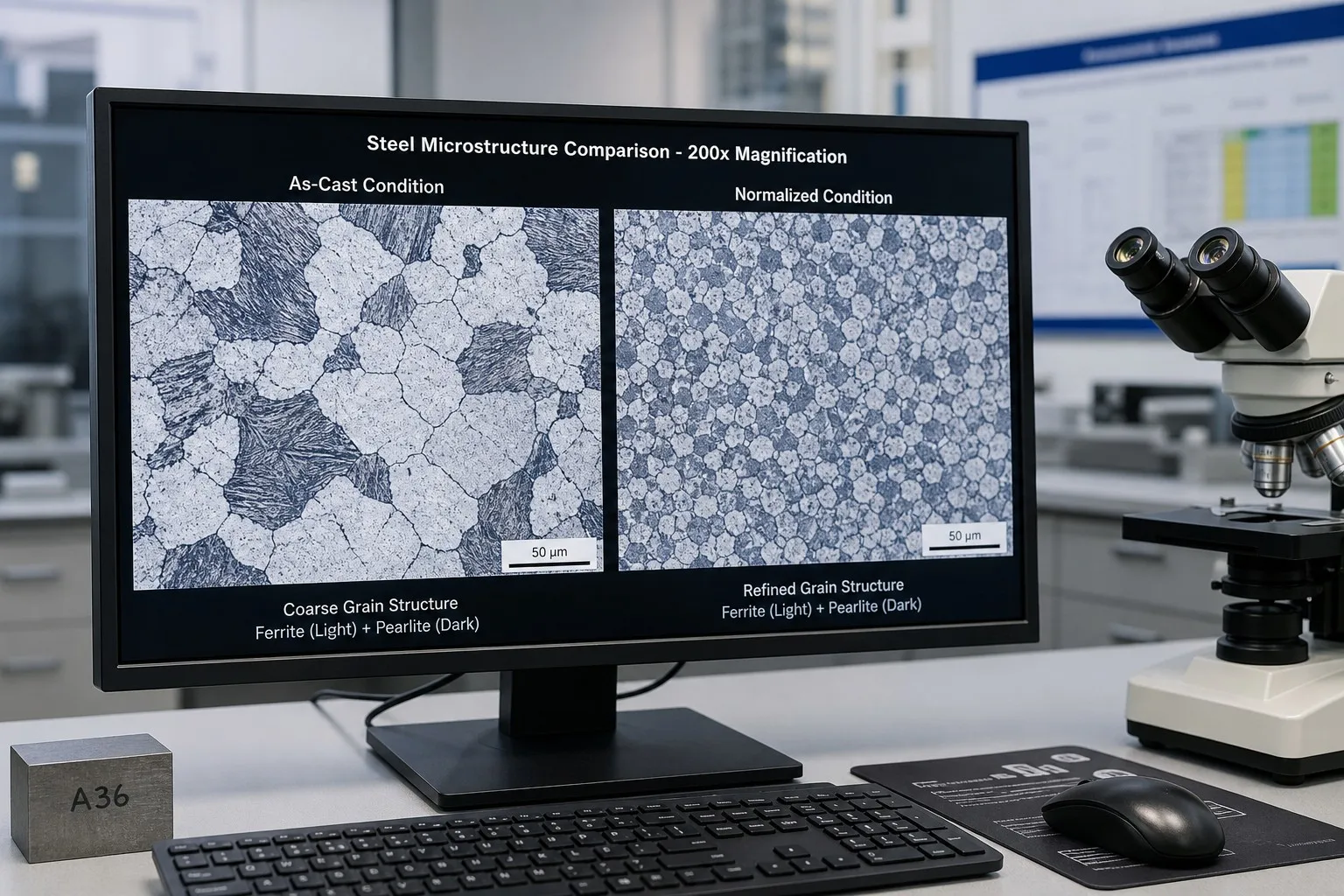
At Dandong City Pengxin Machinery Co., Ltd., the heat treatment workshop operates calibrated furnaces with multi-zone temperature control and continuous chart recording, ensuring that every Q&T cycle is executed to the specified parameters with complete traceability — from furnace loading charts to final hardness test results.
Purpose: Dissolve chromium carbides that precipitated during solidification or cooling, restoring the homogeneous austenitic microstructure and full corrosion resistance. This is the essential heat treatment for austenitic stainless steel castings.
How it works: The casting is heated to a temperature where chromium carbides dissolve (typically 1040–1120 °C), held to homogenize the austenite, then rapidly cooled (water quenched) to retain the carbon and chromium in solid solution. Slow cooling through the 425–870 °C range causes chromium carbide precipitation at grain boundaries (sensitization), depleting the adjacent matrix of chromium and destroying corrosion resistance.
| Grade | Solution Annealing Temperature | Holding Time | Cooling |
|---|---|---|---|
| CF8 / 304 (A351) | 1040–1120 °C | 1 hour per 25 mm, minimum 30 minutes | Water quench |
| CF8M / 316 (A351) | 1040–1120 °C | 1 hour per 25 mm | Water quench |
| CF3 / 304L (A351) | 1040–1100 °C | 1 hour per 25 mm | Water quench |
| CF3M / 316L (A351) | 1040–1100 °C | 1 hour per 25 mm | Water quench |
| CD4MCu (Duplex, A890) | 1040–1100 °C | 1 hour per 25 mm | Water quench |
| CE3MN / 2507 (Super Duplex, A890) | 1060–1120 °C | Solution anneal + water quench | Water quench — rapid cooling essential to avoid sigma phase |
Critical requirement: The time from furnace exit to immersion in the quench tank must be minimized — ideally under 60 seconds for thin sections, and not more than 2–3 minutes for any section. Any delay allows the casting surface to drop into the sensitization temperature range before quenching.
Duplex stainless steel considerations: In addition to dissolving carbides, the solution anneal establishes the correct ferrite-austenite phase balance (typically 40–60% ferrite). The cooling rate from the solution temperature must be fast enough to suppress the formation of sigma phase and other intermetallic compounds — these embrittle the alloy and destroy corrosion resistance. Solution annealing temperature and cooling rate for duplex grades must be tightly controlled.
Verification: After solution annealing, verify:
Cast irons respond to heat treatment differently than steels because of the presence of graphite — which does not transform — and the higher carbon and silicon contents, which shift transformation temperatures and kinetics.
| Material | Temperature | Holding Time | Cooling |
|---|---|---|---|
| Gray iron (unalloyed) | 510–565 °C | 1 hour per 25 mm | Furnace cool to 200 °C, then air cool |
| Gray iron (alloyed, e.g., Ni-Cr) | 550–590 °C | 1 hour per 25 mm | Furnace cool to 200 °C, then air cool |
| Ductile iron (ferritic) | 510–565 °C | 1 hour per 25 mm | Furnace cool to 300 °C, then air cool |
| Ductile iron (pearlitic) | 550–590 °C | 1 hour per 25 mm | Furnace cool to 300 °C, then air cool |
Note: Stress relieving above 600 °C for gray iron can cause graphite flake growth and permanent dimensional change. Keep temperatures below 600 °C for gray iron unless a deliberate annealing cycle (with expected dimensional change) is specified.
Purpose: Produce a fully ferritic matrix for maximum ductility and impact toughness (as required for QT400-18 / 60-40-18 grades).
Process: Heat to 900–950 °C, hold to austenitize (carbon from the matrix dissolves into austenite), then furnace cool slowly through the eutectoid range (700–760 °C) to allow carbon to diffuse from the austenite to the existing graphite nodules. The result is a ferrite matrix with graphite nodules — maximum ductility, minimum strength.
| Parameter | Value |
|---|---|
| Austenitizing temperature | 900–950 °C |
| Holding time | 1 hour per 25 mm + 1 hour |
| Cooling | Furnace cool at ≤50 °C/hour through 760–690 °C range; then air cool |
Result: QT400-18 properties: tensile ≥400 MPa, yield ≥250 MPa, elongation ≥18%, hardness 130–180 HB, Charpy ≥14 J (RT).
Purpose: Produce a predominantly pearlitic matrix for higher strength and wear resistance (QT600-3, QT700-2 grades).
Process: Austenitize at 870–930 °C, then air cool. The faster cooling rate (compared to annealing) suppresses carbon diffusion to the graphite nodules, forcing the carbon to precipitate as pearlite during the eutectoid transformation.
| Grade Target | Normalizing Temperature | Cooling | Typical Result |
|---|---|---|---|
| QT600-3 | 870–900 °C | Still air | Pearlite + ferrite (bullseye structure); 190–270 HB |
| QT700-2 | 880–920 °C | Forced air or oil quench + temper at 550–600 °C | Fine pearlite or tempered martensite; 225–305 HB |
Purpose: Produce an ausferritic microstructure (acicular ferrite + carbon-stabilized austenite) that combines extremely high strength with useful ductility — the highest performance grade of ductile iron.
How it works: The casting is austenitized (850–930 °C), then quenched into a molten salt bath held at 230–450 °C (above the martensite start temperature). It is held at this temperature (austempered) until the ausferrite transformation is complete, then cooled to room temperature. The result is a matrix of fine acicular ferrite in a matrix of carbon-enriched stable austenite — no martensite, no pearlite.
| ADI Grade (ISO 17804) | Austempering Temperature | Tensile (MPa) | Elongation (%) | Hardness (HB) | Typical Application |
|---|---|---|---|---|---|
| ADI 800-10 | 380–450 °C | 800 min | 10 min | 250–310 | High-ductility ADI; suspension components, brackets |
| ADI 1050-7 | 320–380 °C | 1050 min | 7 min | 320–380 | Medium-strength ADI; gears, crankshafts |
| ADI 1200-3 | 280–340 °C | 1200 min | 3 min | 340–420 | High-strength ADI; wear plates, rail components |
| ADI 1400-1 | 230–280 °C | 1400 min | 1 min | 380–480 | Maximum strength; mining wear parts, heavy gears |
Austempering enables ADI to replace forged and heat-treated steel in many applications — at lower cost and with the added benefits of near-net-shape casting, reduced machining, and superior damping. It is the fastest-growing segment of the ductile iron market.
| Requirement | Specification |
|---|---|
| Temperature uniformity | ±15 °C across the working zone (AMS 2750 or equivalent) |
| Temperature control | PID controller with thermocouple feedback |
| Temperature recording | Continuous chart recorder or digital data logger — permanent record for each cycle |
| Thermocouple placement | At least one contact thermocouple on the casting (for critical parts) in addition to furnace control thermocouples |
| Calibration | Furnace thermocouples and controllers calibrated every 3–6 months; traceable to national standards |
| Test | When Required | Acceptance |
|---|---|---|
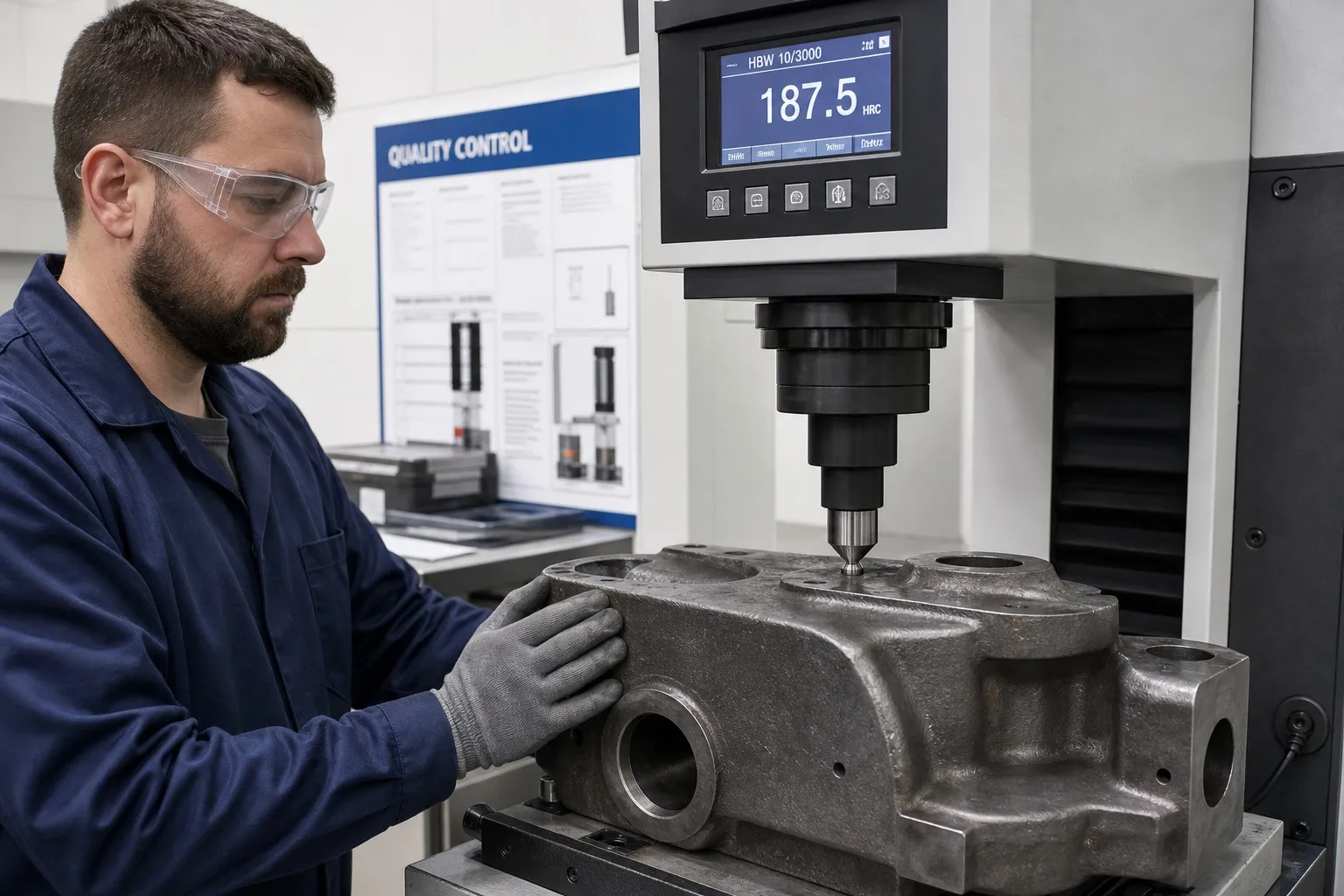
| Hardness (Brinell/Rockwell) | Every heat treatment batch | Per material specification or drawing |
| Tensile test | Per heat or per casting lot | Per material standard (ASTM, EN) |
| Charpy impact | Low-temperature service; pressure equipment | Per specification at minimum design metal temperature |
| Metallography | New process qualification; failure investigation | Microstructure matches specified condition |
| Corrosion test (ASTM A262, G48) | Stainless steel after solution anneal | No sensitization; acceptable pitting resistance |
| NDE after heat treatment (MT, UT) | Castings prone to quench cracking; pressure-containing parts | No cracks attributable to heat treatment |
| Defect | Cause | Prevention |
|---|---|---|
| Quench cracking | Cooling rate too severe; sharp corners; inadequate preheat; improper quenchant selection | Use polymer quench or oil for complex shapes; increase fillet radii; preheat before austenitizing |
| Insufficient hardness | Austenitizing temperature too low; quench delay; inadequate quench agitation; decarburization | Verify furnace temperature; minimize transfer time; ensure adequate quench flow; use protective atmosphere |
| Excessive hardness / low ductility | Under-tempering; tempering temperature too low | Verify tempering furnace temperature; check chart recorder |
| Distortion | Non-uniform heating or cooling; residual stress from casting; inadequate support during heating | Use stepped heating; stress-relieve before hardening; support castings properly in furnace |
| Sensitization (stainless steel) | Slow cooling through 425–870 °C range after solution anneal | Water quench immediately from solution temperature; verify with ASTM A262 |
| Decarburization | Heating in oxidizing atmosphere without protection | Use controlled atmosphere (endothermic gas, nitrogen, vacuum) or protective coating |
A complete heat treatment specification leaves no room for interpretation. The following elements should appear on the casting drawing or in the accompanying heat treatment procedure specification:
HEAT TREATMENT REQUIREMENT:

Process: Normalize + Temper
Material: ASTM A216 Grade WCB
Normalizing temperature: 900 ± 15 °C
Holding time at temperature: 1 hour per 25 mm of maximum section thickness, minimum 2 hours
Cooling: Still air cool to ambient temperature
Tempering temperature: 620 ± 15 °C
Holding time at temperature: 1 hour per 25 mm, minimum 2 hours
Cooling after tempering: Still air cool

Required properties after heat treatment:
- Hardness: 140–170 HB
- Tensile strength: 485–620 MPa
- Yield strength: 250 MPa minimum
- Elongation: 22% minimum

Documentation:
- Furnace chart recorder trace for each cycle, identified with casting heat number
- Hardness test results for each casting or representative sample
- Tensile test results from test bar cast from same heat and heat-treated with castingsHeat treatment is where metallurgy meets manufacturing. It is the single process step that can multiply the value of a casting — or destroy it. The difference between a casting that meets specification and one that fails in service is often a matter of 20 °C in furnace temperature, 30 minutes of holding time, or 10 seconds between furnace exit and quench immersion.
Key principles for successful heat treatment of castings:
At Dandong City Pengxin Machinery Co., Ltd., heat treatment is an integral part of our casting-to-finished-part workflow. With calibrated furnaces, continuous chart recording, in-house mechanical testing, and a documented quality system certified to ISO 9001, we deliver castings in the exact heat treatment condition you specify — supported by complete process documentation.
Need steel or iron castings with certified heat treatment? Dandong City Pengxin Machinery Co., Ltd. provides integrated casting, heat treatment, CNC machining, and quality assurance from our 80,000 m² facility in Liaoning, China. Contact us with your material specification and heat treatment requirements for a technical quotation.
 Hot News
2026-10-16
2026-10-09
2026-10-02
2026-09-25
2026-09-18
2026-09-11

Dandong City Pengxin Machinery was founded in 1958, is a set of casting, machining and assembly as one of the private enterprises.
Wangjiapu Group, Xinan Village, Qianyang Town, Donggang City, Dandong City, Liaoning Province, China
Copyright © Dandong City Pengxin Machinery Co.,Ltd. All Rights Reserved Privacy Policy Blog
 EN
EN