Meta Description: A practical guide for international buyers sourcing steel, iron, and stainless steel castings from China. Learn how to evaluate foundries, negotiate pricing, manage quality assurance, and avoid the most common sourcing pitfalls.
China produces more than 50 million tons of metal castings annually — roughly half of global output. For procurement managers, engineers, and business owners in North America, Europe, the Middle East, and beyond, Chinese foundries offer an unmatched combination of production capacity, material range, and cost competitiveness. But the gap between finding a supplier on Alibaba.com and receiving conforming parts on your dock is wide — and it is filled with risks that first-time buyers routinely underestimate.
This guide provides a structured, practical framework for sourcing steel castings, iron castings, and stainless steel castings from China. It covers supplier evaluation, technical communication, pricing, quality assurance, logistics, and the cultural and commercial nuances that determine whether a sourcing relationship succeeds or fails.
Before contacting suppliers, understand what you are looking at. The Chinese casting industry is not a monolith — it spans everything from family-run workshops with a single cupola furnace to publicly listed enterprises with IATF 16949 certification and automated molding lines.
| Tier | Characteristics | Typical Certifications | Best For |
|---|---|---|---|
| Tier 1 — Export-Oriented Professionals | 150–2,000+ employees; in-house machining, heat treatment, and testing laboratory; dedicated export department with English-speaking engineers; 20+ years of operation | ISO 9001, ISO 14001, IATF 16949, PED/AD2000, DNV/GL, API, ISO 45001 | High-value, complex castings; ongoing production contracts; buyers requiring full documentation and PPAP |
| Tier 2 — Domestic Leaders Expanding Export | 50–300 employees; strong domestic reputation; developing export capability; solid technical competence but may have communication gaps | ISO 9001, possibly ISO 14001 | Medium-complexity parts; buyers with technical staff who can bridge communication gaps |
| Tier 3 — Price-Focused Workshops | 10–100 employees; minimal quality infrastructure; limited documentation capability; price is the primary selling point | ISO 9001 (sometimes) or none | Simple, non-critical parts; buyers willing to manage quality themselves with in-country inspection |
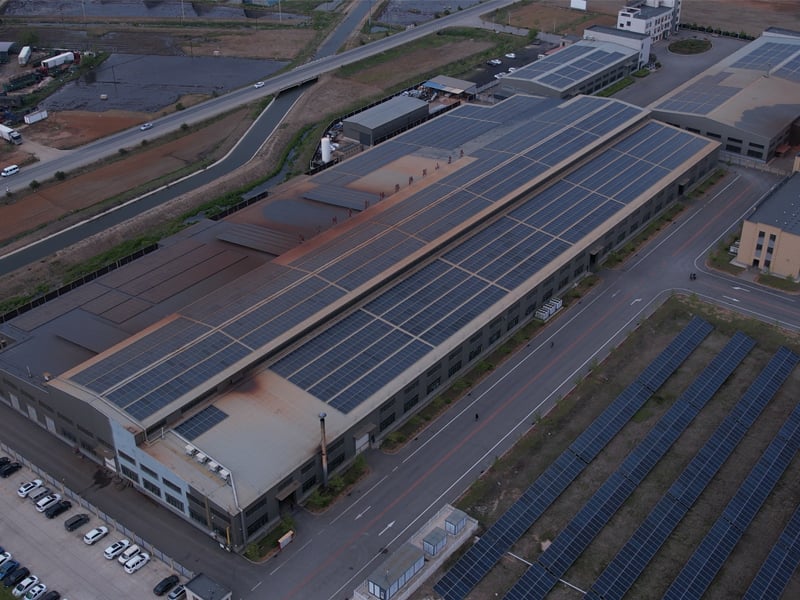
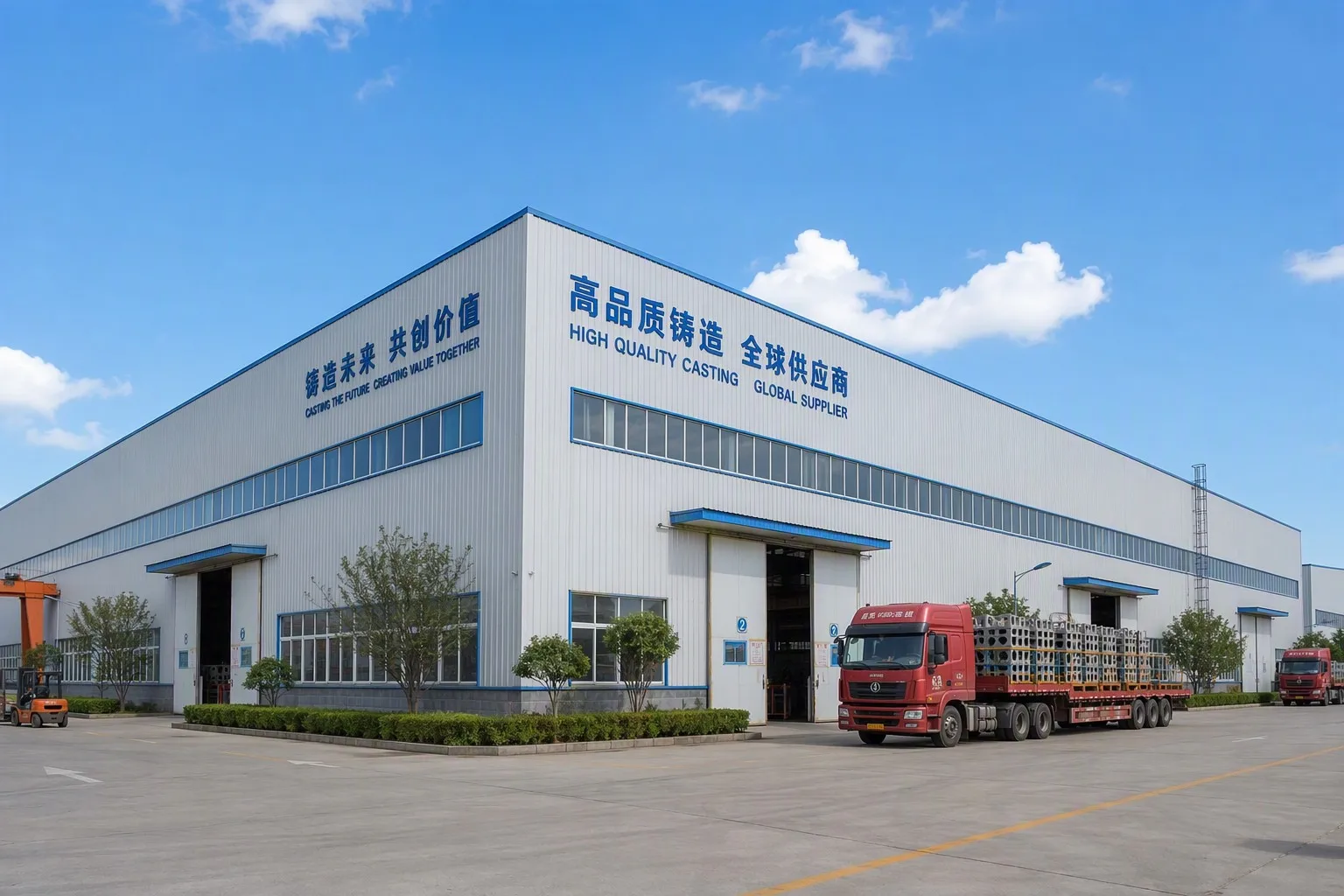
Practical advice: Tier 1 foundries are the safest choice for first-time buyers and critical components. The higher unit price is almost always offset by fewer quality problems, faster communication, and reliable documentation. Companies like Dandong City Pengxin Machinery Co., Ltd. — founded in 1958, with over 156 employees, an 80,000 m² facility, and ISO 9001 certification — represent the Tier 1 model that international buyers should target: established history, integrated casting and machining capabilities, and systematic quality management.
Chinese foundries are concentrated in specific regions, each with its own specialization:
| Region | Specialization | Notes |
|---|---|---|
| Liaoning (Dandong, Anshan, Shenyang) | Large steel castings, heavy industrial components, slag pots, mining equipment parts | Strong heavy industry heritage; proximity to steel mills and ports (Dalian, Dandong) for export logistics |
| Hebei (Cangzhou, Handan) | Pipe fittings, valve bodies, general-purpose iron and steel castings | Large cluster of small-to-medium foundries |
| Shandong | Ductile iron, gray iron, automotive castings | Major production hub; strong in automotive and machinery sectors |
| Zhejiang (Ningbo, Wenzhou) | Investment casting, stainless steel, precision parts | Strong in valve and pump components |
| Shanxi | Large iron castings, machine tool bases | Heavy section capability; lower labor costs |
Understanding the regional specialization helps narrow your search. A buyer seeking large slag pots or mining equipment castings should start with Liaoning foundries; a buyer needing investment cast stainless steel valve components should look to Zhejiang.
An Alibaba.com or Made-in-China.com supplier profile is a starting point, not a qualification. Here is how to evaluate a Chinese foundry properly.
Request and verify these documents before any site visit or sample order:
| Document | What to Check |
|---|---|
| Business license | Company name, registered capital, establishment date, business scope. Registration capital below RMB 5 million (~$700,000) is a caution flag for heavy industrial suppliers. |
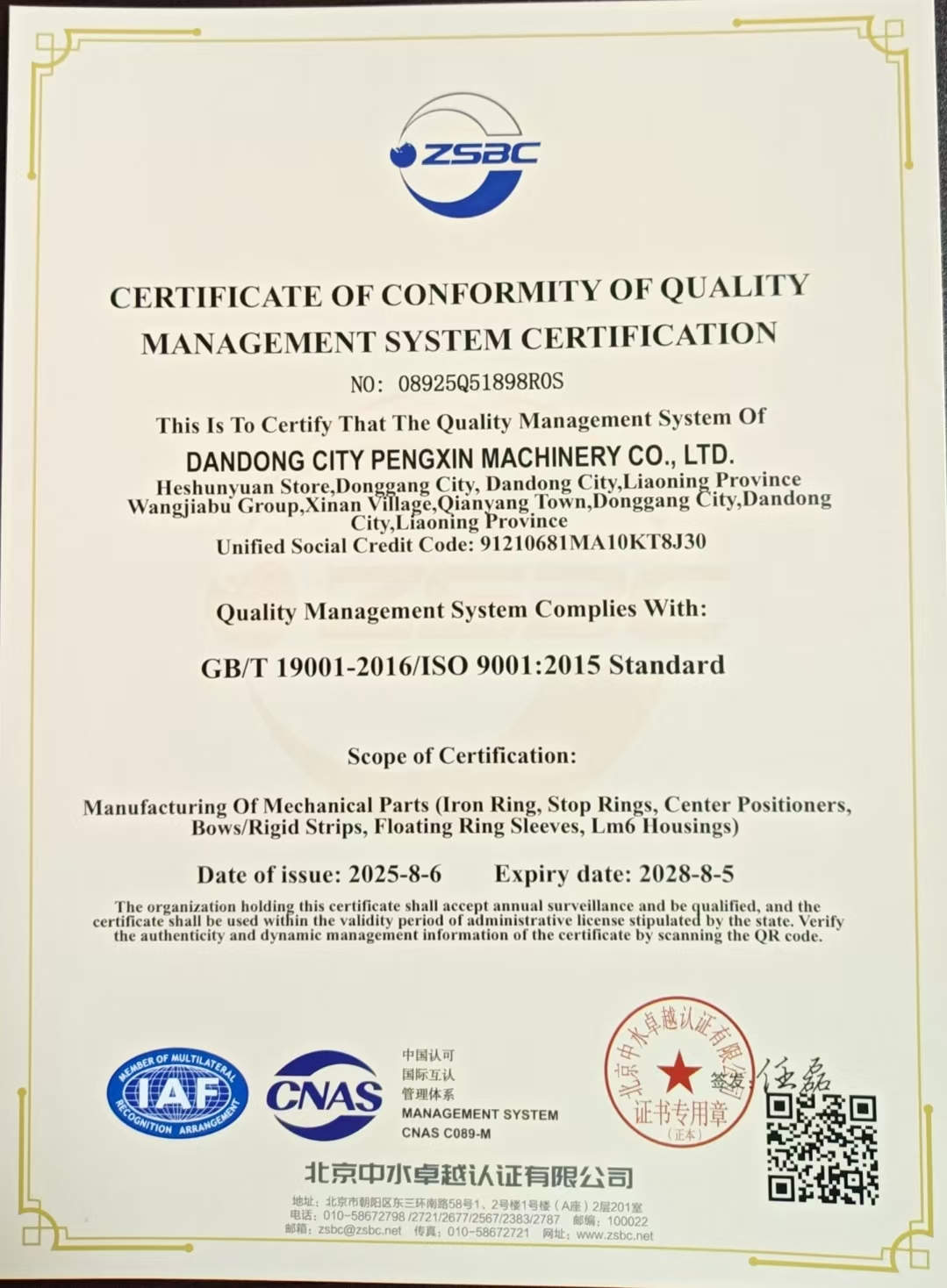
| ISO 9001 certificate | Verify the certificate number on the issuing body's website (e.g., SGS, TUV, Bureau Veritas, DNV). Check expiration date. |
|Industry-specific certifications| IATF 16949 (automotive), PED/AD2000 (pressure equipment), DNV/GL (marine), API (oil and gas). Verify scope covers casting production, not just trading. | |Export license / Import-Export registration| Confirms the company is legally authorized to export directly. Some suppliers only have a trading company handle exports — this is not necessarily a problem but adds a layer. | |Factory audit report| If available — from a third party (SGS, Bureau Veritas, TUV) or from an existing customer. |
Red flag: A certificate issued by an unknown or unverifiable certification body. Legitimate certifications come from internationally recognized bodies. A certificate from an obscure local agency with no online verification portal is worthless.
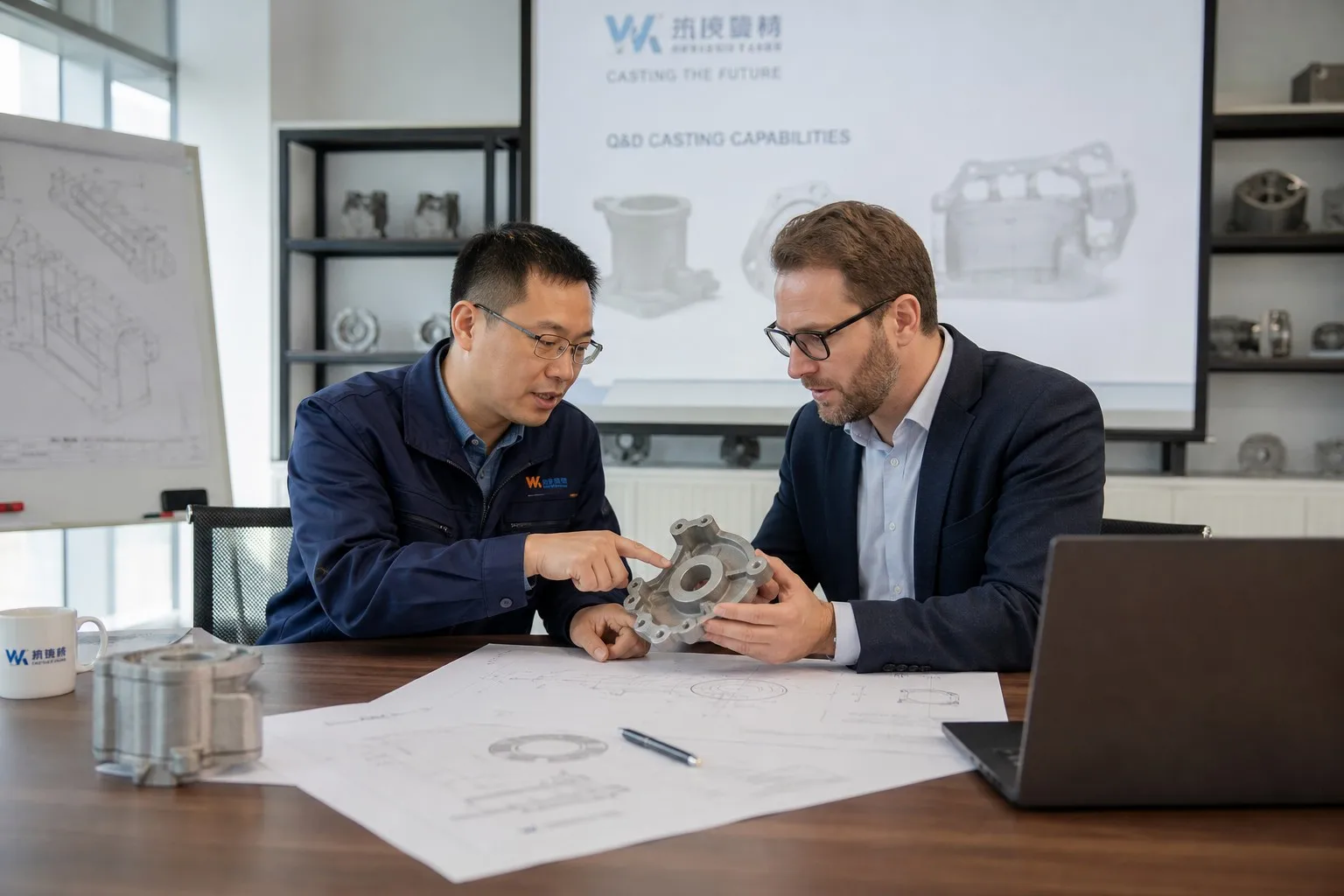
Quality of communication is one of the strongest predictors of sourcing success. Evaluate:
| Signal | Good | Concerning |
|---|---|---|
| Response time | Within 24 hours for initial inquiry; within 48 hours for technical questions | Multiple days without response; no follow-up to unanswered questions |
| English proficiency | Dedicated export staff who understand technical casting terminology | Only basic English; misunderstandings on technical specifications |
| Technical engagement | Asks detailed questions about your application, service conditions, and quality requirements | Immediately quotes a price without technical discussion |
| Drawing review | Provides DFM feedback, suggests modifications to improve castability | Accepts the drawing without questions or comments |
| Sample willingness | Offers samples with full dimensional and material reports | Pushes for production order without sample qualification |
A foundry that asks penetrating questions about your part — service temperature, pressure, corrosive environment, cyclic loading — is demonstrating engineering competence. A foundry that quotes a price within five minutes of receiving your drawing is likely pricing from weight alone without understanding the technical requirements.
If the documentation and communication pass, the next step is a factory audit. For buyers unable to travel to China, third-party inspection companies (SGS, Bureau Veritas, TUV Rheinland, Intertek) offer factory audit services for approximately 2,500 per audit.
Key audit checklist:
A professional Tier 1 foundry — such as Dandong City Pengxin Machinery Co., Ltd. with its ISO 9001-certified quality system and integrated casting-to-machining workflow — will welcome an audit and have all documentation readily available. A foundry that resists or delays an audit request should be eliminated from consideration.
The quality of the castings you receive is directly proportional to the quality of the information you provide in your request for quotation (RFQ). A one-line email with an attached drawing is the most common cause of quoting errors and quality failures.
Every casting inquiry should include:
Example specification block:

Material: ASTM A216 Grade WCB (Carbon Steel)
Heat Treatment: Normalize at 900 ± 20°C, air cool; Temper at 650 ± 20°C
NDE: 100% MT of all accessible surfaces per ASTM E709, accept to ASTM A903 Severity Level II
Pressure Test: Hydrostatic at 1.5× design pressure for 30 minutes
Documentation: EN 10204 3.1 material certificate, dimensional report, NDE report, pressure test report
Marking: Heat number and part number stamped on non-machined surfaceTell the foundry what the part does. This information — service temperature, pressure, environment, cyclic loading — allows the foundry engineer to identify risks that are not apparent from the drawing alone. A pump casing for fresh water service and a pump casing for 15% hydrochloric acid at 80 °C may look identical on the drawing but require completely different materials and quality controls.
| Practice | Why It Matters |
|---|---|
| Use recognized standards | ASTM, EN, ISO, JIS, DIN — not proprietary or obsolete company standards the foundry cannot reference |
| Number all drawings and revisions | Drawing "pump-housing-v3-final.pdf" is ambiguous. Use "PX-DWG-2026-001 Rev B" with a revision table. |
| Specify surface finish in Ra (μm) | "Smooth finish" is subjective. "Ra 1.6 μm on sealing faces" is unambiguous. |
| Define acceptance criteria for NDE | "Do UT" is not a specification. "UT per ASTM A609, acceptance to Level II" is. |
| Use photos or marked-up images for cosmetic requirements | "No surface defects" is unenforceable. A reference photo showing acceptable vs. unacceptable surface condition is. |
Casting prices from Chinese foundries can vary by a factor of 2–3× for the same drawing. Understanding the cost structure helps separate legitimate quotes from unrealistic ones and identify what you are sacrificing at lower price points.
| Cost Component | Approximate Share | What Affects It |
|---|---|---|
| Raw material (scrap, alloys, ferroalloys) | 30–40% | Global scrap steel and alloy prices (Ni, Cr, Mo, Mn) |
| Melting and molding (energy, labor, consumables) | 25–35% | Melting process (induction vs. EAF), molding method (manual vs. automated), energy costs |
| Heat treatment | 5–10% | Normalize, quench and temper, solution anneal — complexity and duration |
| Fettling and finishing (riser removal, grinding, shot blast) | 5–10% | Number of risers, surface area, accessibility for grinding |
| Quality assurance (chemical, mechanical, NDE, dimensional) | 5–10% | Number and type of tests, documentation requirements, third-party witness |
| Machining (if applicable) | 10–20% | Complexity, number of set-ups, tolerance requirements |
| Pattern/tooling amortization | 2–5% | Pattern complexity, expected production volume |
| Overhead and margin | 10–15% | Fixed costs, depreciation, profit |
A Tier 1 foundry quoting 5.50/kg are not selling the same product. The difference is typically distributed across:
| What You Get at $5.50/kg | What You Get at $8.50/kg |
|---|---|
| Chemical analysis: one sample per heat, spectrometer of unknown calibration | Chemical analysis: spectrometer with daily calibration, retained sample for each heat |
| Mechanical testing: single tensile bar per heat (if requested) | Mechanical testing: tensile, yield, elongation, Charpy impact per heat, per standard |
| NDE: visual only (unless you specifically negotiate each test) | NDE: MT, UT, or RT as specified, with qualified inspectors and documented procedures |
| Documentation: material certificate only | Documentation: full EN 10204 3.1 package with heat numbers, test results, dimensional report, NDE reports |
| Traceability: heat number stamped on casting | Traceability: full lot traceability from raw material through finished part |
| Defect resolution: "We will fix it next order" | Formal corrective action with root cause analysis |
| On-time delivery: aspirational | On-time delivery: measured, tracked, guaranteed |
The real cost of the cheaper option often emerges downstream: rejected shipments, production delays at your factory, customer warranty claims, and the management time required to resolve quality problems remotely. A 30% lower casting price that results in a single rejected shipment typically wipes out any savings for the entire order.
The quality assurance strategy should be agreed upon before the order is placed, not after problems arise.
Before full production begins, require a first article — typically 1–3 castings from production tooling — that undergoes complete inspection:
The FAI must be approved in writing before the foundry proceeds with production quantities. This single step prevents the most expensive sourcing failure mode: receiving a full order of castings that all share a systematic defect that could have been caught on the first part.
| Option | Cost | Best For |
|---|---|---|
| Trust the foundry's QC | Free (included in price) | Long-term partners with proven track record |
| Third-party in-process inspection (SGS, BV, TUV, Intertek) | 1,500 per visit | New suppliers, critical components, large orders |
| Your own inspector on-site | Travel costs + salary | Strategic suppliers with ongoing high-volume production |
| Final random inspection (FRI) before shipment | 1,000 per inspection | Standard practice for most new supplier relationships |
Recommended approach for a new supplier relationship: FAI with full inspection at your facility (or third-party) → third-party in-process inspection during the production run → final random inspection before shipment.
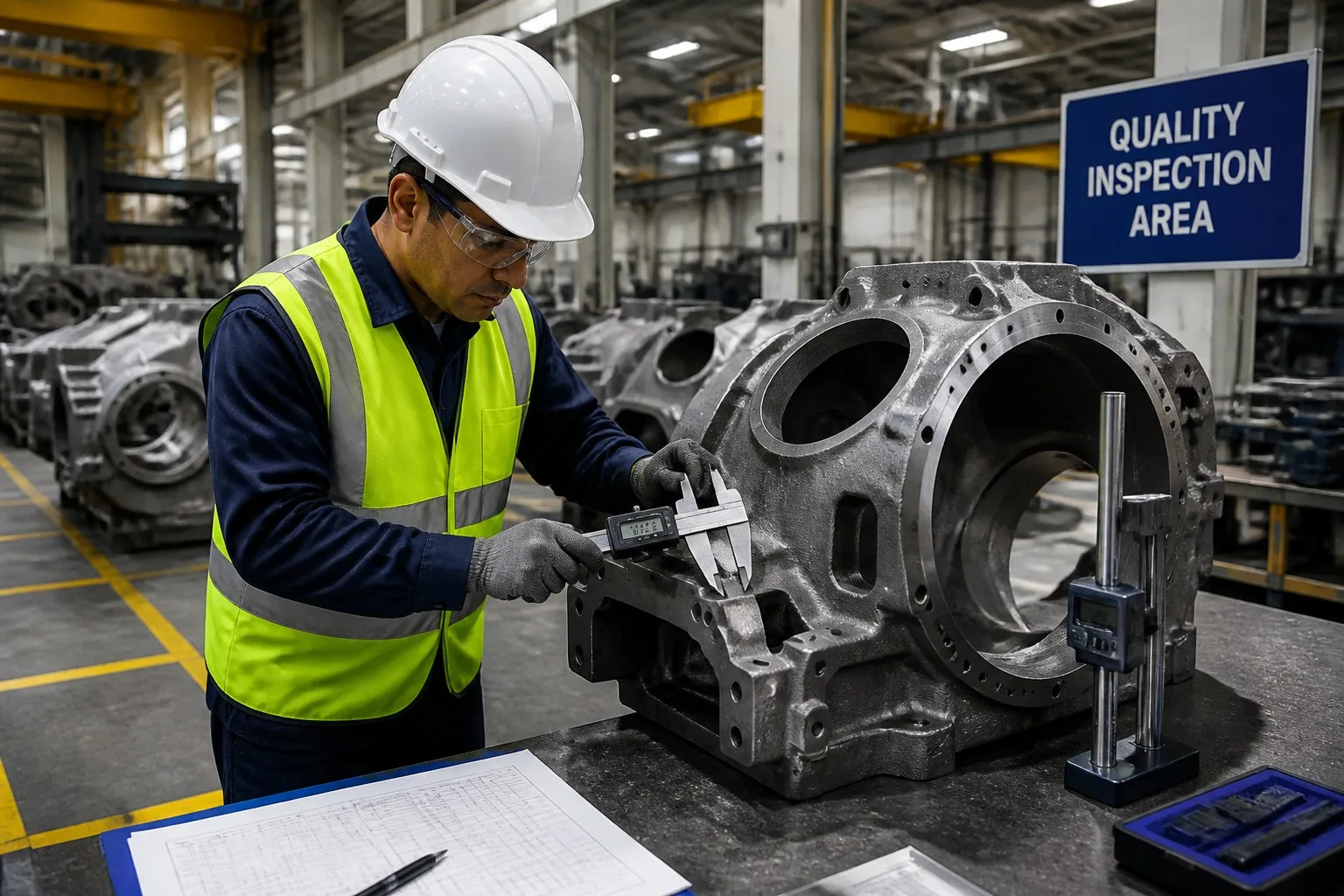
A pre-shipment inspection (PSI) should sample per ANSI/ASQ Z1.4 (AQL) or an agreed sampling plan:
| Inspection Item | Method | Acceptance Criteria |
|---|---|---|
| Visual and dimensional | Sampling per AQL; measure critical dimensions on each sample | Per drawing tolerances |
| Chemical composition | Review spectrometer records for sampled heats | Per material specification |
| NDE | Verify NDE reports; spot-check with portable MT/UT equipment if available | Per specified acceptance standards |
| Marking | Verify heat number, part number, and any required stamping | Per purchase order requirements |
| Surface condition | Visual comparison to reference samples or specified surface finish standard | No cracks, shrinkage, sand inclusions, or cold shuts exceeding acceptance limits |
| Packaging | Verify packaging prevents damage during transit; markings match packing list | Per agreed packaging specification |
| Quantity and identification | Count and verify against packing list | Per purchase order |
| Incoterm | What the Seller Pays | What the Buyer Pays | Best For |
|---|---|---|---|
| EXW (Ex Works) | Nothing beyond factory gate | Everything — domestic trucking, export clearance, ocean freight, insurance, import clearance, destination delivery | Buyers with established China logistics partners |
| FOB (Free on Board) | Factory to vessel; export clearance | Ocean freight, insurance, import clearance, destination delivery | Standard for sea freight; buyer controls shipping |
| FCA (Free Carrier) | Factory to named place (e.g., FCA Dalian); export clearance | Main carriage, insurance, import clearance, destination delivery | Containerized cargo; used when seller delivers to carrier's terminal |
| CIF (Cost, Insurance, Freight) | Factory to destination port including insurance | Import clearance, duties, taxes, destination delivery | Buyers who want a single delivered-to-port price |
| DAP (Delivered at Place) | Everything except import clearance and duties | Import clearance, duties, taxes | Full-service option; seller manages all transport |
Practical note: For a first order with a new supplier, FOB or FCA is the most common starting point. It gives the buyer control over freight forwarder selection while keeping the seller responsible for export procedures. FCA Dalian, for example, means the foundry delivers the goods to the carrier's terminal at Dalian port and handles Chinese export customs — a clean division of responsibility.
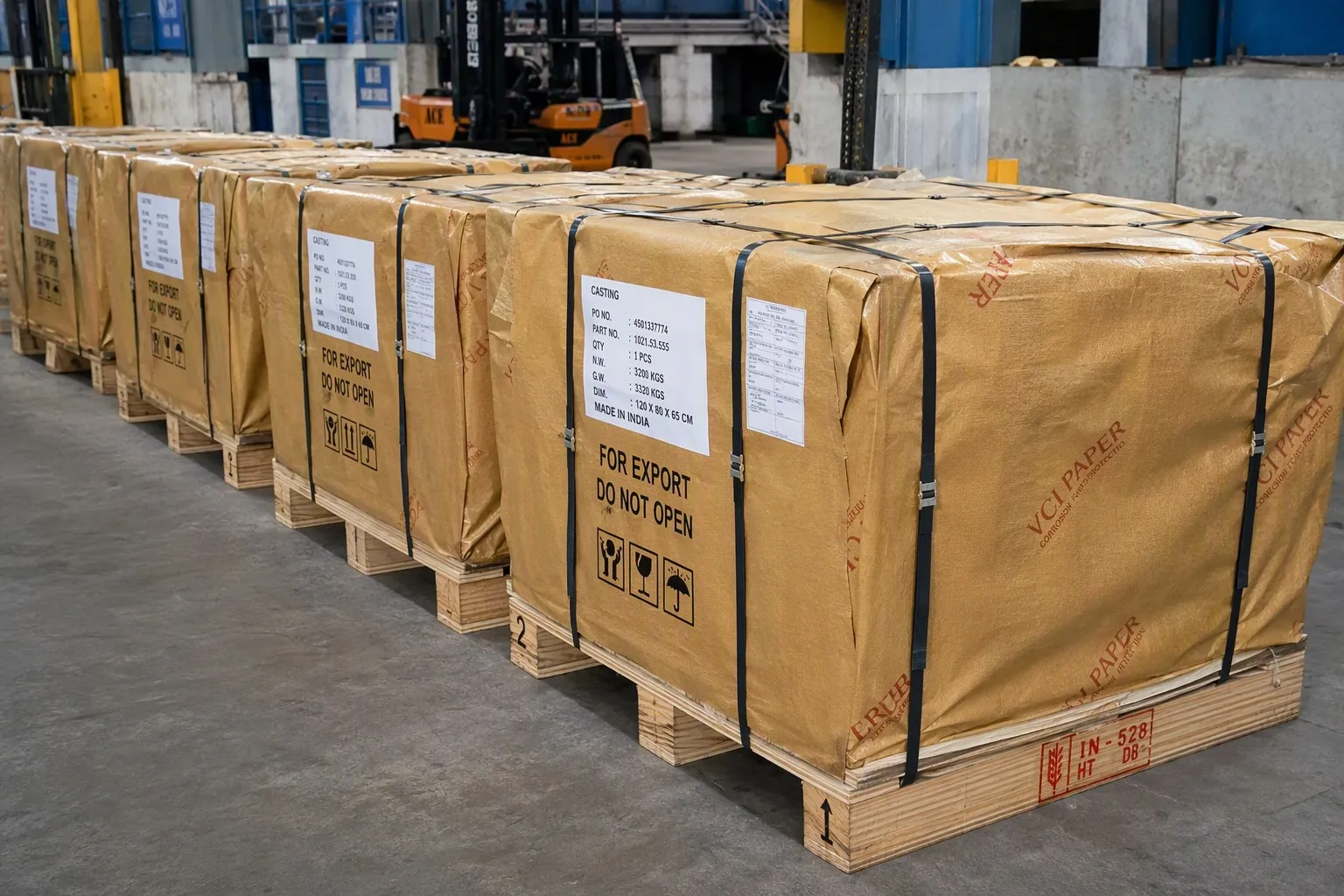
Castings are heavy, often have sharp edges, and can damage each other during transit. Specify packaging standards in the purchase order:
| Requirement | Specification |
|---|---|
| Palletization | Export-grade fumigated wooden pallets (ISPM 15 stamped) or steel stillage |
| Securing | Steel banding or bolted to pallet; individual parts must not contact each other |
| Corrosion protection | VCI (Volatile Corrosion Inhibitor) paper or film for machined surfaces; rust-preventive oil coating |
| Identification | Each casting tagged or marked; each pallet with packing list showing contents, heat numbers, PO number |
| Weather protection | Full shrink-wrap or waterproof covering for sea freight |
You receive perfect samples produced under the owner's direct supervision. You place a production order. The castings arrive with defects the samples did not have.
Prevention: Specify in the purchase order that production parts must be produced under the same process parameters and quality controls as the approved samples. Require process capability data (Cpk) for critical dimensions. Include a contractual provision that allows rejection if production quality deviates materially from sample quality.
The foundry modifies the pattern, gating, or riser design without informing you — perhaps to improve their casting yield or reduce their scrap rate. The change affects material soundness or dimensional accuracy.
Prevention: Contractually require written approval for any process change that could affect part quality. Include this in your supplier quality agreement. A professional foundry already operates this way — it is part of any ISO 9001 or IATF 16949 quality system.
Your sole Chinese supplier experiences a production problem, an environmental inspection shutdown, or a financial difficulty. You have no backup and your production line stops.
Prevention: Qualify a second supplier for critical components. Even if 80% of volume goes to your primary supplier, having a qualified secondary source eliminates single-point failure risk.
A 10% movement in USD/CNY exchange rate or a change in import tariff policy can wipe out your cost advantage overnight.
Prevention: For long-term contracts, negotiate price adjustment mechanisms tied to raw material indices and exchange rates. A formula like "Base price adjusted quarterly by ±50% of the change in the LME Steel Scrap Index and the USD/CNY mid-rate" shares risk fairly between buyer and seller.
You source entirely through email and Alibaba, never visiting the factory. The photos are real (taken at someone else's factory), the certifications are borrowed, and the "factory" is a trading office.
Prevention: Visit the factory yourself, or commission a third-party audit. There is no digital substitute for walking the foundry floor, watching a pour, inspecting the laboratory, and meeting the quality manager face to face. A plane ticket to China costs less than a single rejected container of castings.
The ultimate goal of sourcing is not a transaction — it is a relationship. A foundry that understands your products, your quality expectations, and your business priorities is dramatically more valuable than a supplier discovered through reverse auction.
| Value | Transactional Supplier | Strategic Partner |
|---|---|---|
| DFM feedback | None — casts to drawing | Proactively suggests design improvements for castability, cost, and quality |
| Inventory management | Builds to order | Maintains safety stock of raw materials; can hold finished goods inventory |
| Cost optimization | Price-only negotiation | Joint cost-reduction projects; shares savings |
| Problem resolution | Defensive; blames the casting process | Collaborative; investigates root cause and implements corrective action |
| Innovation | None | Proposes alternative materials, process improvements, new capabilities |
| Communication during crises | Silent | Proactive notification of delays or quality issues with recovery plan |
Share your roadmap: Tell your supplier what you plan to need in 6–12 months, not just what you need today. This allows them to plan capacity, procure raw materials, and invest in tooling.
Visit regularly: An annual factory visit, even if brief, signals commitment. The face-to-face relationship with the foundry's general manager and quality manager is your best insurance against problems.
Pay on time: Chinese foundries operate on thin margins. Consistent, timely payment earns preferential treatment — your order moves to the front of the production queue, and you get the first call when a quality concern arises.
Share performance feedback: Tell the foundry how their castings perform in your application. Positive feedback is motivating; constructive feedback drives improvement. A foundry that never hears how their parts perform in service cannot optimize for your success.
Grow together: As your volumes increase, discuss capacity investment with your supplier. A foundry that invests in new equipment to serve your growing needs is a partner, not a vendor.
| Priority | Action |
|---|---|
| Before you source | Define your technical requirements completely. A vague RFQ produces vague quotes and unpredictable quality. |
| Supplier selection | Evaluate on total capability — not price alone. Audit the factory. Verify certifications. Test communication quality. |
| First order | Start with a first article inspection. Do not skip this step. |
| Production | Implement third-party inspection for at least the first 2–3 orders until the supplier demonstrates consistent quality. |
| Ongoing | Invest in the relationship. Visit. Communicate. Pay on time. Share feedback. |
The Chinese foundry industry has world-class capability. The most successful international buyers are not those who find the cheapest price — they are those who invest the effort to identify, qualify, and partner with the right foundry. Companies like Dandong City Pengxin Machinery Co., Ltd. — with over 65 years of casting heritage, integrated machining and quality assurance, and a systematic approach to export manufacturing — represent the kind of partner that transforms sourcing from a cost-reduction exercise into a competitive advantage.
Looking for a reliable Chinese casting partner? Dandong City Pengxin Machinery Co., Ltd. provides integrated casting and CNC machining services from our 80,000 m² facility in Liaoning, China. With ISO 9001 certification, in-house spectrometer, mechanical testing, CMM inspection, and NDT capability, we deliver documented quality to customers across North America, Europe, the Middle East, and Asia. Contact us to discuss your next casting project.
 Hot News
2026-10-16
2026-10-09
2026-10-02
2026-09-25
2026-09-18
2026-09-11
Dandong City Pengxin Machinery was founded in 1958, is a set of casting, machining and assembly as one of the private enterprises.
Wangjiapu Group, Xinan Village, Qianyang Town, Donggang City, Dandong City, Liaoning Province, China
Copyright © Dandong City Pengxin Machinery Co.,Ltd. All Rights Reserved Privacy Policy Blog
 EN
EN