
 EN
EN
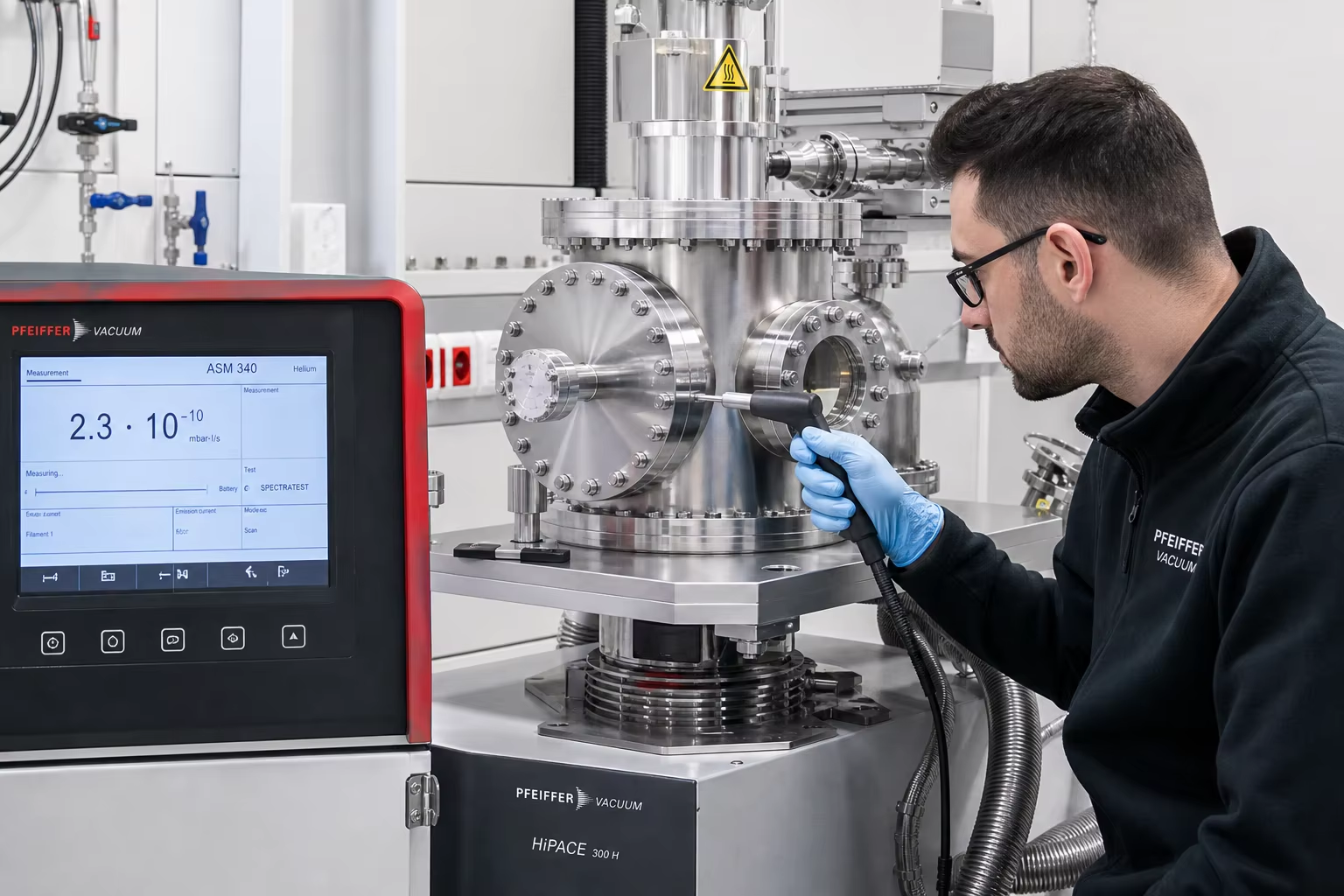
Meta Description: A complete technical guide to high-vacuum and semiconductor equipment chamber castings. Explore vacuum induction melted (VIM) low-carbon stainless steels (ASTM A351 CF3M / 316L), knife-edge CF-flange CNC machining, helium mass spectrometer leak detection (<10^-9 mbar*l/s), and ultra-clean electro-polishing (Ra <=0.2 µm).
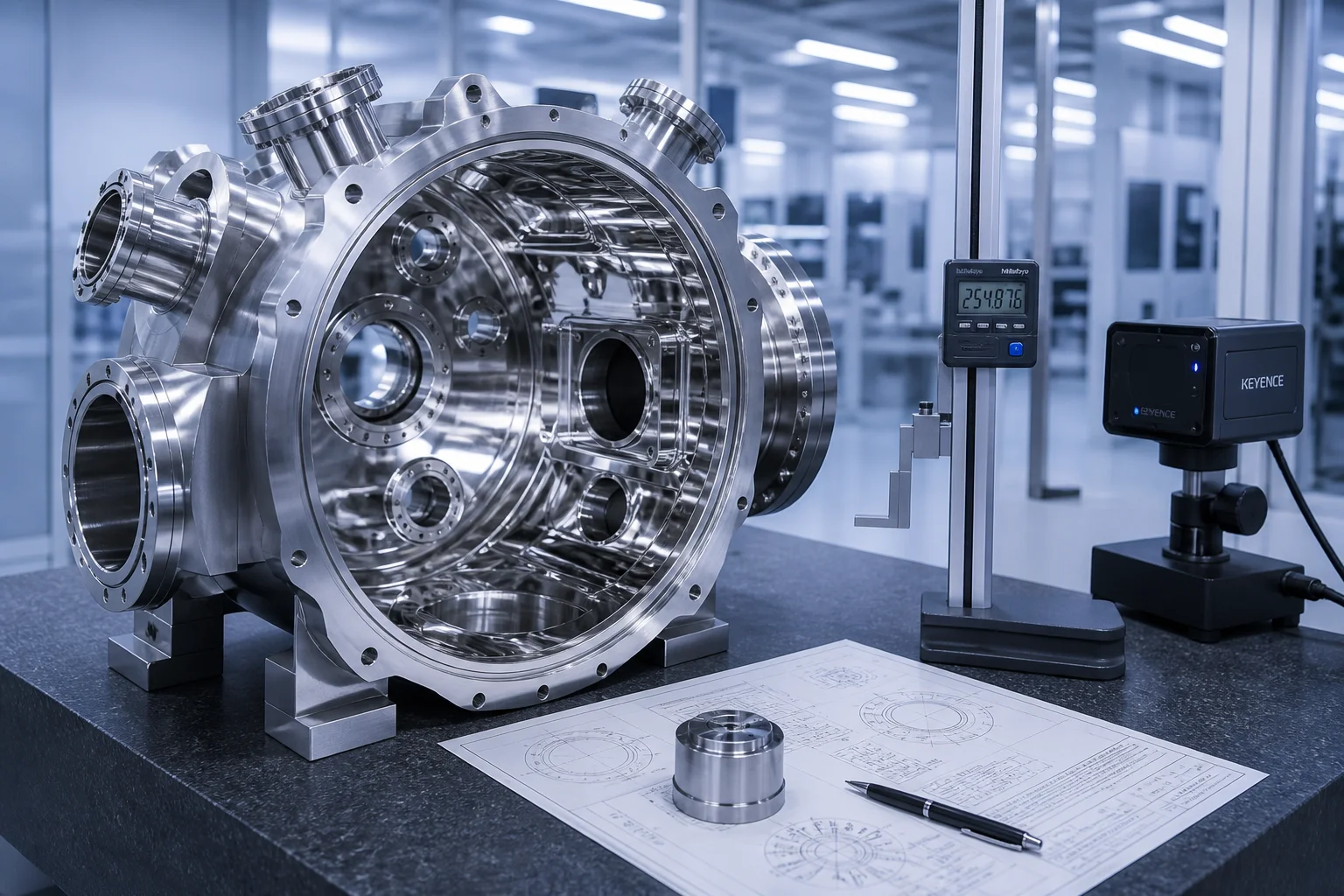
In advanced semiconductor wafer manufacturing (plasma etching, chemical vapor deposition CVD, atomic layer deposition ALD, ion implantation), vacuum metallurgy, and high-energy physics particle accelerators, vacuum chambers and process manifolds operate under High-Vacuum (HV: ) and Ultra-High Vacuum (UHV: ) regimes.
Under these extreme atomic-scale operating pressures, standard commercial metal castings are completely unacceptable. Standard castings suffer from:
- Subsurface Micro-Porosity Gas Traps: Microscopic shrinkage pores and pinholes act as continuous virtual leaks, trapping atmospheric gases and desorbing moisture for weeks, destroying chamber base vacuum.
- Surface Outgassing & Hydrocarbon Contamination: High surface roughness () provides massive true surface area for water molecule adsorption.
- Corrosive Process Chemistry Attack: Fluorine, chlorine, and bromine-based plasma etch gases () rapidly attack non-metallic sulfide/oxide inclusions, releasing contaminating metallic particles onto silicon wafers.
Achieving ultra-high vacuum chamber integrity requires specialized high-purity foundry engineering: melting Ultra-Low Carbon Austenitic Stainless Steels (ASTM A351 CF3M / Cast 316L) via Vacuum Induction Melting (VIM), achieving zero micro-porosity through disciplined ceramic shell investment casting, executing 5-axis CNC machining of ConFlat (CF) Knife-Edge Flanges and High-Vacuum O-Ring Grooves (), verifying absolute hermetic seal tightness via Helium Mass Spectrometer Leak Detection (), and delivering cleanroom-certified Mirror Electro-Polished Finishes ().
This engineering guide provides an exhaustive analysis of vacuum metallurgy, zero-porosity casting design, precision UHV flange CNC machining, helium leak detection protocols, and cleanroom electro-polishing standards.
1. Ultra-High Vacuum (UHV) Physics & Chamber Degradation Mechanisms
                     ┌──────────────────────────────────────────────┐
                     │ Ultra-High Vacuum Environment (<10^-8 mbar)  │
                     └──────────────────────┬───────────────────────┘
                                            │
        ┌───────────────────────────────────┼───────────────────────────────────┐
        ▼                                   ▼                                   ▼
┌───────────────────────────────┐ ┌───────────────────────────────┐ ┌───────────────────────────────┐
│ Virtual Leakage (Outgassing)  │ │ Corrosive Plasma Attack       │ │ Micro-Channel Through-Leakage │
│ (Trapped air/moisture in      │ │ (Halogen etch chemistry       │ │ (Through-wall interconnected  │
│  subsurface casting pores)    │ │  attacking inclusion sites)   │ │  shrinkage leaking He gas)    │
└───────────────────────────────┘ └───────────────────────────────┘ └───────────────────────────────┘| Semiconductor Vacuum Application | Pressure Regime & Chemistry | Critical Quality Requirement | Casting Solution |
|---|---|---|---|
| CVD / ALD Deposition Chambers | / Silane, Metal-Organics | Zero virtual leaks; outgassing rate | VIM Cast Low-Carbon Stainless (ASTM A351 CF3M / 1.4404) |
| Plasma Dry Etch Process Bowls | / plasma | Zero particle contamination, chemical passivation | High-Purity CF3M + Ultra-Smooth Electro-Polishing () |
| High-Vacuum Pumping Manifolds | Turbomolecular Pump Interface | Knife-edge CF flange seal retention, helium tight | Investment Cast CF3 / CF8M with 100% Helium Leak Certification |
| Vacuum Annealing Furnace Shells | / | High thermal stability, low thermal desorption | Cast Austenitic Heat-Resistant Alloy (316L / HK40) |
2. Vacuum Metallurgy & Ultra-Clean Melting Protocols (VIM / AOD)
To eliminate internal gas pockets and non-metallic inclusions that generate virtual leaks, vacuum chamber castings undergo Vacuum Induction Melting (VIM) or Argon Oxygen Decarburization (AOD):
| Chemical Element | ASTM A351 CF3M Standard | Pengxin UHV Semiconductor Grade | Critical Vacuum Engineering Function |
|---|---|---|---|
| Carbon (C) | (Ultra-Low Carbon) | Prevents chromium carbide precipitation at grain boundaries; prevents intergranular etch attack | |
| Chromium (Cr) | Forms dense, self-healing passive layer resistant to halogen plasma chemistries | ||
| Nickel (Ni) | (High Nickel) | Guarantees stable fully austenitic FCC matrix; suppresses magnetic permeability () | |
| Molybdenum (Mo) | High resistance to chloride and halide pitting corrosion in plasma cleaning cycles | ||
| Sulfur & Phosphorus | (Ultra-Pure) | Critical: Eliminates non-metallic stringers that create microscopic vacuum leak paths | |
| Dissolved Gases | Not Specified | Eliminates bulk gas desorption during ultra-high vacuum pump-down cycles |
3. Zero-Porosity Investment & Ceramic Shell Casting
Semiconductor vacuum chambers feature complex internal process gas distribution channels, water cooling jackets, and multiple optical viewports:
┌─────────────────────────────────────────────────────────────┐
│ 1. Precision Multi-Piece Aluminum Tooling & Wax Injection   │
│    • High-stability wax patterns with zero sink marks       │
├─────────────────────────────────────────────────────────────┤
│ 2. Automated Multi-Layer Fused Silica Ceramic Shell Molding │
│    • Fine zircon flour primary face coat (Ra 1.6 µm finish) │
│    • Zero sand inclusion or ceramic spalling in mold cavity │
├─────────────────────────────────────────────────────────────┤
│ 3. Vacuum Induction Pouring with Filtered Bottom Ingate     │
│    • Melt poured directly under protective argon atmosphere │
│    • Directional progressive solidification from base up    │
├─────────────────────────────────────────────────────────────┤
│ 4. 100% Hot Isostatic Pressing (HIP Processing - Optional)  │
│    • $1,150 °C$ at $1,000\text{ bar}$ Argon pressure; collapses all  │
│      internal micro-voids, achieving 100% theoretical density│
└─────────────────────────────────────────────────────────────┘
4. 5-Axis CNC Precision UHV Flange Machining
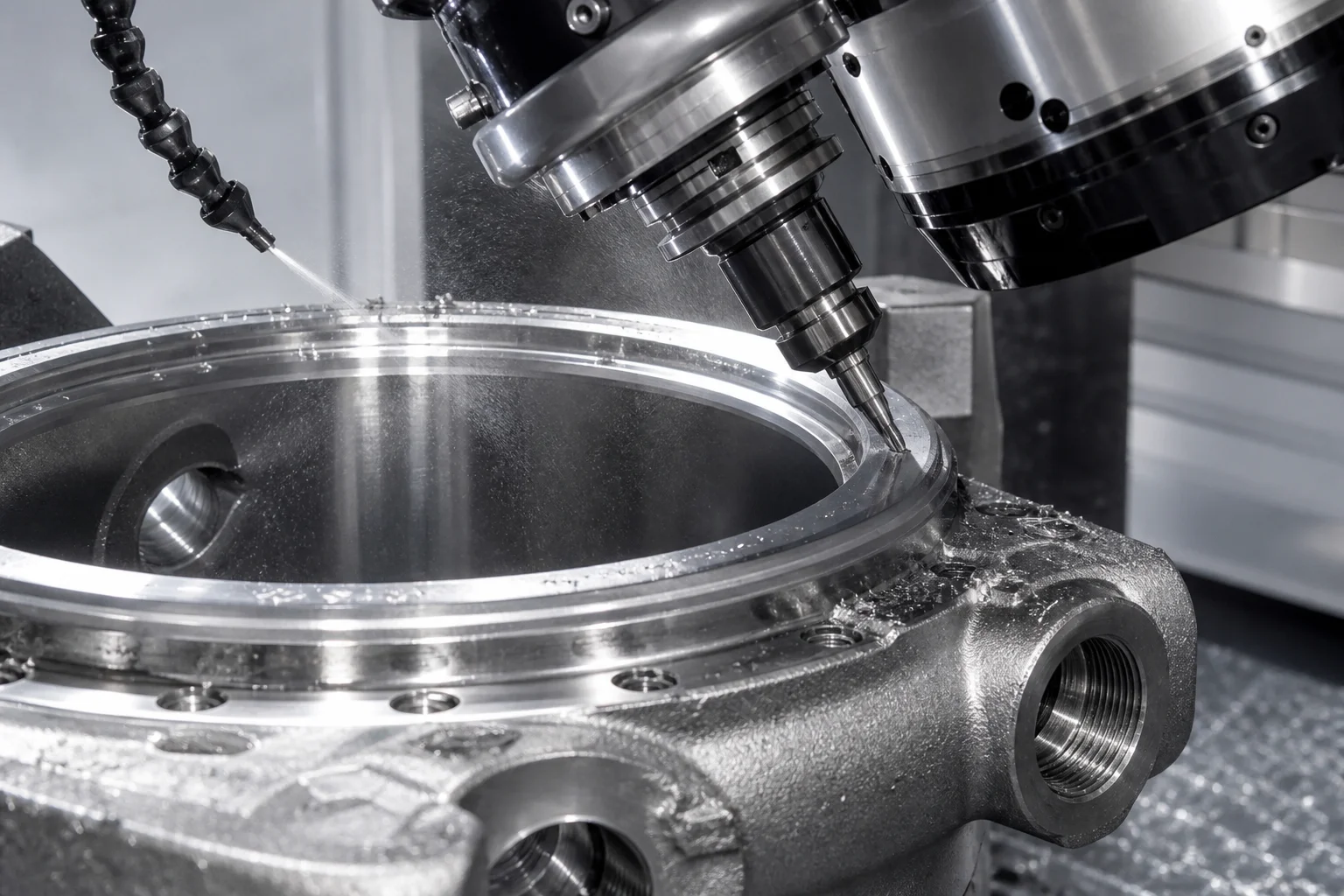
Ultra-high vacuum seals rely on precision metallic copper gasket deformation or elastomeric Viton/FFKM O-rings:
        ┌───────────────────────────────────────────────────────┐
        │ 1. High-Vacuum Solution Annealing (1,100 °C)          │
        │ • Rapid water quench; eliminates all residual stress  │
        └──────────────────────────┬────────────────────────────┘
                                   │
                                   ▼
        ┌───────────────────────────────────────────────────────┐
        │ 2. 5-Axis CNC High-Speed Milling Center Operations    │
        │ • Precision machining of chamber internal cavities    │
        │ • Coaxiality of opposing viewport axes $\le 0.015\text{ mm}$│
        └──────────────────────────┬────────────────────────────┘
                                   │
                                   ▼
        ┌───────────────────────────────────────────────────────┐
        │ 3. ConFlat (CF) Knife-Edge & O-Ring Groove Micro-Turn │
        │ • CF flange knife-edge angle ($70^\circ \pm 0.5^\circ$) with  │
        │   sharp peak radius ($R \le 0.10\text{ mm}$)          │
        │ • O-ring dovetail groove surface roughness $Ra \le 0.4\text{ µm}$│
        └───────────────────────────────────────────────────────┘
5. Cleanroom Chemical Pickling, Passivation & Electro-Polishing (EP)
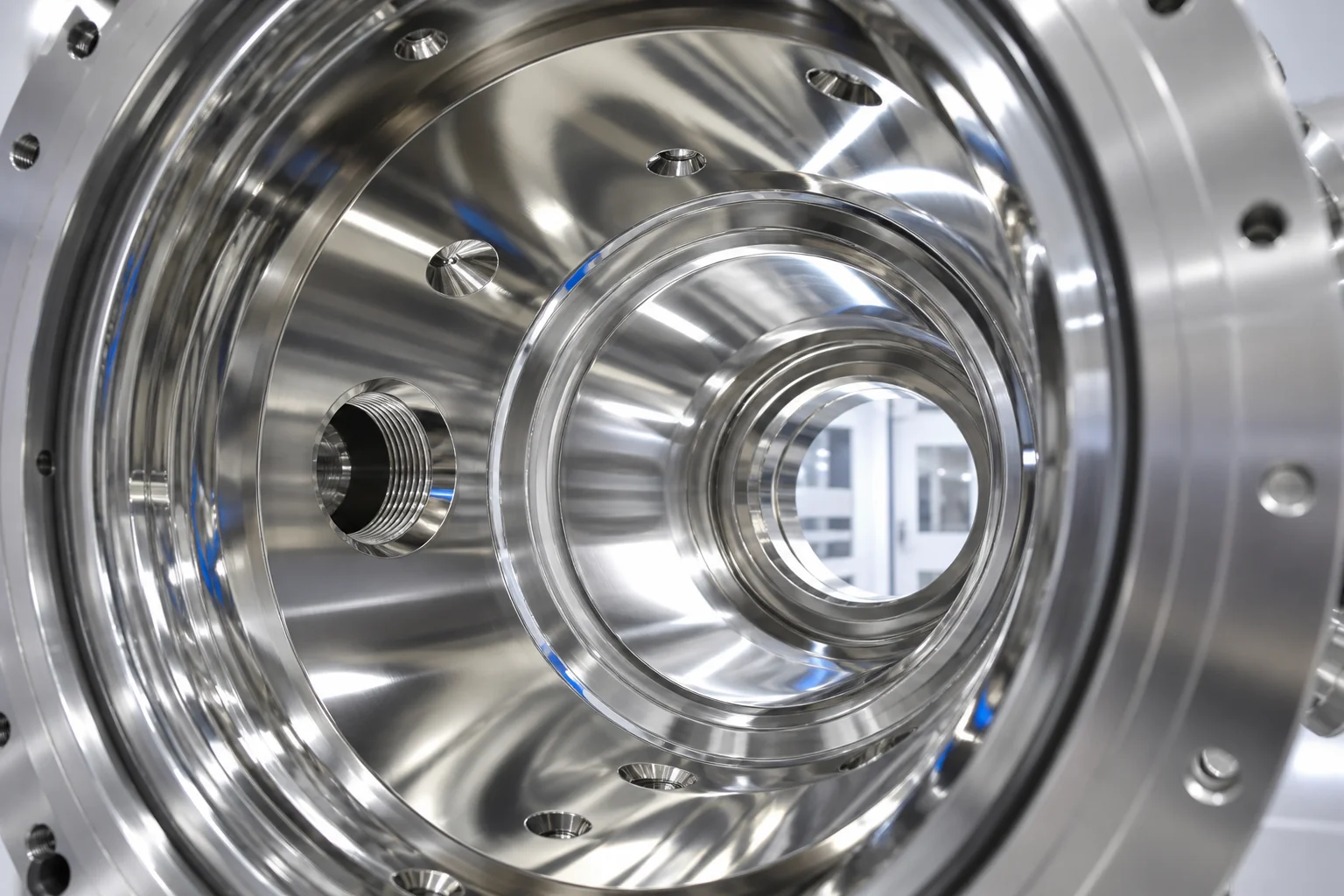
To achieve ultra-low outgassing rates, cast chamber surfaces undergo precision multi-stage electro-chemical finishing:
Machined Chamber Surface (Ra 0.8–1.6 µm)
                   │
                   ▼
┌────────────────────────────────────────────────────────┐
│ 1. Ultrasonic Degreasing & Solvent Cleaning            │
│    (Removes all CNC cutting oils and particulate matter)
└──────────────────┬─────────────────────────────────────┘
                   │
                   ▼
┌────────────────────────────────────────────────────────┐
│ 2. Nitric-Hydrofluoric Acid Pickling & Passivation     │
│    (ASTM A380 / A967: Removes free iron and oxide scale)
└──────────────────┬─────────────────────────────────────┘
                   │
                   ▼
┌────────────────────────────────────────────────────────┐
│ 3. Precision Anodic Electro-Polishing (EP) (ASTM B912) │
│    • Controlled electrochemical dissolution of peaks   │
│    • Delivers true mirror finish ($Ra \le 0.20\text{ µm}$)  │
│    • Maximizes $Cr/Fe$ surface atomic ratio ($\ge 2.0$)│
└──────────────────┬─────────────────────────────────────┘
                   │
                   ▼
┌────────────────────────────────────────────────────────┐
│ 4. Class 1,000 Cleanroom Ultra-Pure Water (UPW) Rinse  │
│    • 18 MΩ·cm deionized water rinse + clean dry pack   │
└────────────────────────────────────────────────────────┘
6. Helium Mass Spectrometer Vacuum Leak Testing Standards
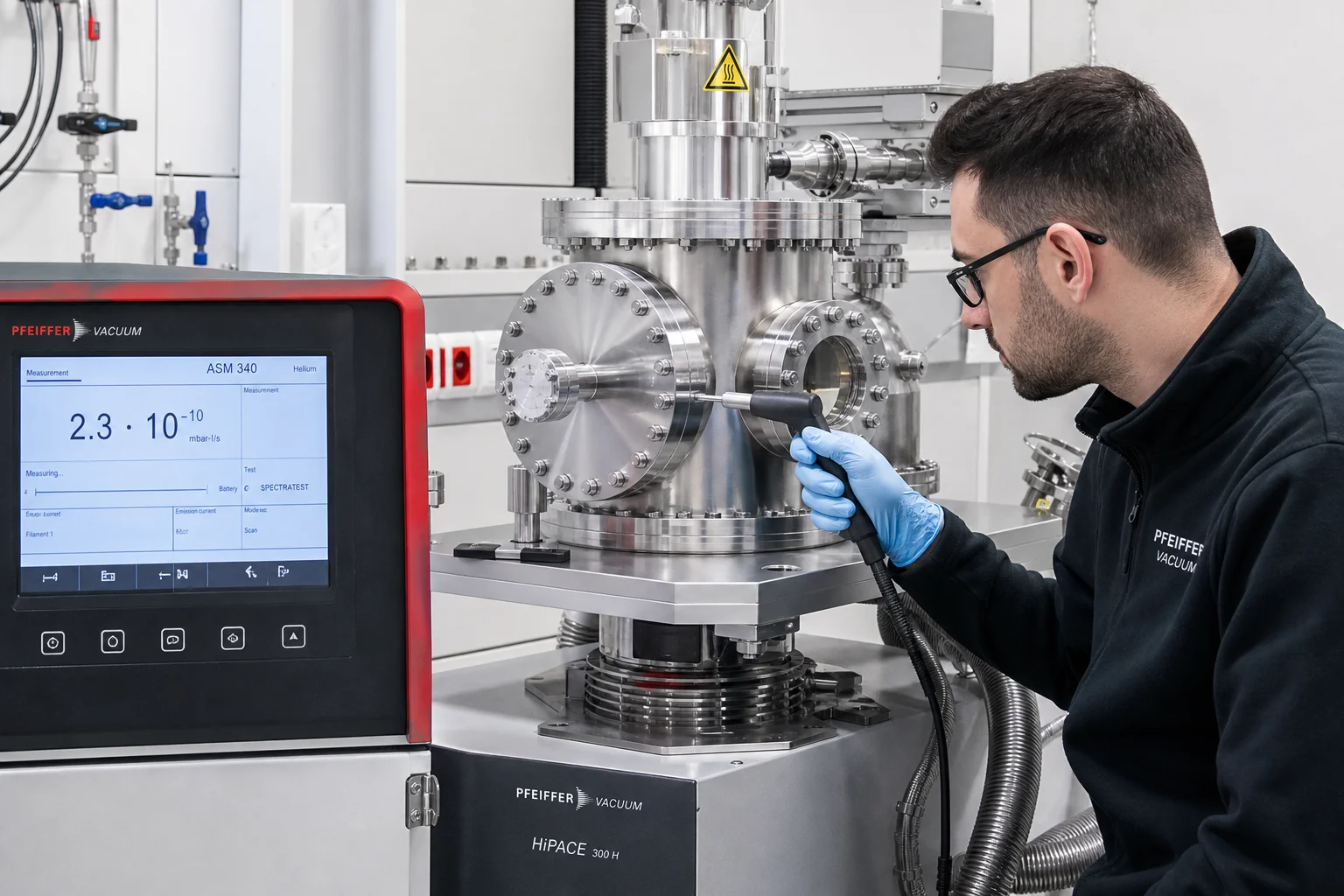
Every vacuum casting undergoes 100% helium leak verification per ASTM E499 / ASME Sec V Art 10:
| Test Method | Setup & Standard | Sensitivity & Acceptance Threshold |
|---|---|---|
| Helium Vacuum Sniffing Test | Pressurized with 100% He (); sniffing probe scan | Leak rate ; zero localized leaks |
| Helium Hard-Vacuum Hood Test | Chamber evacuated to ; helium shroud envelope | Global Leak Rate |
| Outgassing Rate Verification | Thermal Desorption Spectroscopy (TDS) | Outgassing rate after bake-out |
| Radiographic Examination (RT) | ASTM E446 Level 1 (Zero Defects) | 100% radiographic scan on all chamber walls and flange intersections |
| Surface Roughness Profilometry | Optical 3D Non-Contact Profilometer | Electro-polished internal surfaces |
7. Semiconductor Vacuum Casting at Dandong City Pengxin Machinery Co., Ltd.
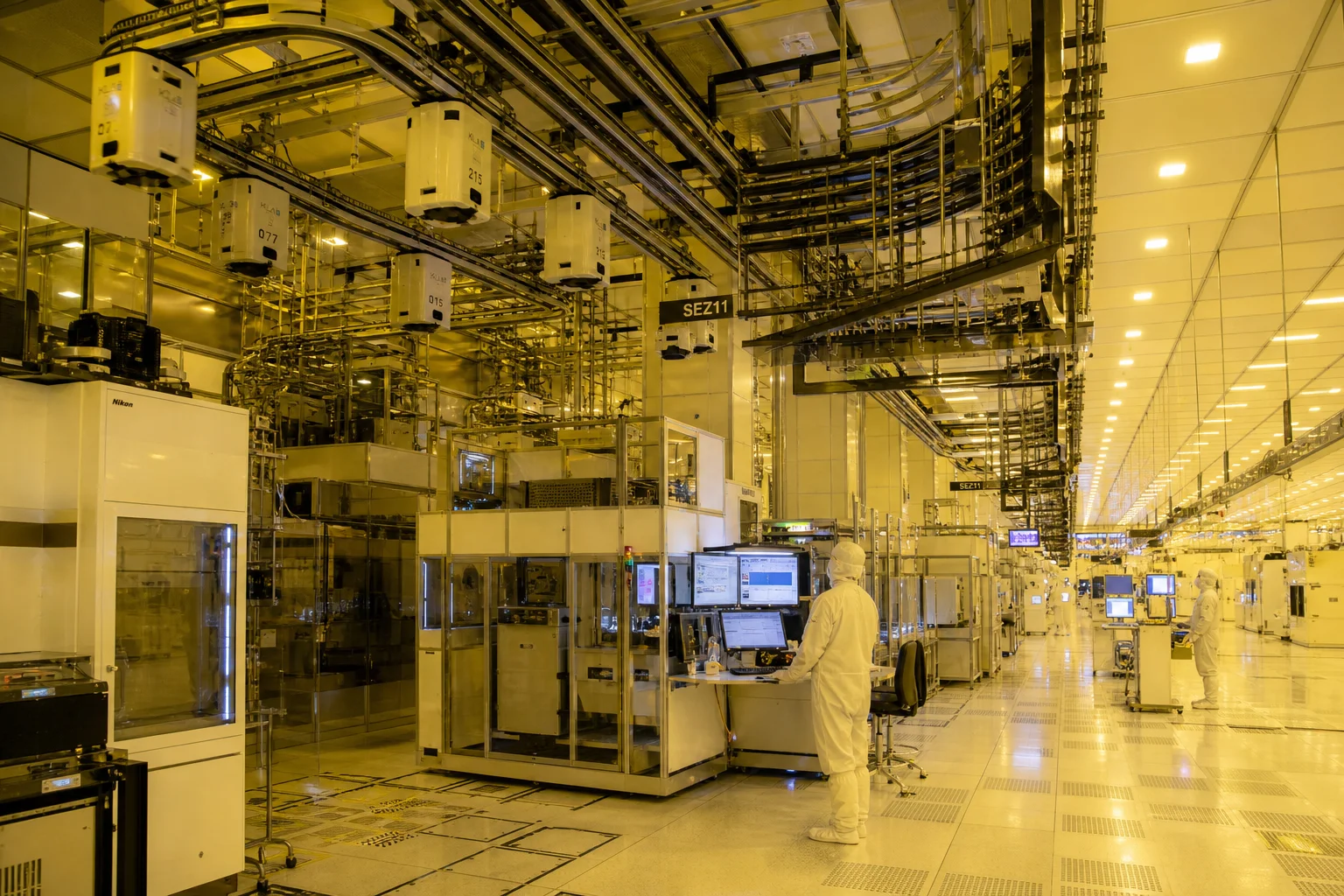
Manufacturing high-vacuum and semiconductor-grade chamber castings demands ultra-clean melting, precision investment casting shops, 5-axis CNC machining centers, and in-house helium leak testing.
Dandong City Pengxin Machinery Co., Ltd. delivers fully certified, turnkey finished vacuum and semiconductor equipment chamber castings:
- Ultra-Pure Stainless Metallurgy: Certified production of vacuum-melted ASTM A351 CF3M, CF3, CF8M (Cast 316L/304L), with ultra-low carbon () and sulfur ().
- Precision Investment & Shell Casting: High-fidelity ceramic shell casting delivering near-net shapes with smooth cast surfaces and zero virtual micro-porosity.
- High-Precision 5-Axis CNC Flange Machining: Dedicated climate-controlled CNC machining centers delivering precision CF knife-edges and O-ring grooves within .
- Certified Helium Mass Spectrometer Testing: In-house Pfeiffer and Inficon helium vacuum leak testing systems certifying leak rates down to .
- Full Quality Documentation: ISO 9001 certified, providing full EN 10204 3.1 material test certificates, 100% Helium Leak Test charts, surface roughness profilometer scans, and cleanroom packaging.
Conclusion
High-vacuum and semiconductor equipment chamber castings operate at the atom-sensitive frontier of high-technology manufacturing. Eliminating virtual outgassing leaks, through-wall micro-channels, and particle contamination demands ultra-clean low-carbon stainless steel metallurgy (CF3M / 316L VIM), zero-porosity investment casting, precision CNC CF-flange knife-edge machining, electro-polishing (), and verified helium mass spectrometer leak tightness ().
Partnering with an experienced, integrated vacuum casting and precision machining powerhouse ensures that your semiconductor and vacuum process chambers pump down faster, maintain deeper vacuum, and deliver zero-defect wafer processing yields.
Contact Dandong City Pengxin Machinery Co., Ltd. to submit your vacuum chamber drawings or request helium leak certification data.
Dandong City Pengxin Machinery Co., Ltd. — Heavy Castings and Precision Machining, Since 1958.
Table of Contents
- 1. Ultra-High Vacuum (UHV) Physics & Chamber Degradation Mechanisms
- 2. Vacuum Metallurgy & Ultra-Clean Melting Protocols (VIM / AOD)
- 3. Zero-Porosity Investment & Ceramic Shell Casting
- 4. 5-Axis CNC Precision UHV Flange Machining
- 5. Cleanroom Chemical Pickling, Passivation & Electro-Polishing (EP)
- 6. Helium Mass Spectrometer Vacuum Leak Testing Standards
- 7. Semiconductor Vacuum Casting at Dandong City Pengxin Machinery Co., Ltd.
- Conclusion