 EN
EN
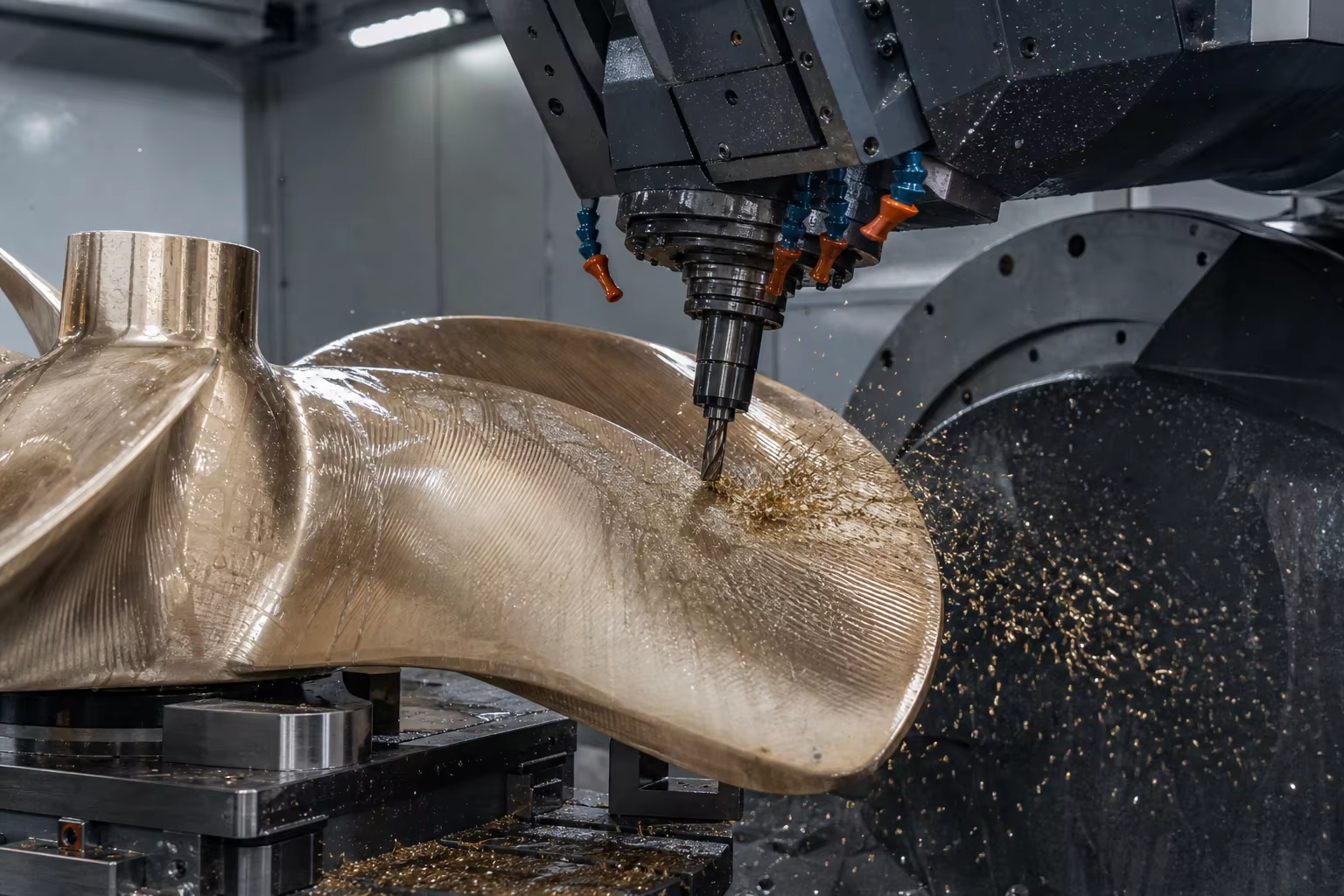
Meta Description: A comprehensive technical guide to marine propulsion and deck machinery castings. Explore Nickel-Aluminum Bronze (ASTM B148 C95800 / EN 1982 CC333G), Arctic low-temp cast steels (ASTM A352 LCC / LC3 at -46°C), 5-axis CNC propeller blade milling, and IACS classification compliance (ABS, DNV, Lloyd's Register, CCS).
Marine vessels and offshore platforms operate in one of the planet's most aggressive multi-factor operating environments. Submerged propulsion components (propeller blades, hubs, rudder horns, stern tube brackets) and deck machinery (anchor windlass drums, mooring winches, towing fairleads) endure continuous seawater electrochemical corrosion, micro-jet cavitation shock waves, severe biological fouling, cyclic wave fatigue, and Arctic sub-zero impact shocks down to .
Under these harsh marine conditions, component failure at sea poses severe environmental and life-safety risks. Consequently, every marine structural casting must comply with the rigorous statutory certification rules of the International Association of Classification Societies (IACS) — including ABS, DNV, Lloyd's Register, Bureau Veritas, and CCS.
Achieving IACS compliance demands specialized foundry metallurgy: melting Nickel-Aluminum Bronze (NAB / C95800) with de-aluminization heat treatment, casting thick-walled Low-Temperature Steels (ASTM A352 LCC/LC3) with verified Charpy impact toughness at sub-zero temperatures, and executing 5-axis CNC hydrodynamic profile milling.
This technical guide details marine alloy selection, melting protocols, cavitation prevention, 5-axis CNC machining, non-destructive testing (NDT), and marine classification society certification workflows.
1. Operating Environment & Marine Degradation Mechanisms
Marine castings must withstand multiple simultaneous chemical and mechanical degradation modes:
                     ┌──────────────────────────────────────────────┐
                     │ Aggressive Deep Seawater & Ocean Dynamics    │
                     └──────────────────────┬───────────────────────┘
                                            │
        ┌───────────────────────────────────┼───────────────────────────────────┐
        ▼                                   ▼                                   ▼
┌───────────────────────────────┐ ┌───────────────────────────────┐ ┌───────────────────────────────┐
│ Cavitation Erosion            │ │ De-Aluminization / Galvanic   │ │ Arctic Low-Temperature Impact │
│ (Imploding vapor micro-jets   │ │ (Selective phase leaching in  │ │ (Brittle fracture risk in     │
│  on high-speed blade tips)    │ │  saline marine electrolytes)  │ │  polar waters down to -46 °C) │
└───────────────────────────────┘ └───────────────────────────────┘ └───────────────────────────────┘| Operating Component | Dominant In-Service Load | Failure Mode to Prevent | Material Solution |
|---|---|---|---|
| Controllable Pitch Propeller (CPP) Blades | Continuous high-velocity seawater flow + cyclical hydrodynamic thrust | Cavitation erosion, tip bending fatigue, biofouling | Nickel-Aluminum Bronze (ASTM B148 C95800 / Cu3) |
| Rudder Horn & Stern Post Frame | Massive wave impact slamming + structural bending moments | Brittle weld cracking, lamellar tearing | Cast Carbon-Manganese Steel (ASTM A27 / IACS Grade 2) |
| Arctic Mooring Fairleads & Winch Drums | Extreme tensile cable shock loads at sub-zero temperatures | Brittle cleavage fracture at sub-zero temperatures | Low-Temperature Cast Steel (ASTM A352 Grade LCC / LC3) |
| Marine Scrubber & Seawater Intake Valves | Concentrated sulfurous acid condensate + high-velocity seawater | Severe pitting and crevice corrosion ( attack) | Super Duplex Stainless Steel (2507 / ASTM A890 5A) |
2. Metallurgical Alloy Hierarchy for Marine Applications
Selecting casting alloys for marine duty balances cavitation resistance, galvanic compatibility, low-temperature toughness, and machinability:
| Alloy Family | Cast Grade / Standard | Nominal Chemical Composition (wt%) | Mechanical Properties | Key Marine Attribute |
|---|---|---|---|---|
| Nickel-Aluminum Bronze (NAB) | ASTM B148 C95800 / EN 1982 CC333G (Cu3) | Superior cavitation resistance; natural antifouling (copper ion release); high corrosion fatigue limit | ||
| Low-Temp Carbon Steel | ASTM A352 Grade LCC / EN 10293 G20Mn5 | Verified Charpy impact toughness at for polar deck equipment | ||
| 3.5% Nickel Low-Temp Steel | ASTM A352 Grade LC3 / 1.5638 | Exceptional cryogenic toughness at for LNG marine piping | ||
| Cast Structural Marine Steel | IACS Grade 2 / ASTM A216 WCB | Standard ship hull castings (stern tubes, rudder frames, hawse pipes) | ||
| Super Duplex Stainless | ASTM A890 5A (CE3MN / 2507) | High PREN (); extreme resistance to hot seawater and sour exhaust gas scrubbers |
Metallurgical Focus: Preventing De-Aluminization in NAB (C95800)
In as-cast NAB, slow cooling in sand molds precipitates an aluminum-rich continuous (gamma-two) phase. In seawater, is highly anodic to the surrounding copper matrix, causing deep, selective electrochemical de-aluminization corrosion.
- Corrosion Mitigation Heat Treatment: NAB castings undergo a dedicated 6-hour annealing cycle at followed by air cooling. This fully breaks down the continuous network into benign, discontinuous (kappa) intermetallic precipitates (), restoring full seawater corrosion fatigue resistance.
3. Marine Sand Casting Technology & Clean Pouring
Propellers and heavy deck equipment range from 200 kg blade segments up to 20-ton one-piece propeller castings.
┌─────────────────────────────────────────────────────────────┐
│ 1. 3D Precision Pattern & Pitch Hydrofoil Tooling           │
│    • High-accuracy CNC machined patterns for complex skew   │
├─────────────────────────────────────────────────────────────┤
│ 2. Furan Resin No-Bake Sand with Zircon Wash                │
│    • High-refractory zircon coating prevents metal burn-in  │
├─────────────────────────────────────────────────────────────┤
│ 3. Bottom-Pour Inverted Gating with Ceramic Swirl Filters   │
│    • Prevents turbulent oxide dross folding in NAB melts    │
├─────────────────────────────────────────────────────────────┤
│ 4. Heavy Feeder Risers with Exothermic Sleeves              │
│    • Directional feeding into thick blade roots & hubs      │
└─────────────────────────────────────────────────────────────┘
4. Multi-Axis CNC Hydrodynamic Machining
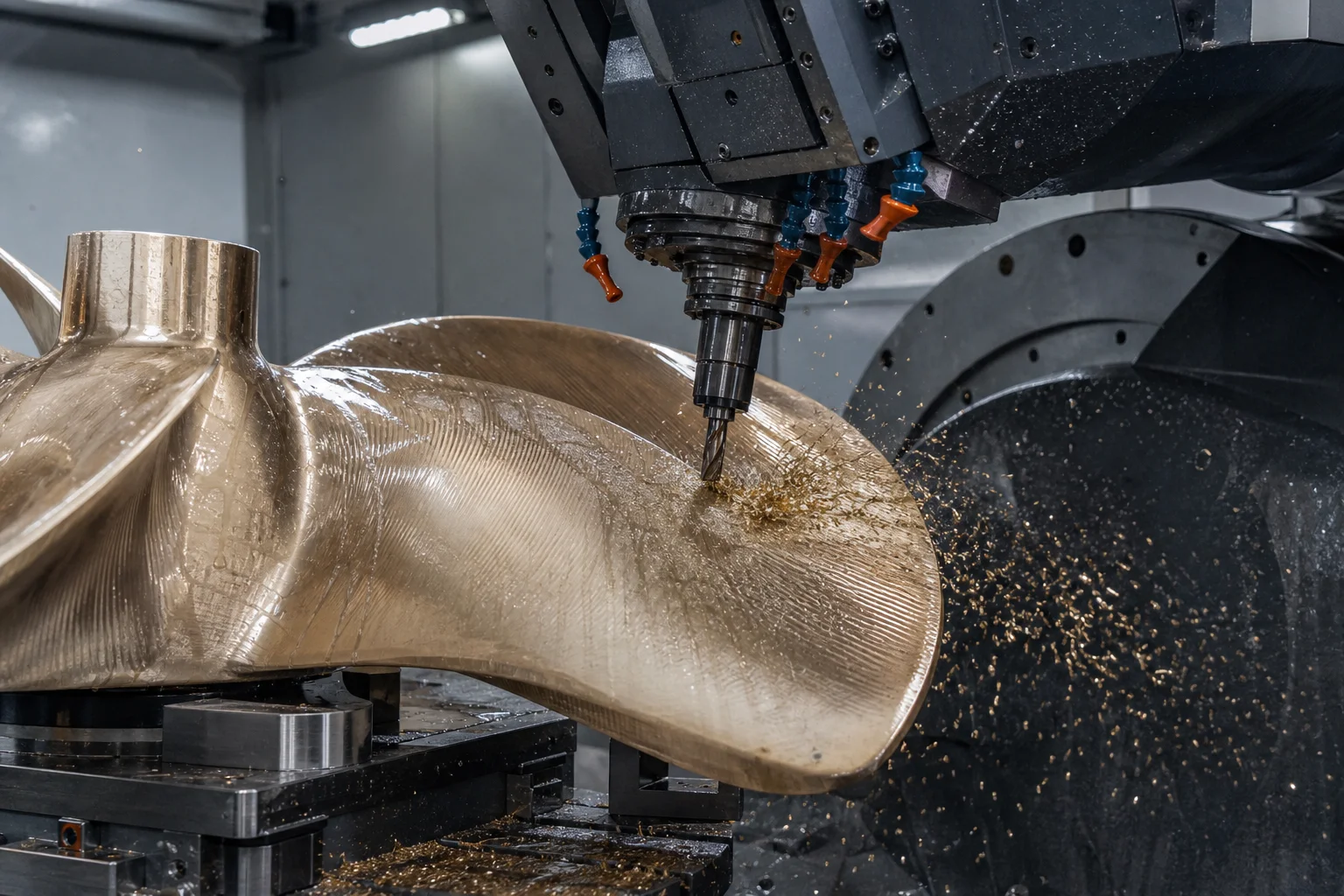
Propeller hydrodynamics dictate ship fuel efficiency, acoustic cavitation signature, and vibration levels:
Precision Machining Operations:
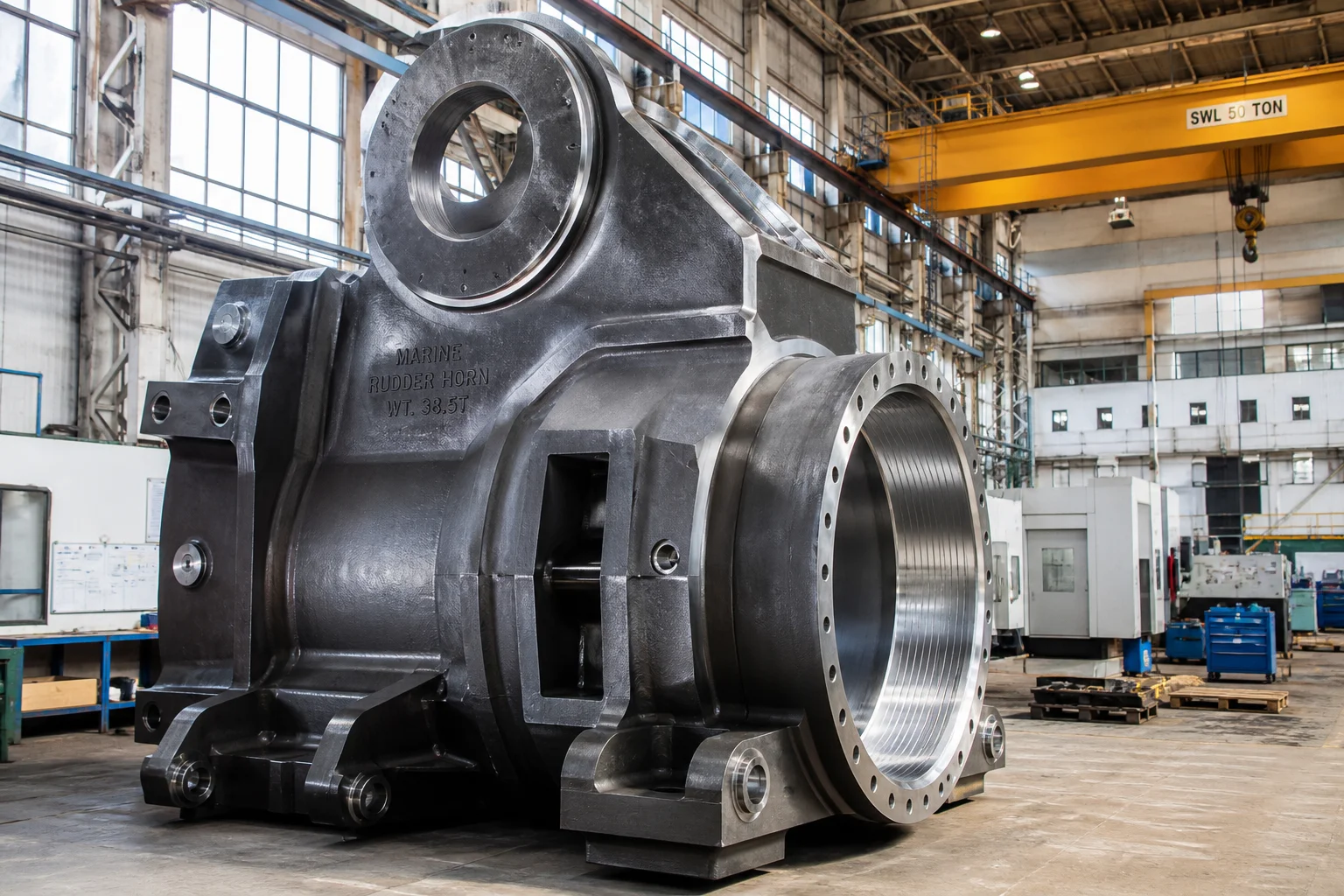
- 5-Axis CNC Blade Contouring: High-speed multi-axis contour milling of complex 3D pressure and suction hydrofoil blade faces. Thickness tolerances are held within ISO 484/1 Class S / Class I ( across 3-meter spans).
- Shaft Bore Taper & Keyway Machining: Marine propeller hub internal tapers (typically or standard tapers) are precision turned on CNC vertical boring mills. Contact blue-dye checking must achieve uniform contact area against the propeller shaft gauge.
- Deck Winch Drum Machining: Precision wire rope helical groove CNC turning on large lathes to prevent wire rope cross-over and crushing under heavy mooring tension.
5. Marine Classification Society (IACS) Certification Workflow
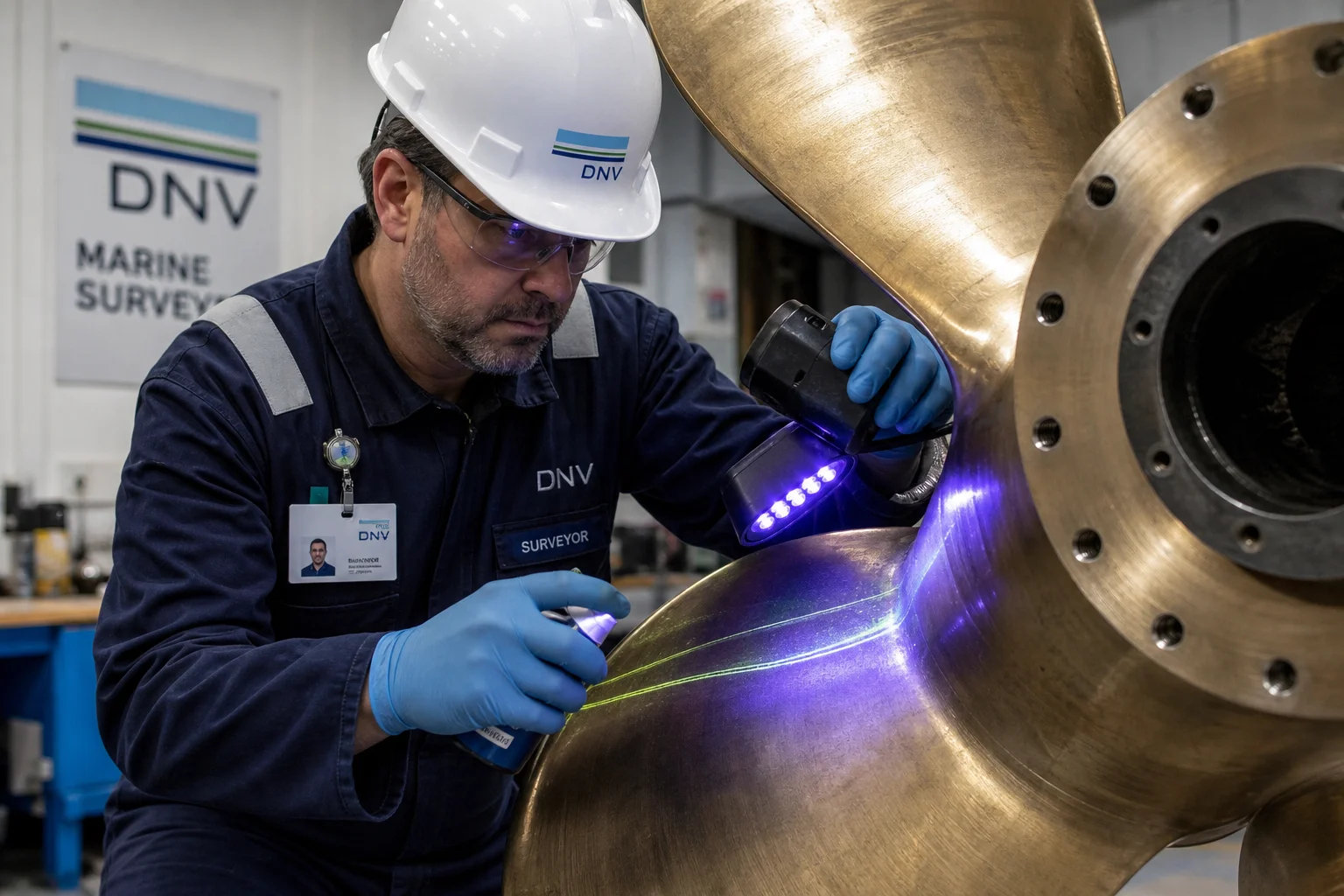
All castings intended for commercial shipping or offshore applications must undergo rigorous Third-Party Witness Testing by an authorized classification society surveyor:
        ┌───────────────────────────────────────────────────────┐
        │ Foundry Works Approval (DNV / ABS / Lloyd's / CCS)   │
        └──────────────────────────┬────────────────────────────┘
                                   │
        ┌──────────────────────────┴───────────────────────────┐
        ▼                                                      ▼
┌───────────────────────────────┐              ┌───────────────────────────────┐
│ In-Process Surveyor Witness   │              │ Final Testing & Verification  │
│ • Molten metal chemical melt  │              │ • 100% Surface PT/MT on roots │
│ • Heat treatment furnace chart│              │ • Volumetric UT / RT on hubs  │
│ • Attached coupon tensile/KV  │              │ • Blade pitch & static balance│
└───────────────────────────────┘              └───────────────────────────────┘
                                   │
                                   ▼
        ┌───────────────────────────────────────────────────────┐
        │ Issuance of EN 10204 3.2 Marine Classification Cert   │
        └───────────────────────────────────────────────────────┘
6. Comprehensive Quality Inspection Standards
| Quality Inspection | Standard / Method | Acceptance Criteria |
|---|---|---|
| Chemical Analysis | Optical Emission Spectrometry (OES) | Strict conformance to ASTM B148 / A352; tramp element limits () |
| Tensile & Impact | ISO 6892-1 / ASTM E23 | Verified ; Charpy impact at for Grade LCC |
| Liquid Dye Penetrant (PT) | ISO 3452 / ASTM E165 (Fluorescent) | 100% inspection of NAB blade leading edges, fillets, and hubs; Level 1 acceptance |
| Ultrasonic Testing (UT) | EN 10228-3 / IACS UR M3 | 100% volumetric scan on heavy blade roots and shaft hubs; zero shrinkage cavities |
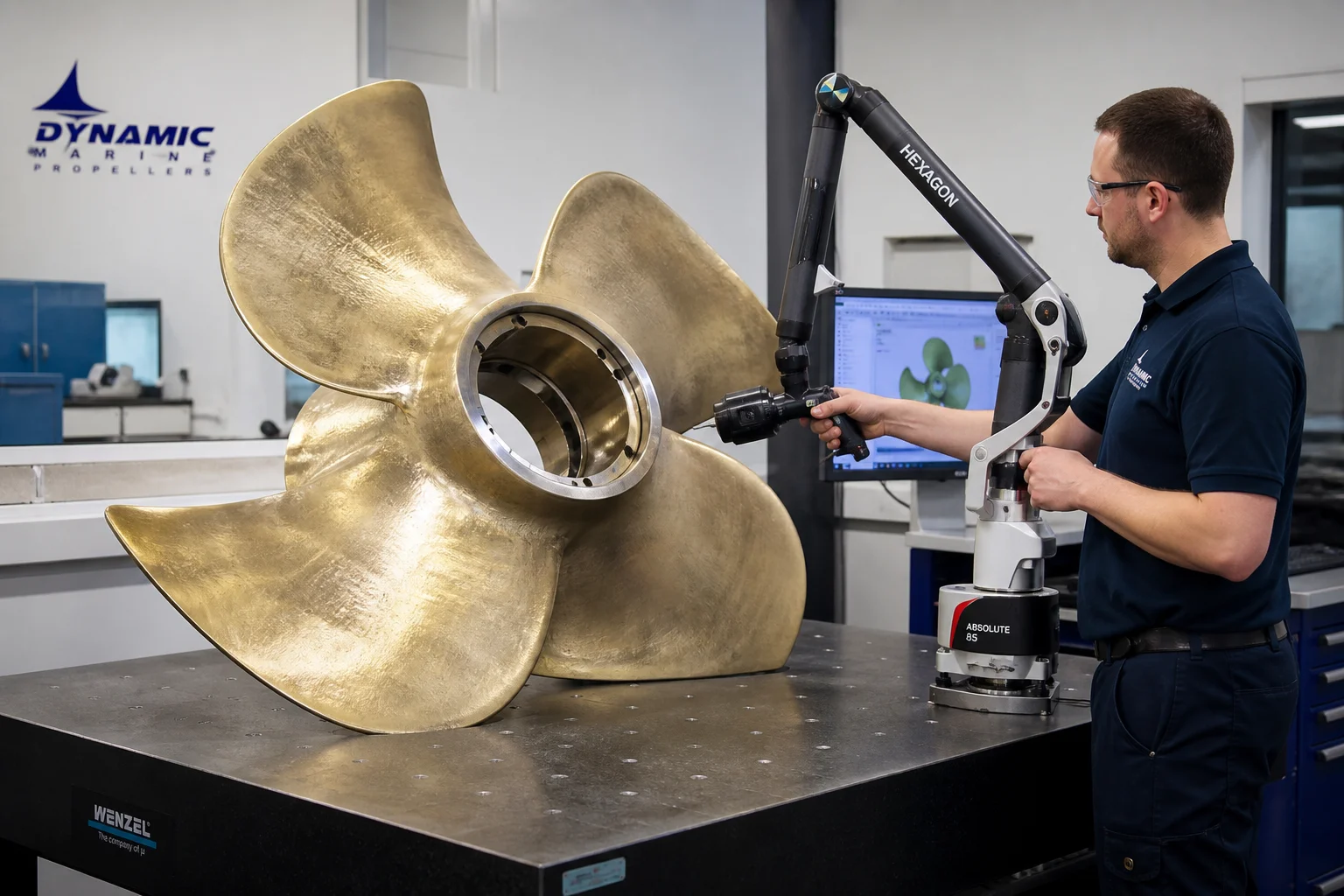
| Hydrofoil Accuracy | 3D Laser Tracker / Optical CMM Scan | Conformance to ISO 484/1 Class S / Class I blade geometry |
| Static & Dynamic Balancing | Balancing Rig per ISO 1940 | Static balancing to within of total propeller mass |
7. Marine Casting Capabilities at Dandong City Pengxin Machinery Co., Ltd.
Delivering marine and offshore castings demands verified foundry quality systems, clean non-ferrous and alloy steel melting capacity, and heavy multi-axis CNC machine tools.
Dandong City Pengxin Machinery Co., Ltd. delivers fully certified marine and offshore castings tailored for shipyards and marine equipment manufacturers worldwide:
- Material Versatility: Certified casting of Nickel-Aluminum Bronze (C95800 / CC333G), Arctic low-temperature steels (ASTM A352 LCC/LC3), structural carbon steels, and Super Duplex alloys.
- Heavy Scale & Infrastructure: 80,000 m² production facility with heavy crane capacity capable of casting single marine components from 200 kg to 25 tons.
- Advanced 5-Axis CNC Finishing: Multi-axis CNC gantry mills and large vertical boring lathes delivering precision blade hydrofoils, hub tapers, and grooved winch drums.
- Classification Society Experience: Established inspection protocols for ABS, DNV, Lloyd's Register, BV, and CCS witness testing and EN 10204 3.2 certification.
- Complete Non-Destructive Testing: Certified Level II/III NDT technicians conducting 100% UT, MT, PT, and 3D optical laser scanning on every critical casting.
Conclusion
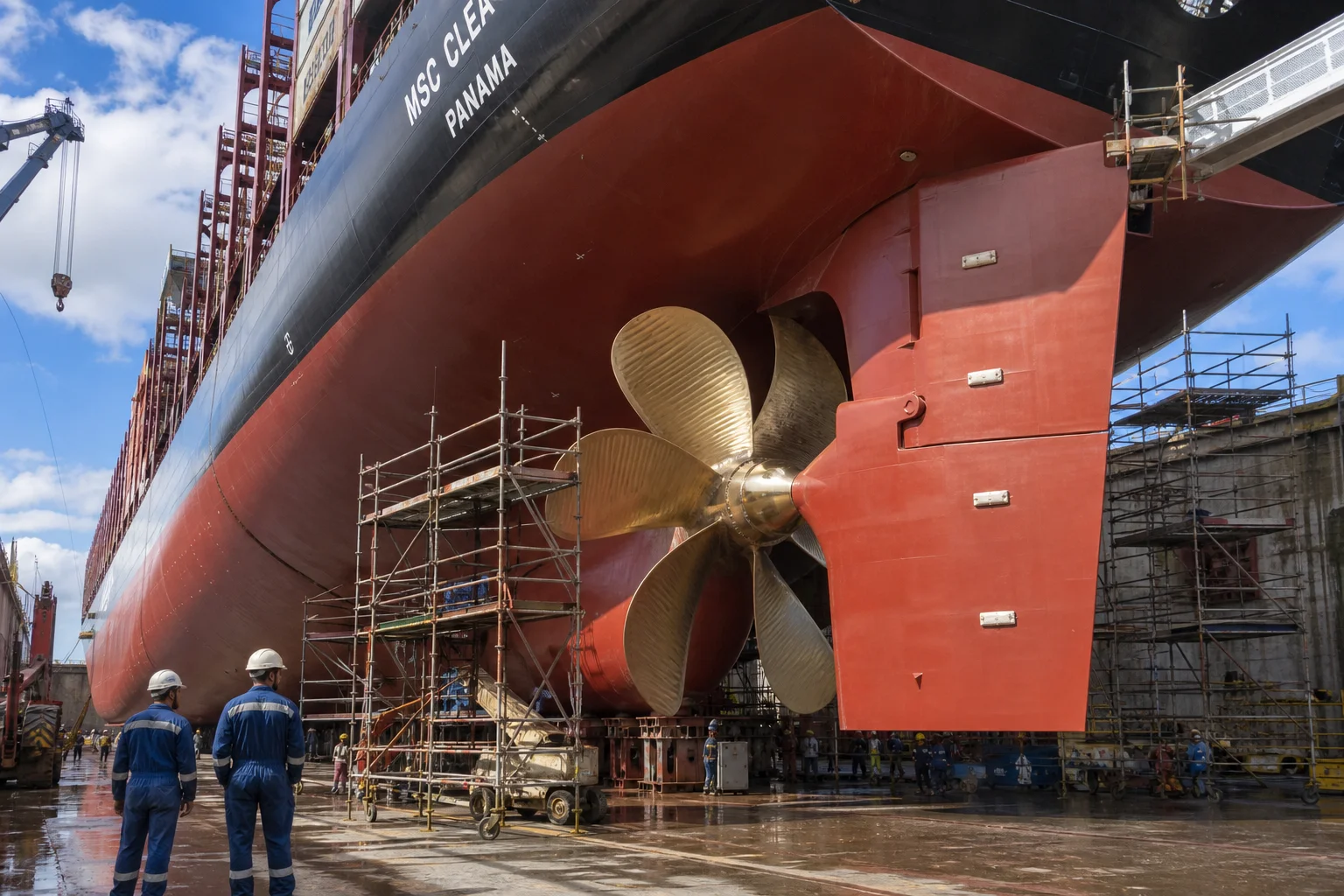
Marine propulsion and deck machinery castings operate under the unforgiving combination of extreme hydrodynamic cavitation, seawater corrosion, cyclic fatigue, and Arctic sub-zero thermal shocks. Guaranteeing decades of seaworthiness demands scientific alloy selection (NAB and low-temperature steels), disciplined heat treatment to eliminate de-aluminization, precision 5-axis CNC machining, and unyielding IACS quality compliance.
Partnering with an experienced, integrated heavy casting and precision machining facility ensures that your marine components perform flawlessly across the world's oceans.
Contact Dandong City Pengxin Machinery Co., Ltd. to submit your marine casting drawings or schedule classification society witness inspections.
Dandong City Pengxin Machinery Co., Ltd. — Heavy Castings and Precision Machining, Since 1958.
Table of Contents
- 1. Operating Environment & Marine Degradation Mechanisms
- 2. Metallurgical Alloy Hierarchy for Marine Applications
- 3. Marine Sand Casting Technology & Clean Pouring
- 4. Multi-Axis CNC Hydrodynamic Machining
- 5. Marine Classification Society (IACS) Certification Workflow
- 6. Comprehensive Quality Inspection Standards
- 7. Marine Casting Capabilities at Dandong City Pengxin Machinery Co., Ltd.
- Conclusion