
 EN
EN
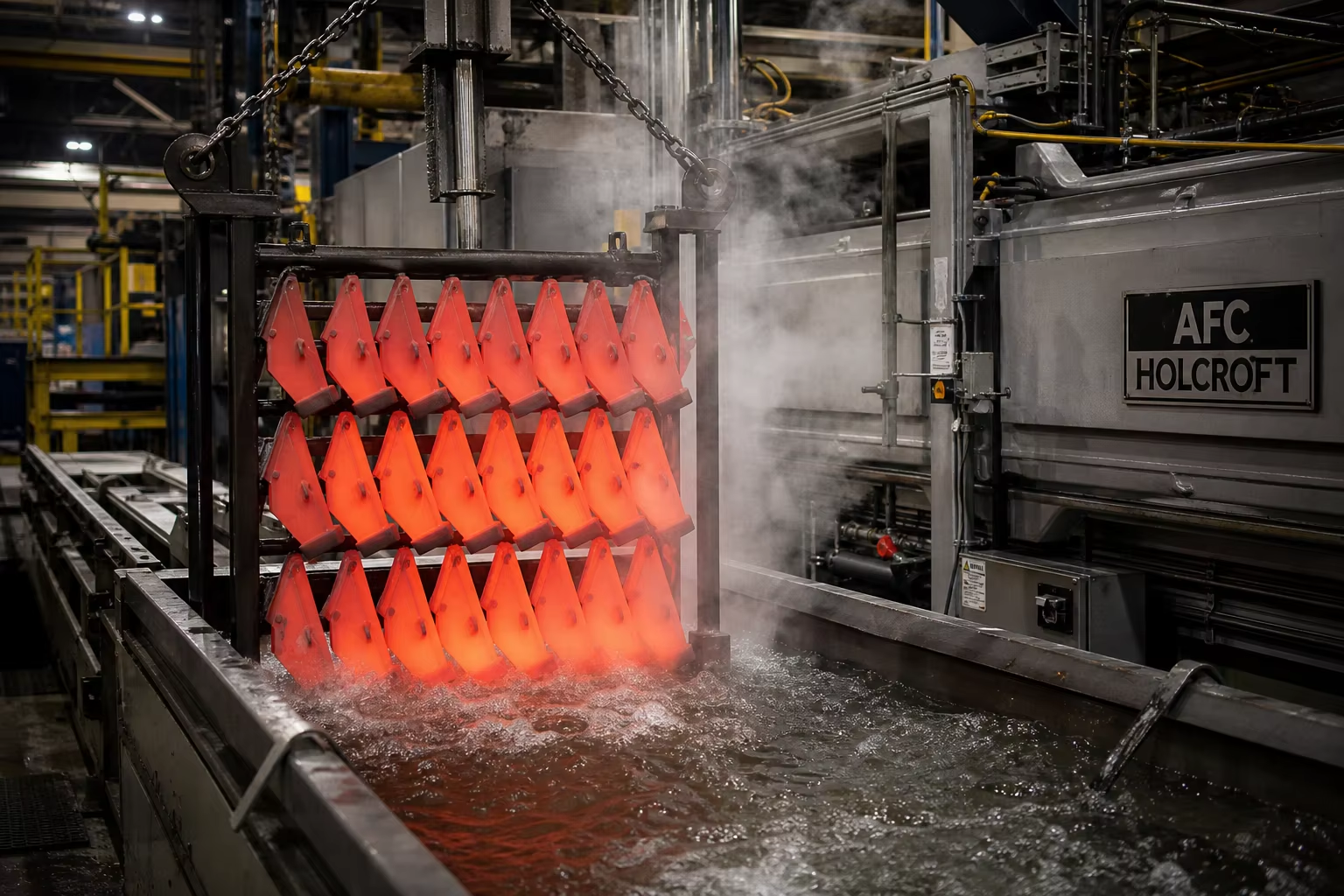
Meta Description: An engineering guide to agricultural wear castings and soil-engaging tools (GET). Explore boron-alloyed cast steels, high-chromium white iron (ASTM A532) composite inserts, quenching & tempering to 50-58 HRC, plow points, subsoilers, cultivator sweeps, and combine concaves.
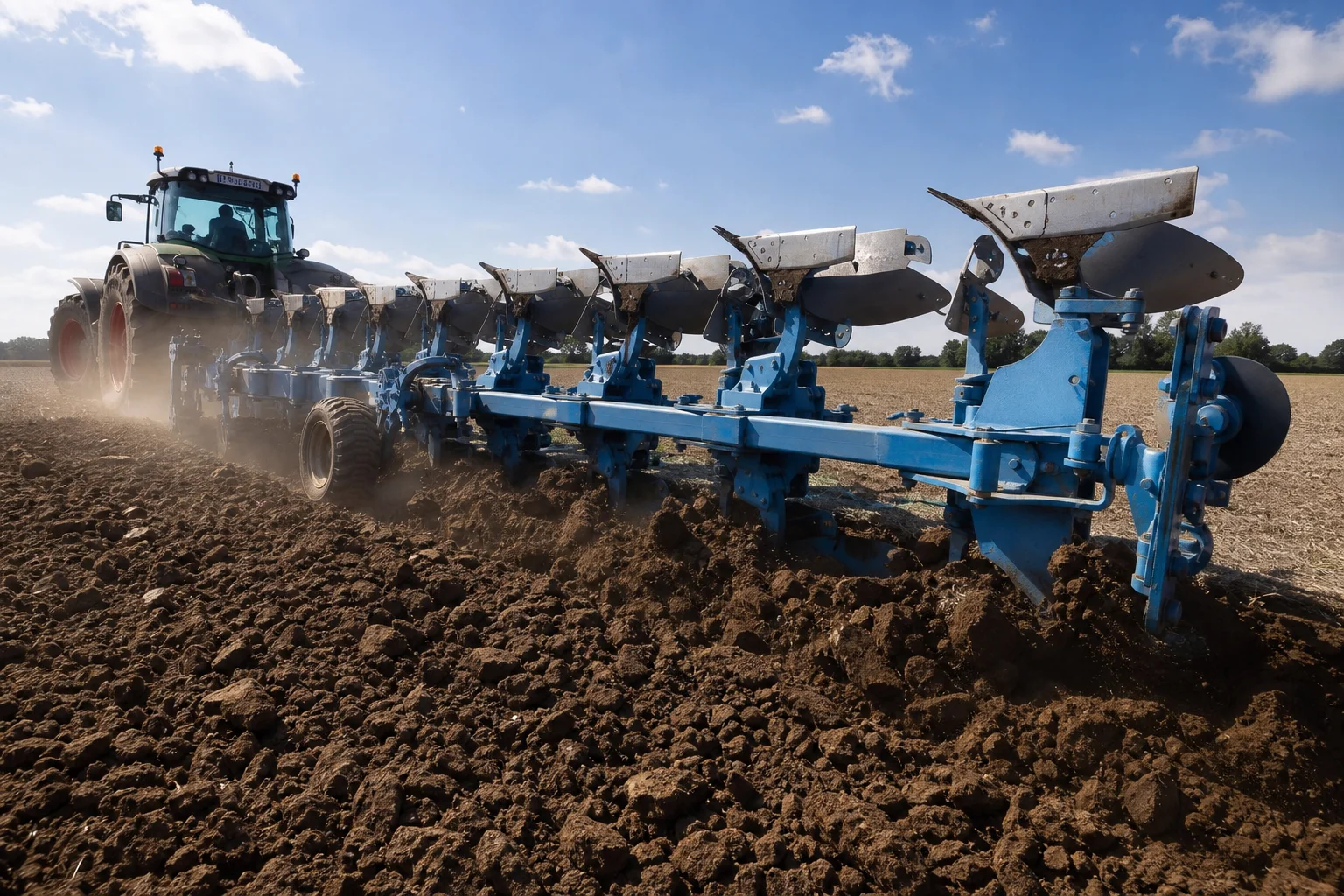
Modern agricultural soil tillage and harvesting equipment operate under relentless mechanical punishment. Agricultural ground-engaging tools (GET) — such as reversible plow points, subsoiler shanks, cultivator sweeps, disc harrow hubs, seed drill opener boots, and combine harvester concaves — are pulled through diverse soil profiles at speeds up to 15 km/h, slicing through hard-packed clay, abrasive quartz sand, flint gravel, and buried rock obstacles.
Under these conditions, standard fabricated carbon steel parts dull, bend, or wear down within dozens of hectares, altering tillage depth, spiking tractor diesel consumption by up to , and forcing frequent, costly field downtime.
Solving agricultural wear challenges requires specialized casting metallurgy: deploying Boron-Alloyed Cast Steels (30MnB5 cast equivalent) that achieve deep through-hardenability (50–58 HRC) with a resilient ductile core, precision High-Chromium White Iron (ASTM A532) Bi-Metallic Inserts, and automated sand molding that guarantees precise bolt-hole fitment against forged tillage tines.
This technical guide breaks down soil wear dynamics, alloy selection, water/polymer quenching heat treatments, bi-metallic casting techniques, CNC machining of mounting interfaces, and field testing standards.
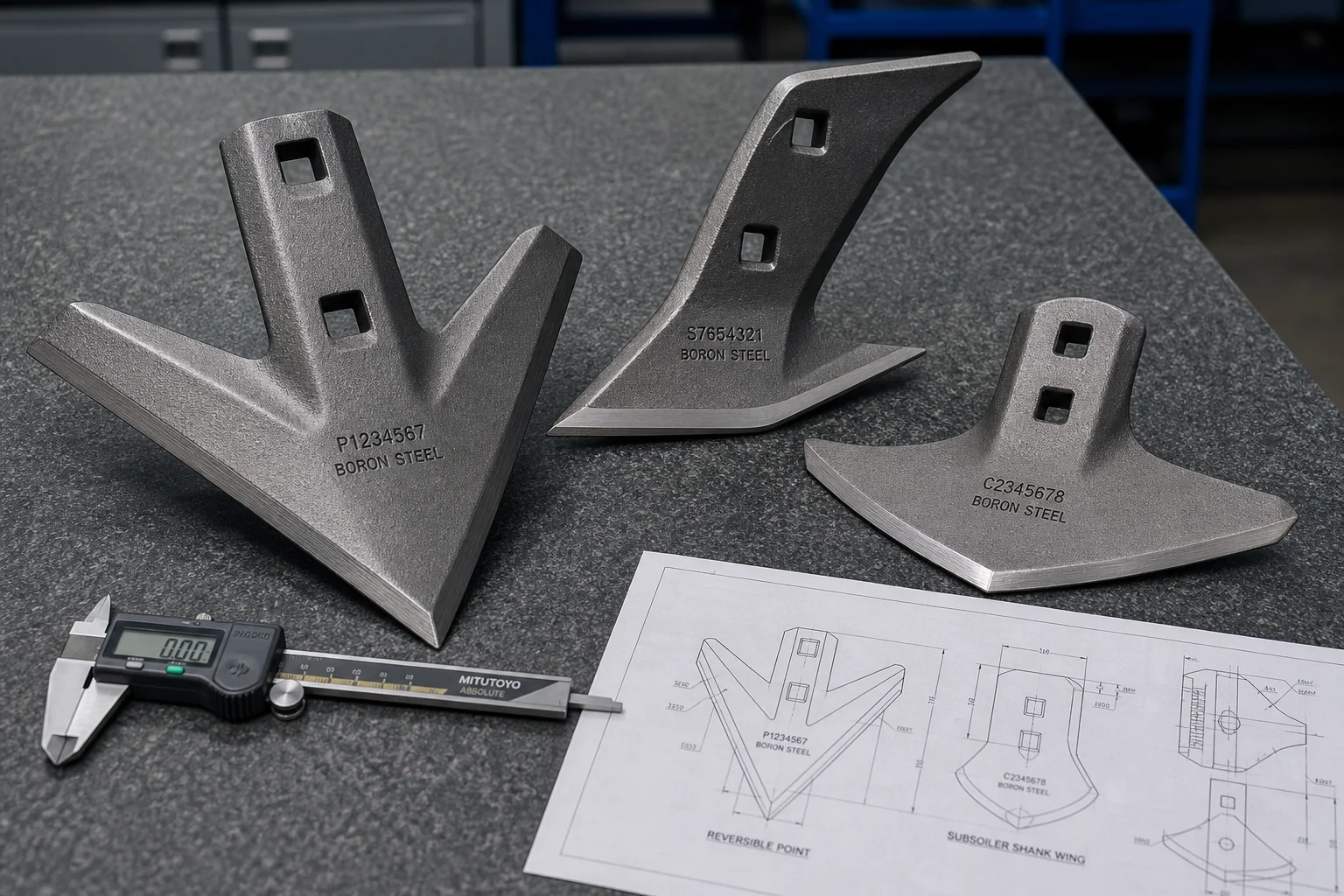
1. Soil Abrasion Dynamics & Field Degradation Modes
Soil wear is one of the most aggressive multi-mechanism wear environments in the engineering world:
                      ┌──────────────────────────────────────────────┐
                      │ Dynamic Soil Engagement & Rock Impact        │
                      └──────────────────────┬───────────────────────┘
                                             │
        ┌────────────────────────────────────┼────────────────────────────────────┐
        ▼                                    ▼                                    ▼
┌───────────────────────────────┐  ┌───────────────────────────────┐  ┌───────────────────────────────┐
│ Two-Body / Three-Body Abrasion│  │ Severe Stone Shock Impact     │  │ Soil Acidity & Fertilizer     │
│ (Sharp quartz sand cutting    │  │ (Buried boulders causing      │  │ (Corrosive electrochemical    │
│  micro-grooves on point nose) │  │  instantaneous nose snapping) │  │  attack from nitrates/manure) │
└───────────────────────────────┘ └───────────────────────────────┘ └───────────────────────────────┘| Tillage Component | Operating Soil Mechanism | Primary Failure Mode | Metallurgical Requirement |
|---|---|---|---|
| Reversible Plow Share Points | High-pressure cutting through abrasive quartz sand () | Rapid nose blunting and edge loss; loss of ground penetration | Boron Cast Steel / White Iron Insert (54–58 HRC) |
| Deep Ripper / Subsoiler Shanks | High-draft pulling down to 600 mm depth; bending moments against buried rocks | Shank gross bending or brittle fracture behind the tip | High-Toughness Cast Alloy Steel (25CrMo4 / 30MnB5) () |
| Cultivator Sweeps & Duckfoot Blades | Shallow high-speed soil slicing; continuous three-body abrasion | Wing thinning and hole breakout around carriage bolts | Martensitic Boron Steel (50–54 HRC with ductile bolt zone) |
| Combine Harvester Concave Bars | High-velocity threshing of grain heads containing silica ash and field grit | Concave tooth wear, unthreshed grain loss | Austempered Ductile Iron (ADI Grade 1200) / High-Cr Iron |
2. Alloy Selection Hierarchy for Agricultural Wear Parts
Agricultural castings must balance high surface hardness (to resist quartz scratch abrasion) against bulk fracture toughness (to absorb stone impacts without shattering):
| Alloy Family | Nominal Chemical Composition (wt%) | Heat Treatment | Hardness Range | Key Engineering Advantage |
|---|---|---|---|---|
| Boron Cast Steel (30MnB5 Cast Equivalent) | Quenched & Low-Temp Tempered | 50 – 56 HRC | Exceptional through-hardenability via trace boron; outstanding impact toughness ( at ) | |
| High-Carbon Low-Alloy (HCLA) Cast Steel | Oil/Polymer Quenched & Tempered | 52 – 58 HRC | High baseline carbon hardness; balanced toughness for plow points | |
| High-Chromium White Iron (ASTM A532 Class II/III) | Destabilized & Air Quenched | 60 – 65 HRC | Massive volume of carbides (); wear life over carbon steel | |
| High-Strength Ductile Iron (EN-GJS-600-3 / 700-2) | As-Cast or Normalized | 220 – 280 HB | Heavy-duty disc harrow bearing housings and bracket arms |
Metallurgical Focus: The Boron Effect in Agricultural Steels
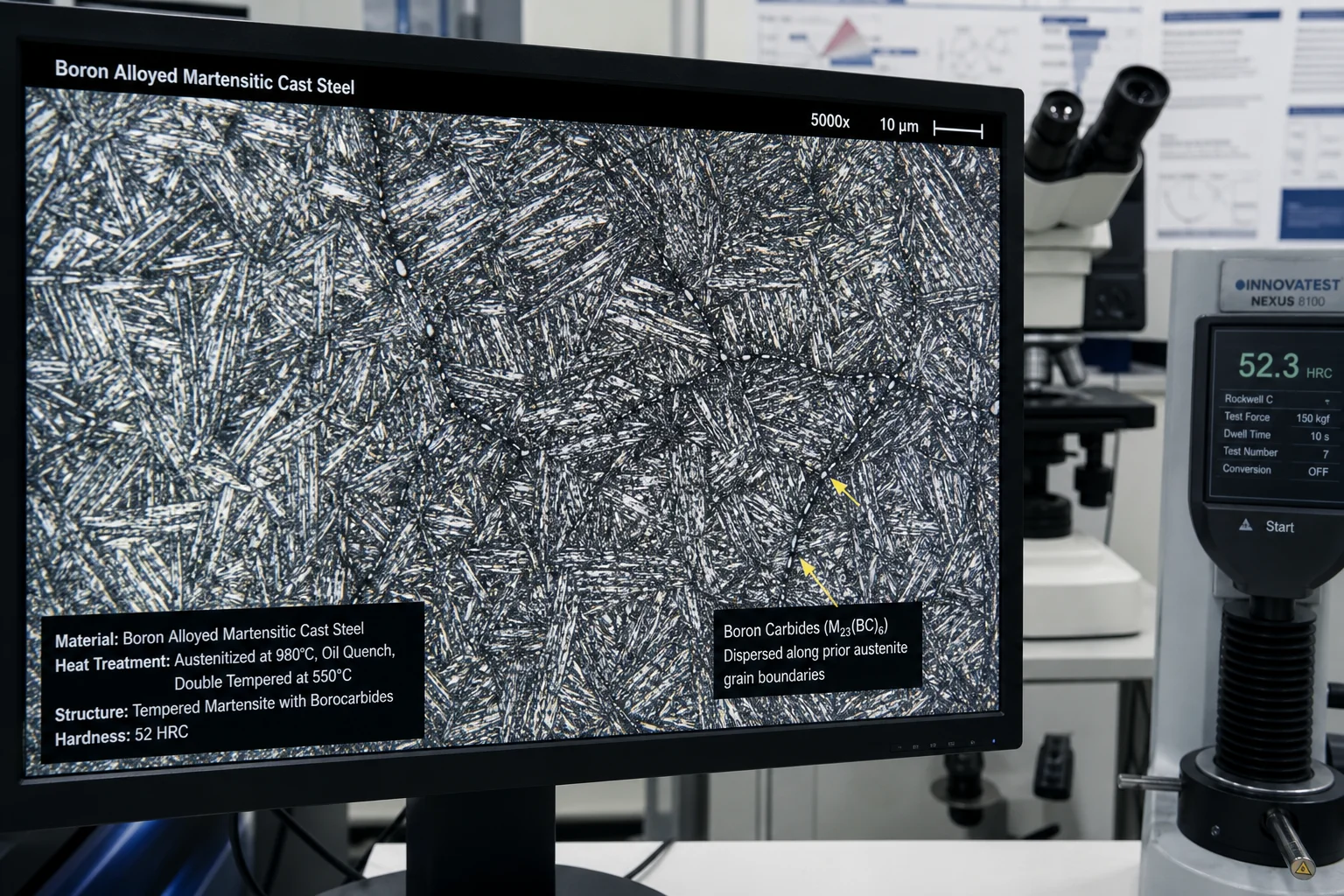
Trace boron () segregates to prior austenite grain boundaries during heating, suppressing the nucleation of soft ferrite and pearlite during quenching. This allows low-carbon cast steel () to achieve fully martensitic transformation across heavy 40 mm sections, yielding high hardness with superior impact ductility that prevents brittle snapping when hitting buried field stones.
3. Bi-Metallic Composite Casting & Hardfacing Integration
For extreme sandy and gravelly soils, single-material steel points wear out too quickly, while solid white iron points shatter upon rock impact. Foundries overcome this via Bi-Metallic Casting Technologies:
┌─────────────────────────────────────────────────────────────┐
│ 1. Cast Tough Alloy Steel Body (Substrate: ~30 HRC Toughness)│
│    • Provides flexible shank mount and bolt hole ductility  │
├─────────────────────────────────────────────────────────────┤
│ 2. Fused High-Chromium White Iron / Tungsten Carbide Nose   │
│    • Solidified bi-metallic insert at high-wear nose tip    │
│    • Extreme surface hardness (>62 HRC / 1,800 HV)          │
├─────────────────────────────────────────────────────────────┤
│ Finished Result: Self-Sharpening Wear Action                │
│ (Softer body wears at controlled rate behind hard nose,     │
│  maintaining a permanently sharp cutting edge)              │
└─────────────────────────────────────────────────────────────┘
4. Automated Sand Molding & Casting Precision
Agricultural parts are manufactured in high annual volumes (10,000 to 500,000 pcs/year), requiring automated molding lines with strict dimensional consistency:
┌────────────────────────────────────────────────────────────────────────┐
│ 1. High-Pressure Automated Flaskless Green Sand Molding (DISA / HWS)   │
│    • Production speeds up to 350 molds/hour with high sand compaction │
├────────────────────────────────────────────────────────────────────────┤
│ 2. Cast-In Square & Oval Carriage Bolt Holes                           │
│    • Precision resin-coated shell sand cores produce clean bolt pockets│
│    • Exact taper tolerances match standard DIN 608 plow bolts          │
├────────────────────────────────────────────────────────────────────────┤
│ 3. Automated Pouring with Stream Inoculation                           │
│    • Clean medium-frequency induction melt with zero slag inclusion    │
├────────────────────────────────────────────────────────────────────────┤
│ 4. Continuous Shot Blasting & Automated Degating                       │
│    • Clean surface finish ready for CNC drilling and paint dip coating │
└────────────────────────────────────────────────────────────────────────┘
5. Heat Treatment Protocols for Toughness-Hardness Optimization
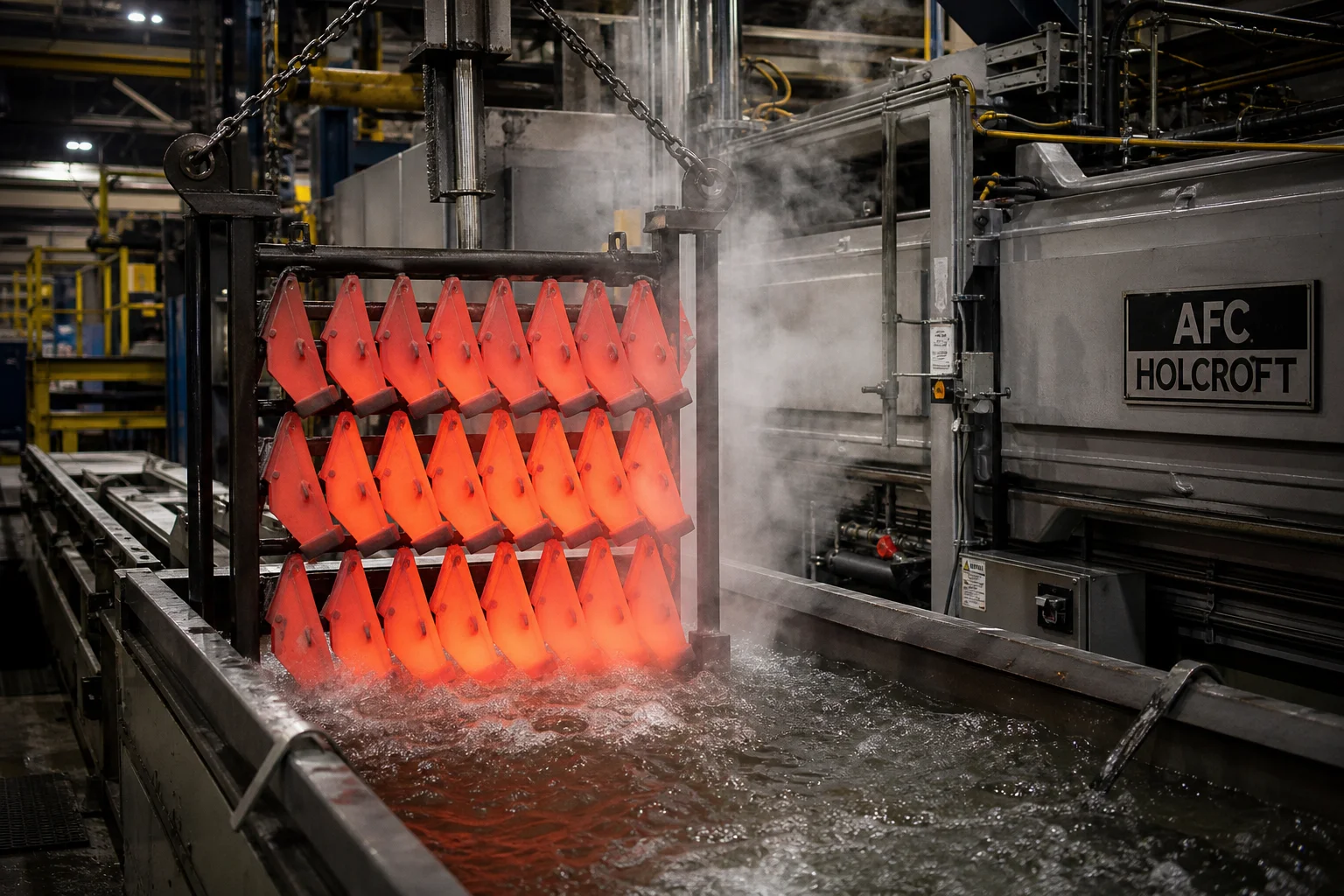
As-Cast Steel Point (~220 HB)
             │
             ▼
┌────────────────────────────────────────────────────────┐
│ Continuous Austenitizing Furnace (880 °C – 920 °C)     │
│ (Protective atmosphere prevents surface decarburization)
└────────────┬───────────────────────────────────────────┘
             │
             ▼  Automated Submerged Conveyor Quench
┌────────────────────────────────────────────────────────┐
│ High-Agitation Polymer / Water Quench Tank             │
│ (Achieves 100% fine Martensite across full section)    │
└────────────┬───────────────────────────────────────────┘
             │
             ▼
┌────────────────────────────────────────────────────────┐
│ Low-Temperature Stress-Relief Tempering (200 °C - 240 °C)
│ (Relieves internal stress; stabilizes 52–56 HRC)       │
└────────────────────────────────────────────────────────┘
6. CNC Machining & Carriage Bolt Interface Finishing
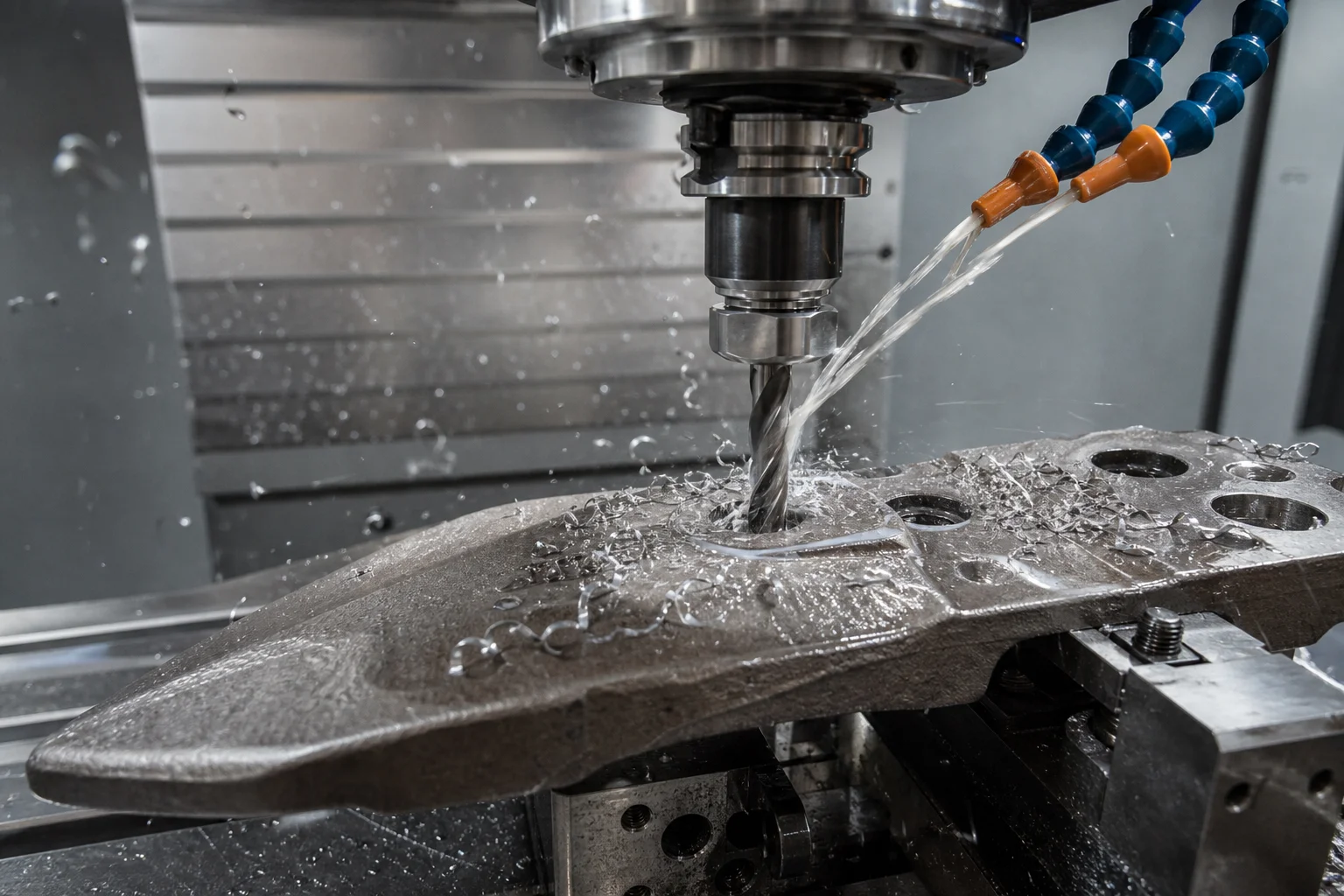
Agricultural wear parts must fit tightly onto forged tines without loose play that causes bolt shearing under vibration:
- Carriage Bolt Holes (DIN 608 / ANSI B18.9): Precision CNC counterboring and square-neck broaching/milling to ensure flush bolt head seating, preventing soil build-up and bolt head erosion.
- Mounting Face Flatness: High-speed CNC face milling of tine contact pads to within flatness, ensuring solid clamping against forged cultivator legs.
7. Laboratory Testing & Standardized Quality Control
| Test Category | Standard / Specification | Acceptance Criteria |
|---|---|---|
| Soil Abrasion Test | ASTM G65 (Dry Sand / Rubber Wheel) | Mass loss rate after 6,000 revolutions |
| Hardness Verification | Rockwell Hardness (HRC) per ASTM E18 | on working edges; around bolt holes |
| Drop Weight / Impact Shock | Falling Weight Impact Rig (50 kg dropped from 2.0 m) | Zero cracking or nose spalling upon repeated hard anvil impacts |
| Chemical Analysis | Optical Emission Spectrometry (OES) | Strict verification of Boron (), Mn, Cr, and C content |
| Dimensional & Bolt Gauge | Go/No-Go Plug Gauges & 3D Optical Scan | 100% verification of hole centers () and shank draft angles |
8. Agricultural Casting Manufacturing at Dandong City Pengxin Machinery Co., Ltd.
Delivering high-performance agricultural castings demands large-volume automated sand molding, advanced continuous heat treatment lines, and rigorous wear testing.
Dandong City Pengxin Machinery Co., Ltd. is an experienced OEM casting manufacturer supplying agricultural implement builders worldwide:
- Material Expertise: Certified casting of boron-alloyed martensitic steels (30MnB5 equivalent), high-chromium white irons (ASTM A532), and heavy ductile irons (QT600-3 / GGG60).
- High-Volume Production Capacity: 80,000 m² foundry facility equipped with automated molding lines, continuous heat treatment furnaces, and multi-spindle CNC machining centers.
- Bi-Metallic & Hardfacing Options: Advanced bi-metallic casting and tungsten-carbide composite brazing delivering up to extended field service life.
- Turnkey Ready-to-Mount Finishing: Clean shot-blasted, precision-machined DIN 608 bolt holes, and high-durability electrostatic powder coating or electrophoretic paint.
- Quality Assurance: ISO 9001 certified, providing full EN 10204 3.1 material test certificates, hardness mapping reports, and batch impact test data.
Conclusion
Agricultural and heavy tillage wear castings are critical wear consumables that directly govern field productivity, diesel fuel efficiency, and farming profitability. Delivering world-class soil tools requires an uncompromising combination of boron-enhanced metallurgy, precision sand casting with clean bolt interfaces, disciplined quenching heat treatment, and bi-metallic composite wear protection.
Partnering with an experienced, integrated agricultural casting foundry ensures that your tillage parts penetrate deeper, run longer, and withstand the toughest field obstacles.
Contact Dandong City Pengxin Machinery Co., Ltd. to submit your agricultural wear part drawings or request high-durability alloy samples.
Dandong City Pengxin Machinery Co., Ltd. — Heavy Castings and Precision Machining, Since 1958.
Table of Contents
- 1. Soil Abrasion Dynamics & Field Degradation Modes
- 2. Alloy Selection Hierarchy for Agricultural Wear Parts
- 3. Bi-Metallic Composite Casting & Hardfacing Integration
- 4. Automated Sand Molding & Casting Precision
- 5. Heat Treatment Protocols for Toughness-Hardness Optimization
- 6. CNC Machining & Carriage Bolt Interface Finishing
- 7. Laboratory Testing & Standardized Quality Control
- 8. Agricultural Casting Manufacturing at Dandong City Pengxin Machinery Co., Ltd.
- Conclusion