 EN
EN
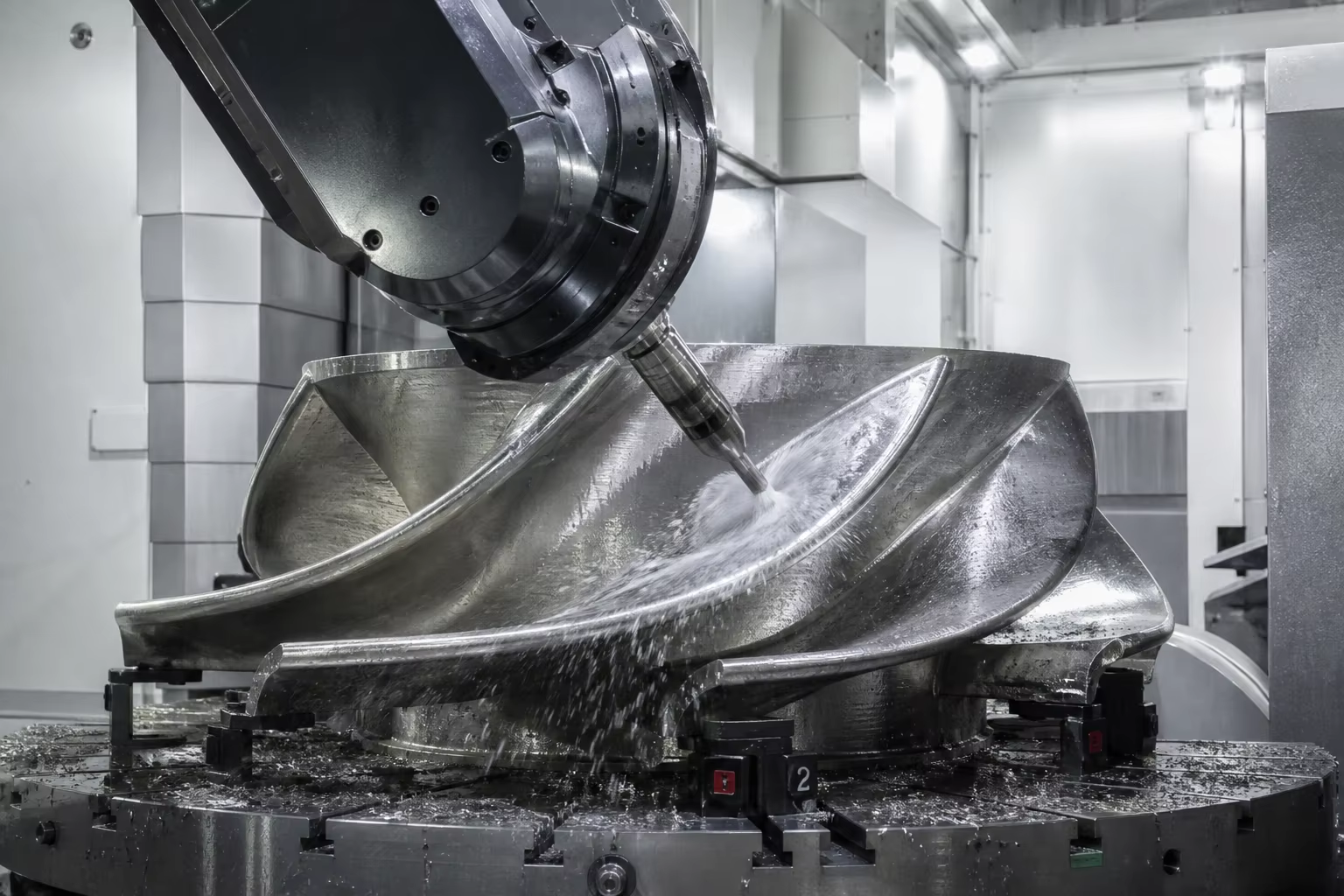
Meta Description: A comprehensive technical guide to hydro and wind power turbine component castings. Explore 13Cr-4Ni martensitic stainless steel (ASTM A743 CA6NM / EN 1.4313) for Francis runners and Pelton buckets, low-temperature ductile iron (EN-GJS-400-18U-LT at -20°C) for 15-ton wind turbine rotor hubs, 5-axis CNC machining, and zero-defect NDT.
In global renewable energy infrastructure, hydro and wind power generation systems represent the pinnacle of large-scale mechanical engineering. Operating continuously for decades under relentless natural forces, power generation castings endure extreme dynamic stresses:
- Hydroelectric Turbines (Francis, Kaplan, Pelton): Runner blades, crowns, bands, and distributor guide vanes operate inside high-velocity water jets exceeding , enduring intense cavitation shock waves (implosion pressures ), high-velocity silt and quartz sand erosion, cyclic water hammer fatigue, and corrosive water chemistries.
- Wind Turbines (Onshore & Offshore 3MW – 16MW): Massive cast Rotor Hubs, Bedplates (Main Frames), Torque Arms, and Planet Carriers endure non-stop multi-axis aerodynamic gust turbulence, high-cycle bending fatigue ( over 25-year design lives), and Arctic offshore marine environments down to or .
Under these punishing conditions, structural integrity is paramount. A micro-shrinkage pore in a Pelton bucket root or an embrittling grain-boundary carbide in a 20-ton wind turbine rotor hub will propagate into catastrophic fatigue fracture, triggering catastrophic turbine failure and multimillion-dollar offshore crane repairs.
Achieving extreme reliability requires specialized foundry metallurgy: casting 13Cr-4Ni Martensitic Stainless Steel (CA6NM / 1.4313) with dual-tempering heat treatment for hydro cavitation resistance, and heavy-section Low-Temperature Ferritic Ductile Iron (EN-GJS-400-18U-LT / QT400-18AL) with guaranteed sub-zero Charpy impact toughness.
This technical guide details the metallurgy, directional solidification modeling, 5-axis CNC hydrodynamic machining, and non-destructive quality validation workflows for hydro and wind power castings.
1. Operating Environments & Renewable Energy Failure Mechanisms
                     ┌──────────────────────────────────────────────┐
                     │ Renewable Kinetic Energy Dynamics            │
                     └──────────────────────┬───────────────────────┘
                                            │
        ┌───────────────────────────────────┼───────────────────────────────────┐
        ▼                                   ▼                                   ▼
┌───────────────────────────────┐ ┌───────────────────────────────┐ ┌───────────────────────────────┐
│ Cavitation & Silt Abrasion    │ │ High-Cycle Aerodynamic Fatigue│ │ Sub-Zero Cold-Climate Impact  │
│ (Vapor micro-jet pitting on   │ │ (Non-stop cyclic gust bending │ │ (Offshore brittle fracture    │
│  hydro runner blade trailing) │ │  across 15-ton rotor hubs)    │ │  risk in arctic wind down -40°C)
└───────────────────────────────┘ └───────────────────────────────┘ └───────────────────────────────┘| Operating Component | Primary Dynamic Load | Critical Failure Mode to Prevent | Material Grade Solution |
|---|---|---|---|
| Pelton Turbine Buckets | High-velocity impulse water jet () + cyclic shock | Bucket splitter erosion, bucket root bending fatigue | 13Cr-4Ni Stainless Steel (ASTM A743 CA6NM / 1.4313) |
| Francis Runner Crown & Blades | Continuous hydrodynamic pressure + cavitation micro-jets | Blade trailing edge cavitation pitting and cracking | Low-Carbon 13Cr-4Ni (CA6NM-Mod / 1.4405) |
| Wind Turbine Rotor Hub (5–16 MW) | Multi-ton aerodynamic blade pitch moments + gust shock | Main blade flange fatigue cracking; brittle fracture | Low-Temp Ductile Iron (EN-GJS-400-18U-LT / QT400-18AL) |
| Wind Turbine Main Bedplate / Frame | Heavy gearbox/generator weight + torsional yaw reaction | Torsional distortion, mounting pad cracking | Ferritic Ductile Iron (EN-GJS-400-15 / EN-GJS-500-7) |
2. Metallurgical Alloy Hierarchy: Hydro vs. Wind Components
A. Hydro Turbines: 13Cr-4Ni Martensitic Stainless Steel (CA6NM / 1.4313)
Standard austenitic stainless steels (304/316) have low yield strength, while standard martensitic steels (410/420) lack weldability and impact toughness. The 13% Cr – 4% Ni – 0.5% Mo Low-Carbon Martensitic Alloy (ASTM A743 CA6NM / EN 10283 1.4313 / GX4CrNiMo16-5-1) represents the gold standard:
| Chemical Element | Target Range (wt%) | Metallurgical Function |
|---|---|---|
| Carbon (C) | (Strict Low Carbon) | Prevents chromium carbide precipitation; guarantees excellent weldability without pre-heat cracking |
| Chromium (Cr) | Forms protective passive film resisting freshwater and silt corrosion | |
| Nickel (Ni) | Suppresses delta-ferrite formation; promotes full martensitic transformation and high impact toughness | |
| Molybdenum (Mo) | Enhances pitting resistance in silt-laden river waters; increases tempering resistance |
- Mechanical Properties (Dual-Tempered): .
- Dual-Stage Tempering: Austenitizing at followed by air/water quench, then First Temper at (transforms retained austenite) and Second Temper at (relieves stresses and precipitates ultra-fine tempered martensite with stable retained austenite for impact toughness).
B. Wind Turbines: Heavy-Section Low-Temperature Ductile Iron (EN-GJS-400-18U-LT)
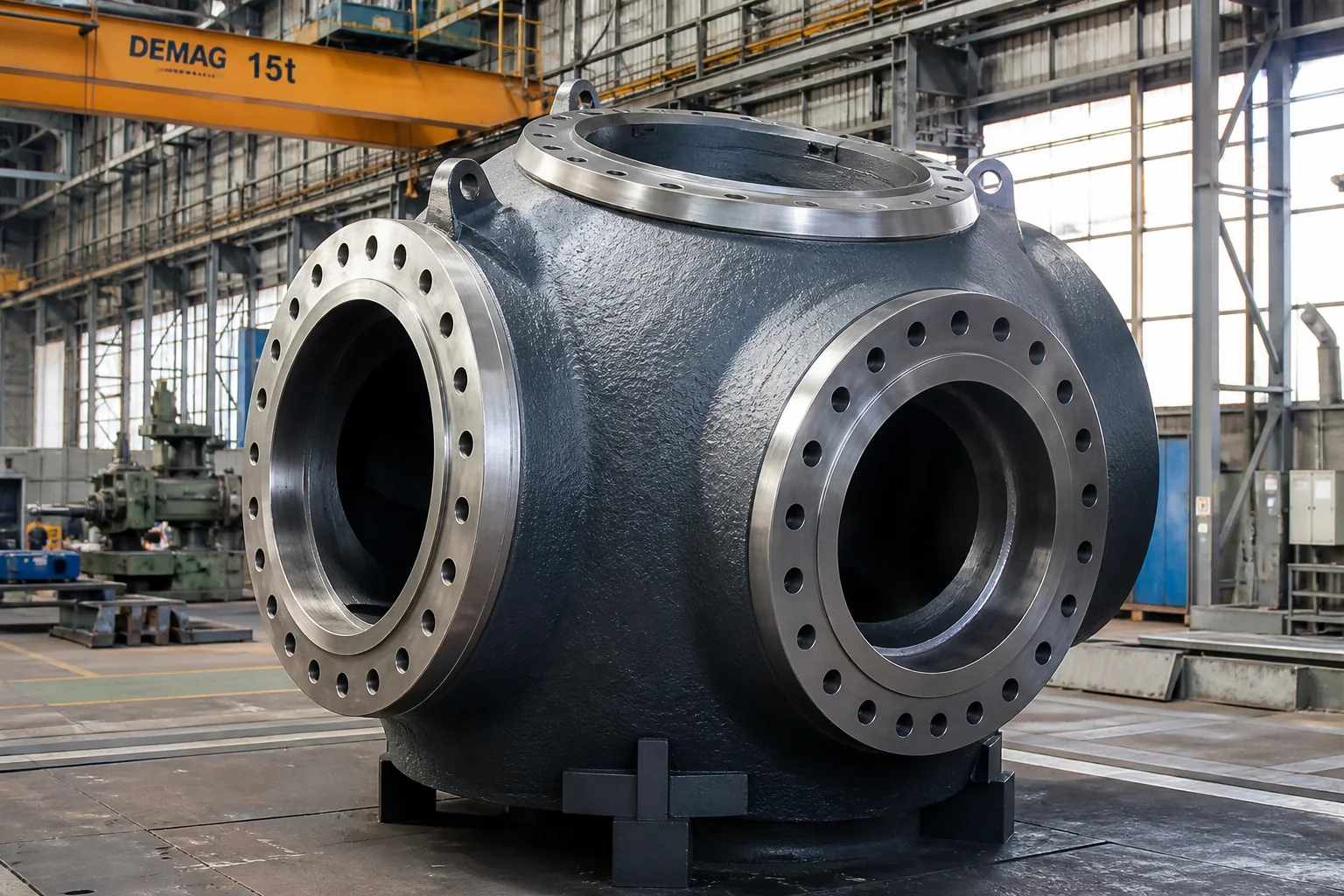
Wind turbine rotor hubs (weighting 10 to 30 tons with wall thicknesses exceeding ) operate in harsh sub-zero offshore environments. Governed by EN 1563 and GL/DNV Wind Energy Guidelines, they demand High-Purity Ferritic Ductile Iron:
| Specification / Property | EN-GJS-400-18U-LT (DIN EN 1563) / QT400-18AL | Critical Engineering Role |
|---|---|---|
| Tensile Strength () | Supports dynamic blade root clamping forces | |
| Yield Strength () | Prevents permanent plastic deformation during storm gusts | |
| Elongation () | High plastic deformation capability under emergency braking | |
| Charpy V-Notch at | (Average) / (Individual) | Mandatory: Prevents brittle cleavage fracture in Arctic winds |
| Nodularity & Matrix | Spheroidal Graphite (Shape VI); Ferrite Matrix | Zero pearlite or intercellular carbides to maximize low-temp ductility |
- Purity Control in Melting: Extremely low levels of tramp embrittling elements: .
3. Large-Scale Pattern Tooling & Directional Solidification
Casting 15-ton wind turbine rotor hubs and monolithic Francis runner crowns requires advanced thermodynamic feeding simulation:
┌────────────────────────────────────────────────────────────────────────┐
│ 1. 3D Machined Wooden / EPS Lost Foam Master Patterns                 │
│    • Accurate shrinkage compensation (+1.2% to +1.5%) across 4m spans  │
├────────────────────────────────────────────────────────────────────────┤
│ 2. Automated Furan Resin Sand Molding with Rigid Core Assembly         │
│    • High mold rigidity prevents mold dilation under 30 tons ferrostatic│
│      liquid pressure                                                   │
├────────────────────────────────────────────────────────────────────────┤
│ 3. CAE Solidification Simulation & Exothermic Feeding Sleeves          │
│    • Feeder sleeves positioned over thick blade root attachment flanges │
│    • Direct-chills placed at interior fillet transitions               │
├────────────────────────────────────────────────────────────────────────┤
│ 4. Clean Bottom-Pour Ladles with Ceramic Foam Filtration               │
│    • Smooth, laminar liquid entry with zero oxide skin entrapment      │
└────────────────────────────────────────────────────────────────────────┘
4. Multi-Axis 5-Axis CNC Hydrofoil & Flange Machining
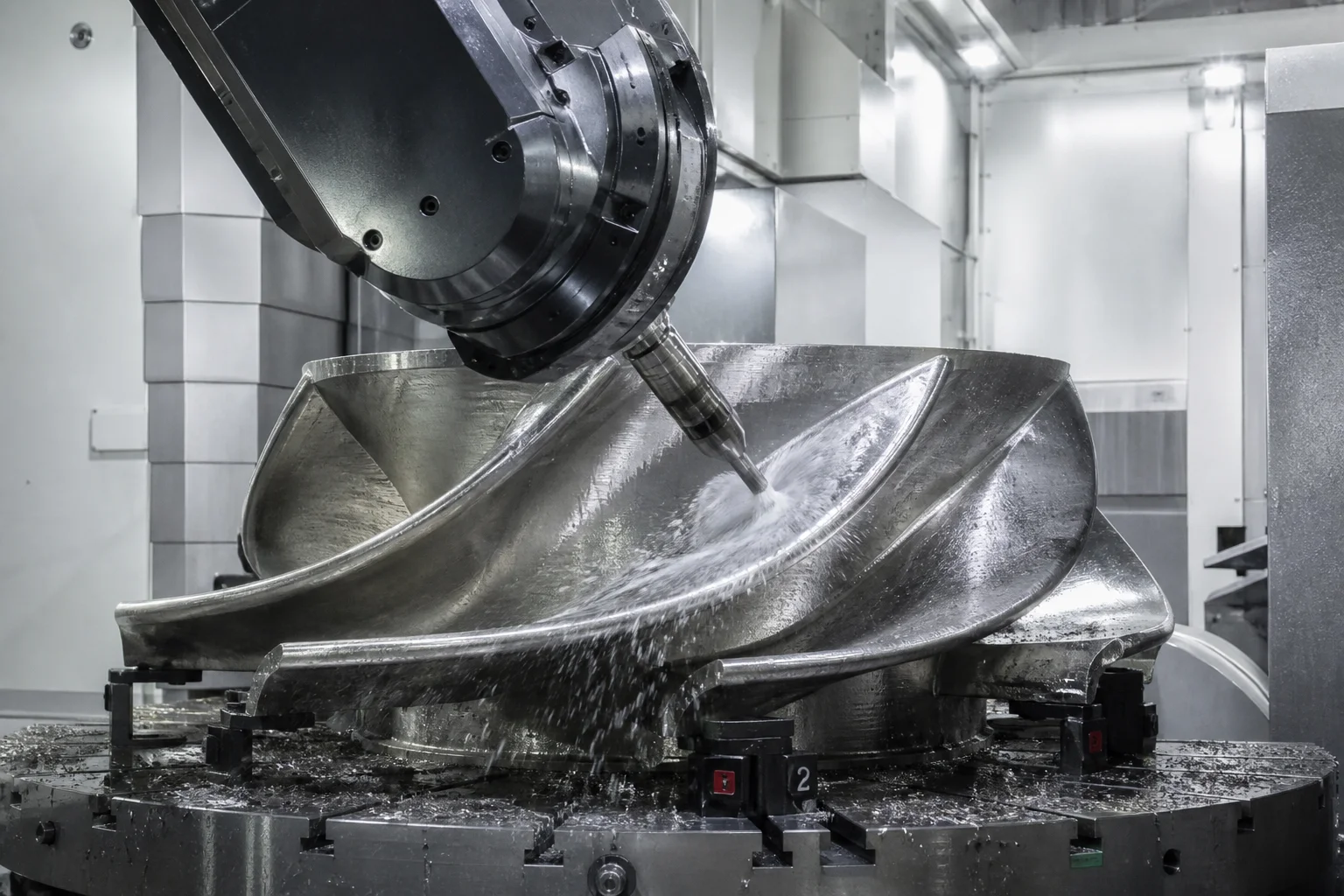
Renewable energy components require high precision to maximize aerodynamic and hydrodynamic energy conversion efficiency:
Precision Machining Capabilities:
- 5-Axis CNC Hydrofoil Milling: Francis runner blades, Pelton bucket splitters, and Kaplan blades are machined on heavy 5-axis CNC portal milling centers. Complex 3D freeform hydraulic surfaces are held within of CAD hydrofoil coordinates ( after precision polishing).
- Wind Rotor Hub Blade Pitch Flanges: Large vertical turning lathes (VTL) turn blade bearing mounting flange faces up to 5 meters in diameter, holding flatness within with deep multi-hole pitch circles drilled and tapped in one setup.
- Main Bedplate Alignment Bores: Horizontal boring mills precision-machine generator and main bearing seats, holding centerline coaxiality within across 6-meter structural beds.
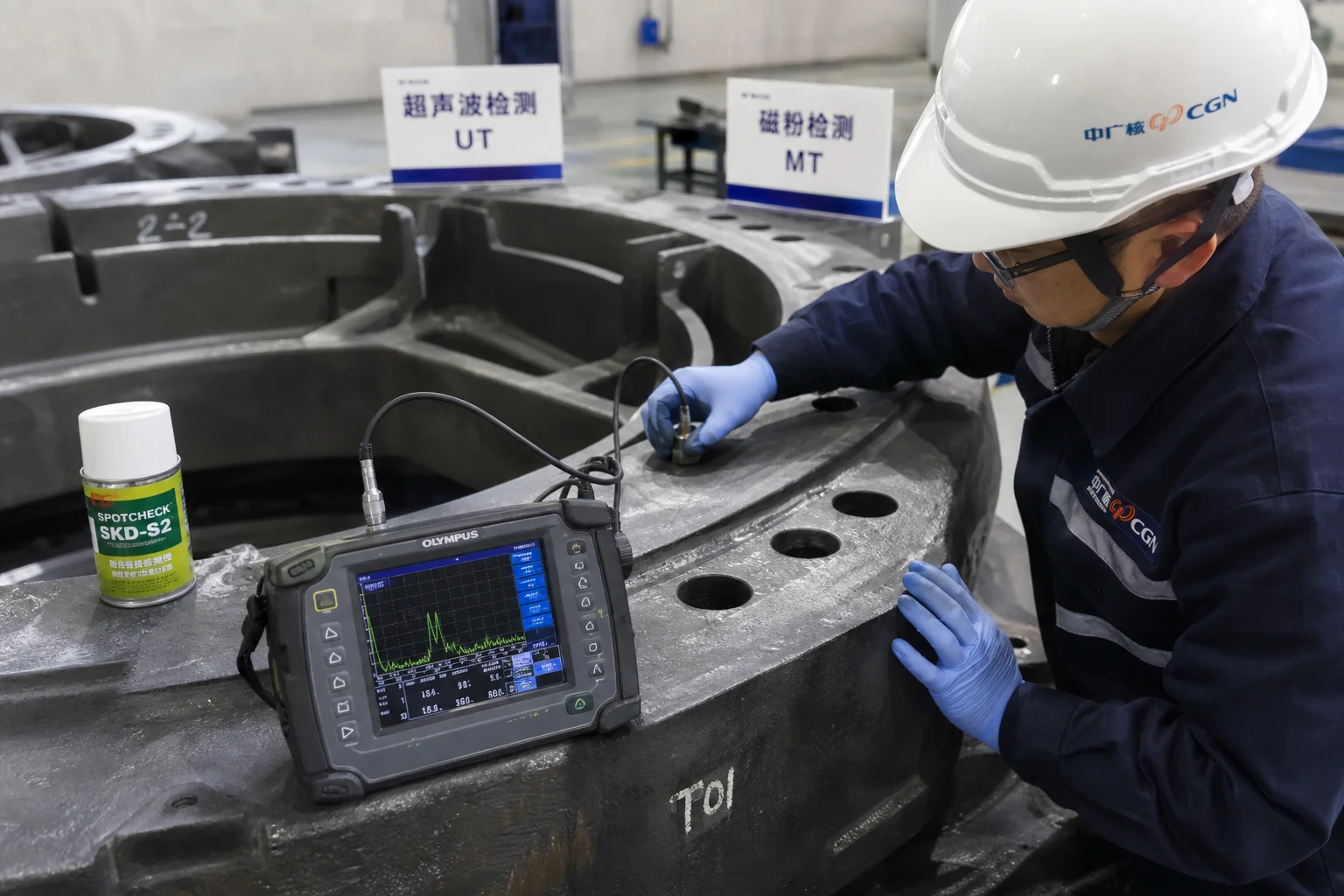
5. Comprehensive Quality Control & Non-Destructive Testing (NDT)
| Quality Test Category | Standard / Test Specification | Acceptance Criteria |
|---|---|---|
| Ultrasonic Testing (UT) | EN 12680-3 / ASTM A609 Level 1/2 | 100% volumetric scanning of blade roots, pitch flanges, and bedplate pads; zero critical shrinkage |
| Magnetic Particle Testing (MT) | ISO 9934 / ASTM E709 (Fluorescent) | 100% surface inspection of all high-stress radii, blade fillets, and flange transitions; zero cracks |
| Sub-Zero Charpy Impact | ASTM E23 / ISO 148-1 on attached test blocks | Verified at (for wind hubs) and at (for 13Cr-4Ni) |
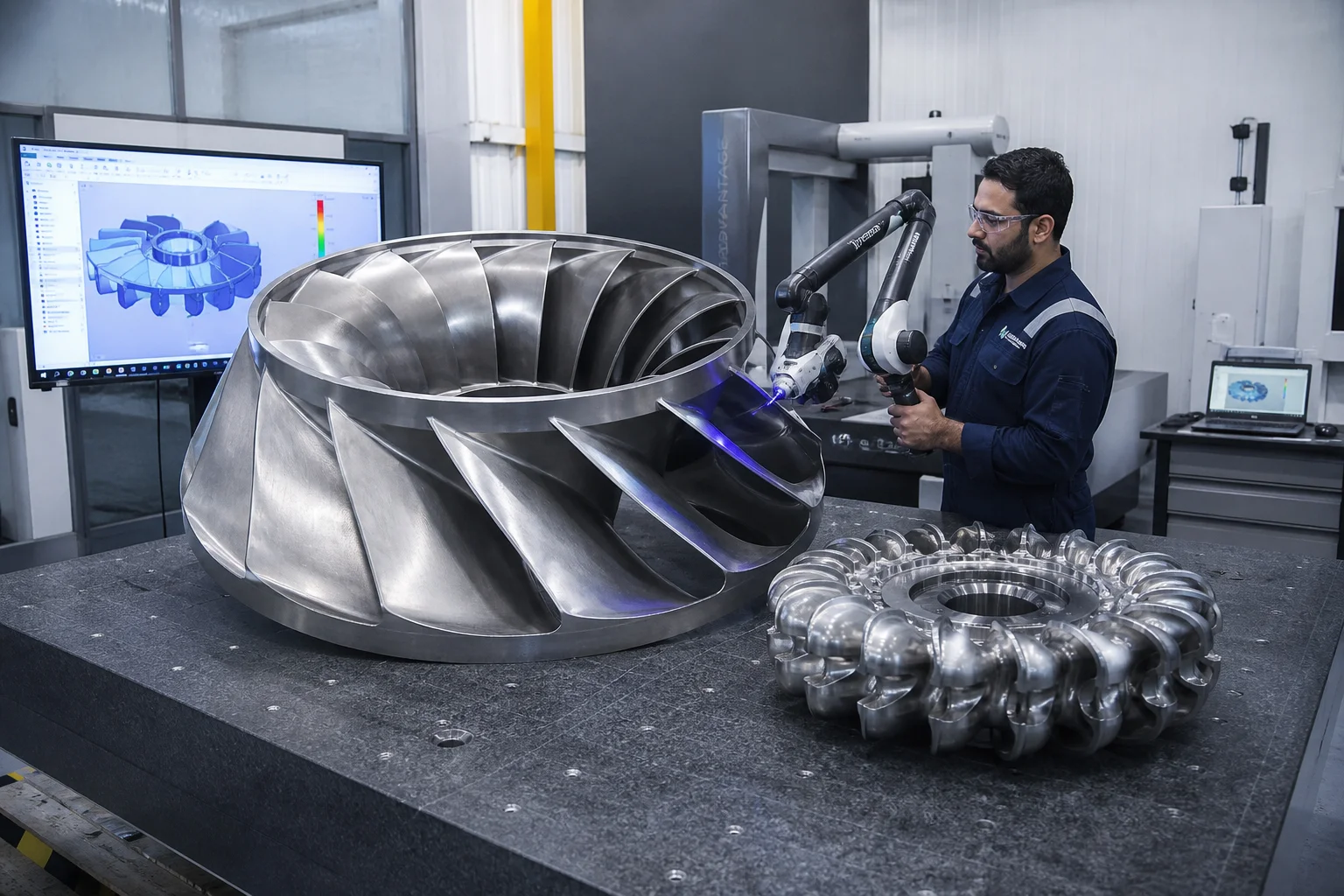
| 3D Optical & Laser Scanning | Portable 3D Laser Tracker / Arm Scanner | Full full-envelope dimensional verification against 3D CAD models |
| Dynamic Rotor Balancing | Balancing Machine per ISO 1940 Grade G2.5 | Dynamic balancing of hydro runners to eliminate rotational vibration |
6. Renewable Energy Castings at Dandong City Pengxin Machinery Co., Ltd.
Delivering high-reliability hydro and wind energy castings requires certified foundry quality systems, advanced metallurgy, and large-envelope multi-axis CNC machine tools.
Dandong City Pengxin Machinery Co., Ltd. is an established heavy casting and precision machining manufacturer serving global power generation equipment OEMs:
- Material Mastery: Certified production of 13Cr-4Ni martensitic stainless steel (CA6NM / 1.4313), low-temperature ductile iron (EN-GJS-400-18U-LT at ), and high-strength alloy steels.
- Heavy Infrastructure: 80,000 m² heavy casting and machining facility with heavy overhead cranes capable of pouring single castings from 500 kg up to 25 tons.
- Advanced 5-Axis CNC Machining: Large-envelope CNC portal milling centers and vertical turning lathes delivering finished hydrofoil runner blades and wind rotor hubs.
- In-House Certified Laboratory: Certified Level II/III NDT technicians, sub-zero Charpy impact testing chambers, metallographic phase analysis, and optical emission spectrometry.
- Complete Certification: ISO 9001 certified, providing full EN 10204 3.1 & 3.2 material test certificates, 100% NDT inspection logs, and 3D laser scan reports.
Conclusion
Hydro and wind power turbine component castings represent the critical structural backbone of the global green energy transition. Operating for 25 to 40 years under continuous cavitation, silt abrasion, and aerodynamic turbulence demands uncompromising metallurgical purity (CA6NM and EN-GJS-400-18U-LT), precision directional solidification, 5-axis CNC machining, and comprehensive NDT quality verification.
Partnering with an experienced, integrated heavy casting and precision machining powerhouse ensures that your renewable energy turbines operate at peak efficiency with decades of trouble-free service.
Contact Dandong City Pengxin Machinery Co., Ltd. to submit your hydro or wind power turbine component drawings.
Dandong City Pengxin Machinery Co., Ltd. — Heavy Castings and Precision Machining, Since 1958.
Table of Contents
- 1. Operating Environments & Renewable Energy Failure Mechanisms
- 2. Metallurgical Alloy Hierarchy: Hydro vs. Wind Components
- 3. Large-Scale Pattern Tooling & Directional Solidification
- 4. Multi-Axis 5-Axis CNC Hydrofoil & Flange Machining
- 5. Comprehensive Quality Control & Non-Destructive Testing (NDT)
- 6. Renewable Energy Castings at Dandong City Pengxin Machinery Co., Ltd.
- Conclusion