 EN
EN
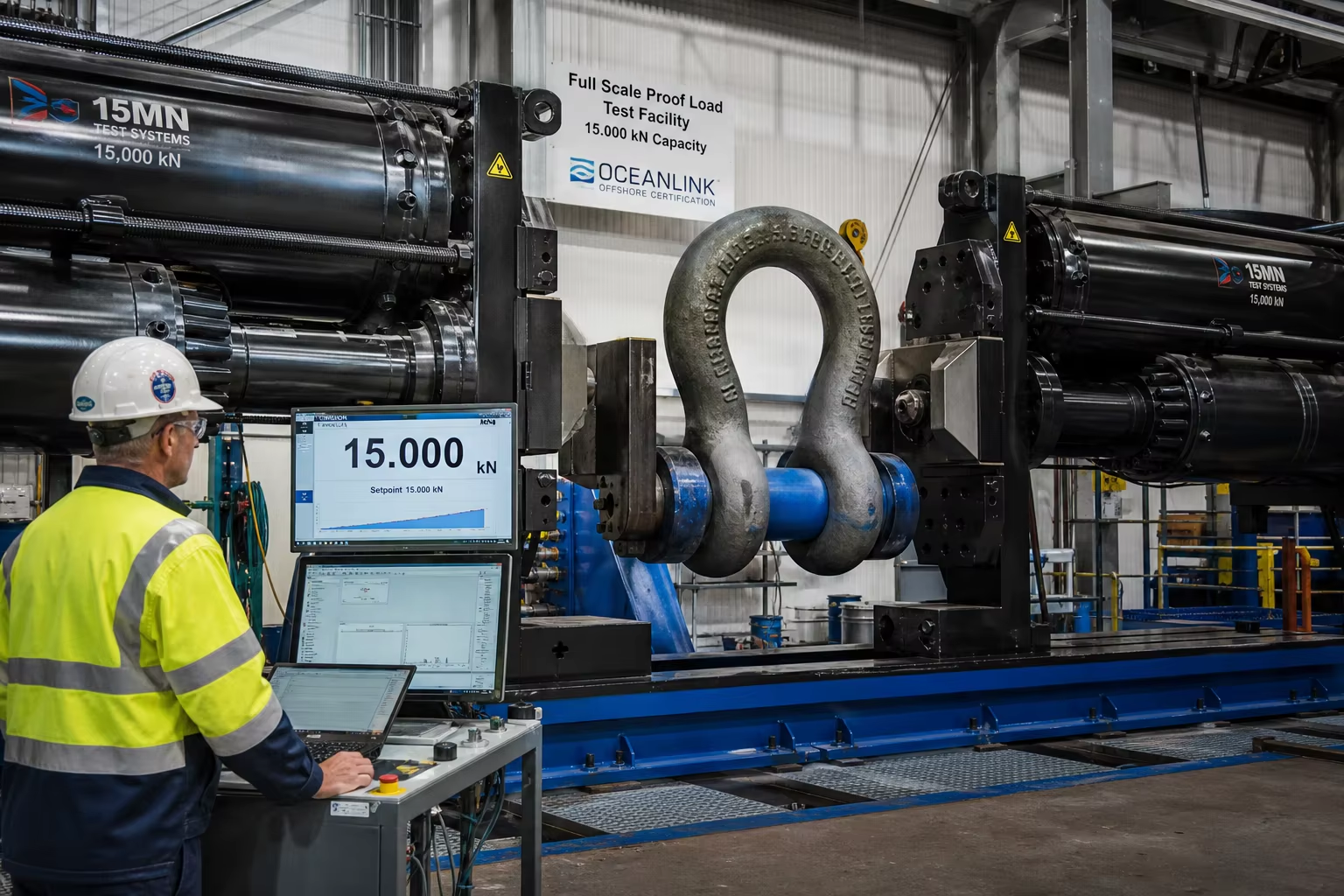
Meta Description: A complete technical guide to heavy cast alloy steel offshore mooring accessories and deepwater anchor components. Explore Grade R4, R4S, and R5 high-strength cast steels (Rm >= 1000 MPa), subsea corrosion fatigue, -20°C Charpy impact (>= 50 J), CTOD fracture mechanics, and 15,000 kN proof load pull testing per DNV-OS-E302 and ABS.
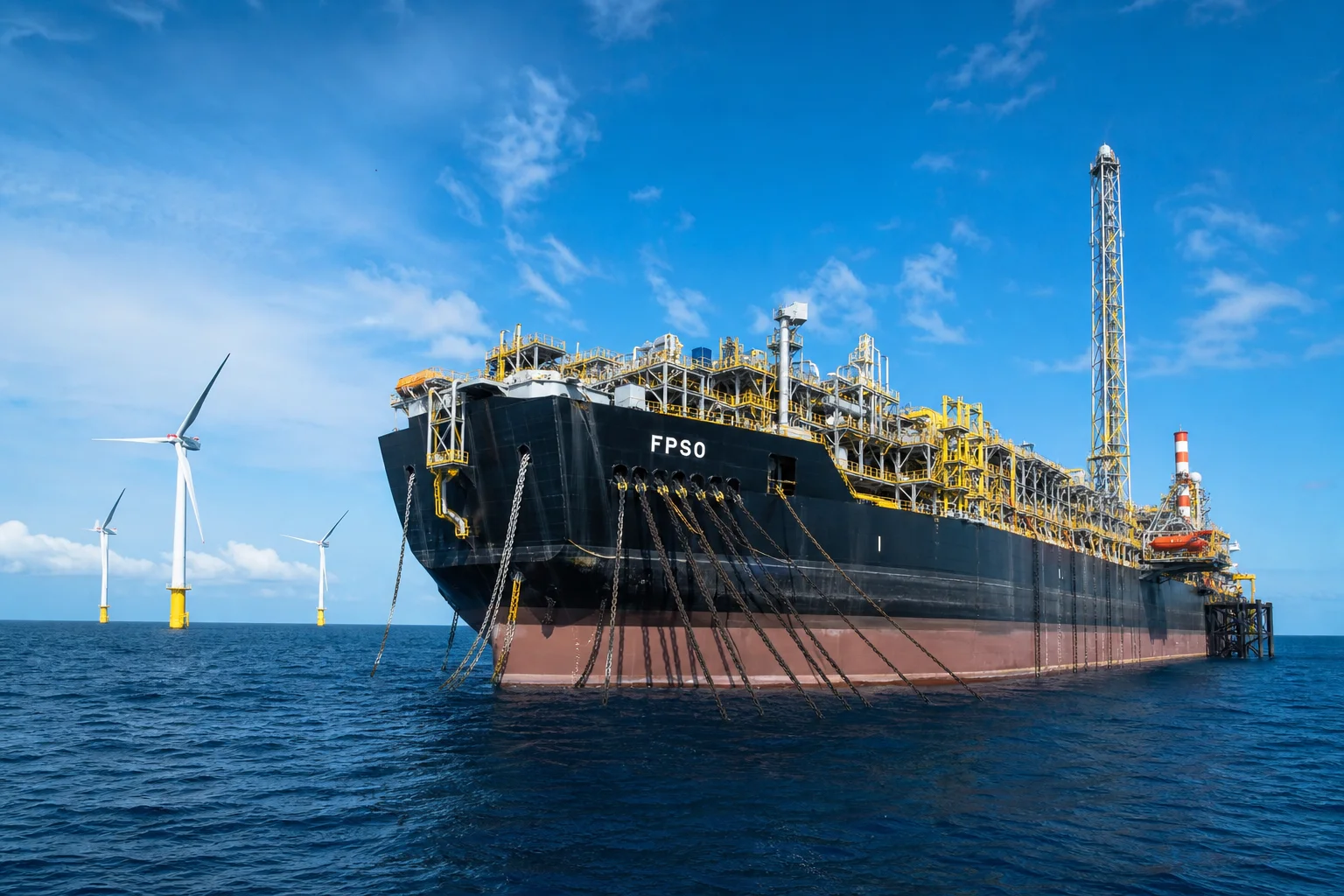
In deepwater offshore oil & gas exploration (FPSO, FLNG, Semi-Submersibles) and floating offshore wind turbine (FOWT) energy systems, offshore mooring lines and anchor connection hardware represent the ultimate mission-critical stationkeeping components. Anchoring floating platforms in ocean depths from 300 meters to over 2,500 meters, mooring lines and anchor connectors endure non-stop marine mechanical forces:
- 100-Year Extreme Storm Waves & Cyclonic Gusts: Peak dynamic tensile line tensions exceeding ().
- Continuous 25-Year Cyclic Fatigue (): High-amplitude low-frequency wave drift combined with high-frequency vortex-induced vibrations (VIV).
- Severe Subsea Environmental Attack: Continuous deep-ocean saltwater electrochemical corrosion, anaerobic sulfate-reducing bacteria (SRB) pitting, and cathodic protection (CP) hydrogen embrittlement risks.
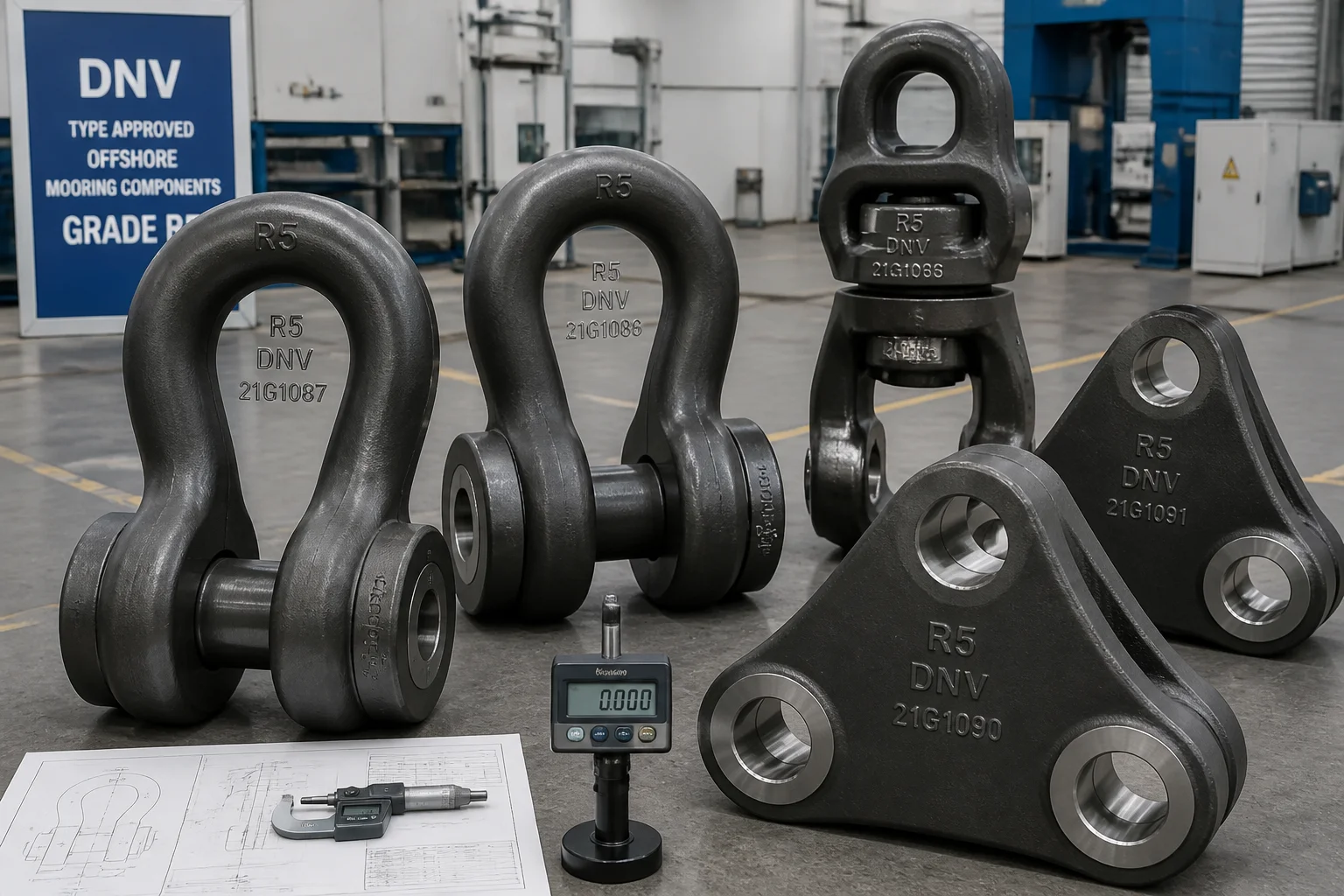
Under these harsh marine conditions, a single mooring component failure can result in platform breakaway, subsea riser rupture, multi-million-dollar oil spills, or floating turbine capsize. Consequently, offshore mooring castings must comply with the world's most rigorous marine standards — governed by DNV-OS-E302 (Offshore Mooring Chain and Accessories) and ABS Rules for Building and Classing Offshore Mooring Systems.
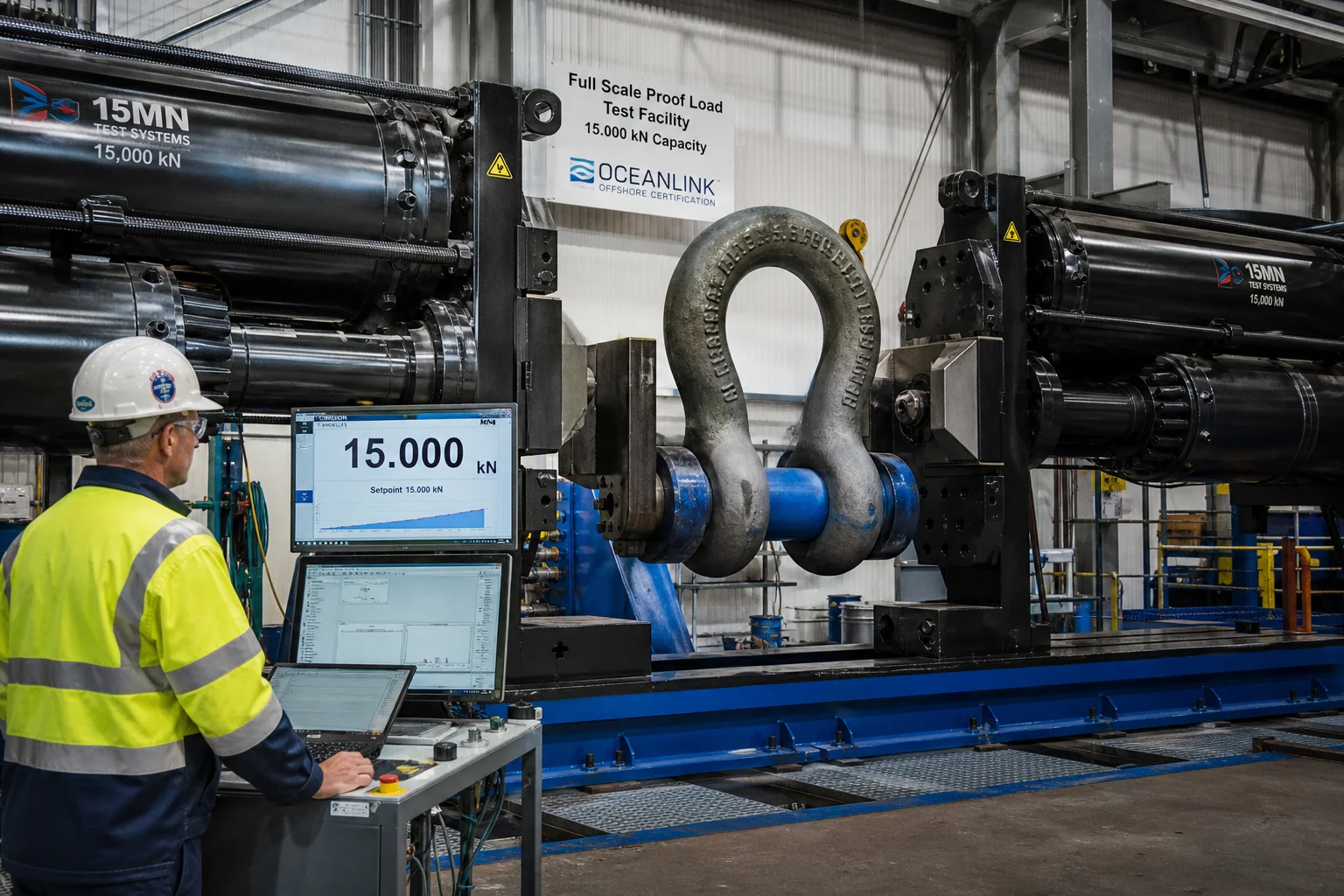
Achieving compliance demands specialized foundry engineering: casting Ultra-High-Strength Quenched & Tempered Nickel-Chromium-Molybdenum Steels (Offshore Mooring Grades R4, R4S, and R5) with tensile strengths exceeding , verifying sub-zero Charpy impact toughness ( at ), executing Crack Tip Opening Displacement (CTOD) fracture toughness testing, and performing Full-Scale Hydraulic Proof Load Tensile Pull Testing ().
This engineering guide provides an exhaustive analysis of offshore mooring metallurgy, casting defect elimination, heat treatment protocols, CNC pin-hole machining, and statutory marine certification workflows.
1. Deepwater Mooring Dynamic Stress Fields & Failure Modes
                     ┌──────────────────────────────────────────────┐
                     │ Severe Deepwater Ocean Dynamics (>10,000 kN) │
                     └──────────────────────┬───────────────────────┘
                                            │
        ┌───────────────────────────────────┼───────────────────────────────────┐
        ▼                                   ▼                                   ▼
┌───────────────────────────────┐ ┌───────────────────────────────┐ ┌───────────────────────────────┐
│ High-Cycle Wave Fatigue       │ │ Cathodic Hydrogen Embrittling │ │ High-Tension Peak Snapping    │
│ (Tension-tension cyclic stress│ │ (Atomic hydrogen diffusion    │ │ (Storm surge peak overload    │
│  at shackle crown radii)      │ │  into high-hardness R5 steel) │ │  exceeding yield strength)    │
└───────────────────────────────┘ └───────────────────────────────┘ └───────────────────────────────┘| Mooring Hardware Component | Operating Mechanical Load | Critical Failure Mode to Prevent | Material Grade Solution |
|---|---|---|---|
| Offshore Anchor Shackles & Swivels | Continuous tensile line tension + multi-axis swivel rotation | Crown radius bending fatigue, swivel pin seizure | Cast Ni-Cr-Mo Steel (DNV Grade R4 / R4S) |
| Delta Tri-Plates & Connector Links | 3-way line angle load splitting () | Center eye hole shear tear-out, brittle fracture | High-Strength Quenched & Tempered Cast Steel (Grade R5) |
| Kenter Joining Shackles | Direct chain-to-chain link locking | Taper pin shearing, locking tongue fatigue | Forged / Cast Grade R4S (Rm MPa) |
| Subsea Suction Pile Pad-Eyes | Deep subsea anchor holding pull | Base weld lamellar tearing, eye hole galling | High-Toughness Low-Temp Cast Steel (ASTM A352 LCC) |
2. Metallurgy & Chemical Control for Offshore Mooring Grades R4, R4S, and R5
DNV-OS-E302 and ABS specify stringent mechanical and chemical requirements for cast mooring steels:
| Offshore Mooring Grade | Minimum Yield Strength () | Minimum Tensile Strength () | Min Elongation () | Min Reduction of Area () | Charpy V-Notch (CVN) at | Critical Application Environment |
|---|---|---|---|---|---|---|
| Grade R3 | (Base) / (Weld) | Shallow water mooring, temporary drilling rigs | ||||
| Grade R4 | at | Standard deepwater FPSO & FLNG catenary lines | ||||
| Grade R4S | at | High-tension taut-leg synthetic/chain hybrid lines | ||||
| Grade R5 | at | Ultra-deepwater floating offshore wind (FOWT), Arctic FPSO |
Strict Chemical Composition & Purity Engineering (Grade R5):
- Carbon Equivalent (): .
- Hydrogen Embrittlement Mitigation: To prevent hydrogen-induced stress corrosion cracking (HISCC) under active cathodic protection, Maximum Surface Hardness is strictly capped at .
- Vacuum Degassing & Ladle Refining: Ultra-low sulfur () and phosphorus (), with total oxygen and hydrogen .
3. High-Integrity Casting Engineering & Directional Solidification
Mooring shackles and tri-plates feature thick cross-sections () subjected to extreme tensile stresses at the inside crown radius:
┌─────────────────────────────────────────────────────────────┐
│ 1. 3D Precision Master Tooling & Furan Resin Sand Molding   │
│    • High-compaction rigid molds eliminate sand erosion     │
├─────────────────────────────────────────────────────────────┤
│ 2. CAE Solidification Simulation & Thermal Modulus Design   │
│    • Feeder risers placed over outer crown sections         │
│    • Zero centerline shrinkage at high-stress inner radius  │
├─────────────────────────────────────────────────────────────┤
│ 3. Ceramic Foam Filtration & Tangential Bottom Gating       │
│    • Smooth, non-turbulent metal flow prevents dross traps  │
├─────────────────────────────────────────────────────────────┤
│ 4. Heavy Steel Chills at Critical Pin Hole Intersections    │
│    • Forces rapid directional freezing toward top feeders   │
└─────────────────────────────────────────────────────────────┘
4. Multi-Stage Quenching & Tempering (Q&T) Heat Treatment
As-Cast Ni-Cr-Mo Steel Component
                │
                ▼
┌────────────────────────────────────────────────────────┐
│ 1. Full Austenitizing (890 °C – 930 °C)                │
│    (Complete homogenization and grain refinement)      │
└───────────────┬────────────────────────────────────────┘
                │
                ▼  High-Agitation Polymer / Water Quench
┌────────────────────────────────────────────────────────┐
│ 2. Severe Quenching (Rapid Heat Extraction)            │
│    (Transforms heavy section to fine Martensite/Bainite)│
└───────────────┬────────────────────────────────────────┘
                │
                ▼
┌────────────────────────────────────────────────────────┐
│ 3. High-Temperature Tempering (600 °C – 660 °C)        │
│    (Relieves all internal quenching stresses;          │
│     produces uniform Tempered Martensite/Sorbite;      │
│     locks in Rm >= 1000 MPa with CVN >= 58 J at -20 °C)│
└────────────────────────────────────────────────────────┘
5. Precision CNC Pin-Hole Boring & Profile Machining
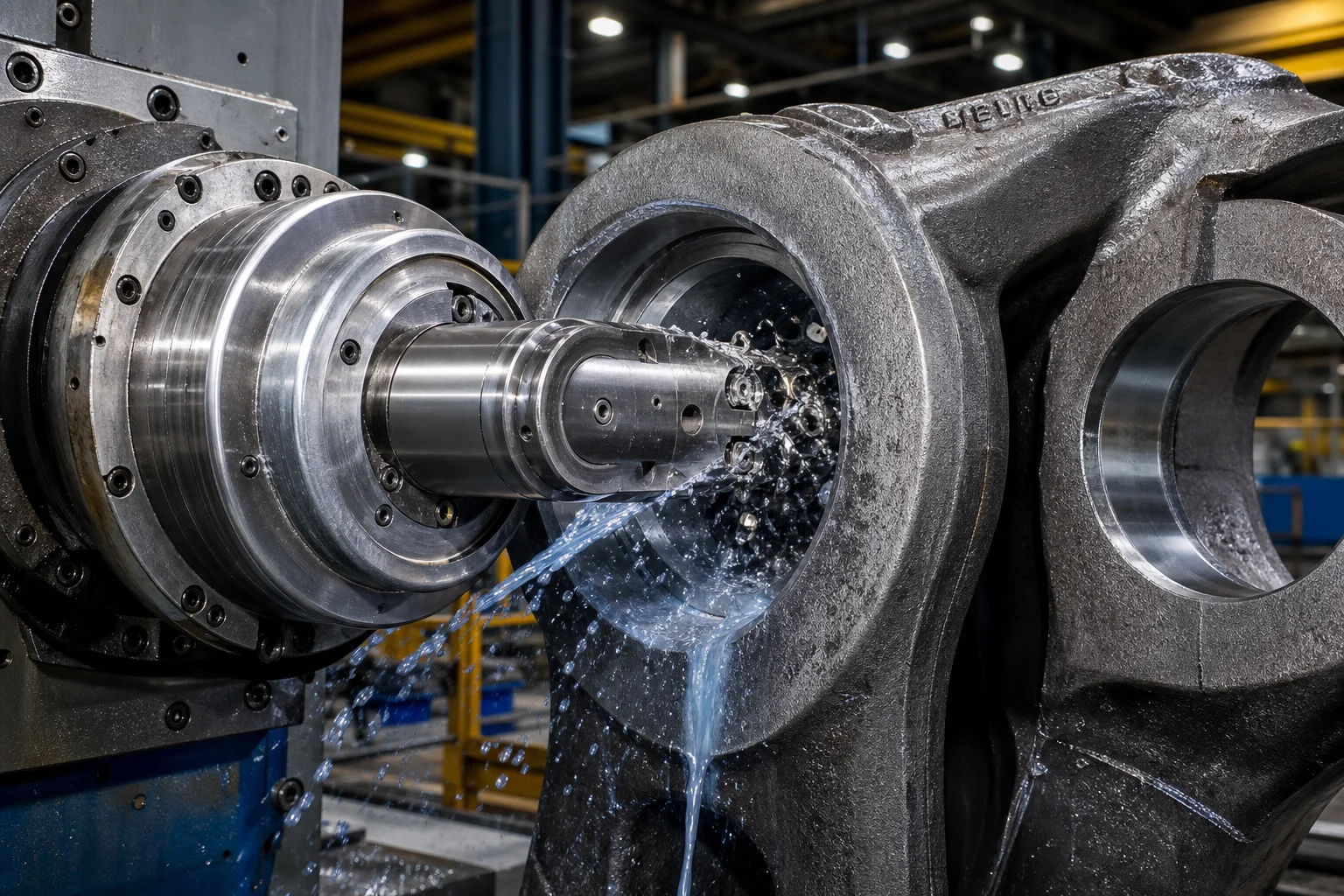
Pin hole alignment dictates load sharing across two-prong clevises and prevents pin point-loading:
- CNC Horizontal Boring of Clevis Pin Bores: In-line boring of both shackle ears in a single clamping setup. Pin hole coaxiality is maintained within , with hole surface roughness .
- Internal Radius Profile Contouring: Smooth transition milling of the inner crown load-bearing radius () to eliminate stress concentration notches.
6. Full-Scale Proof Load Pull Testing & Non-Destructive Quality Standards
| Inspection Category | Standard / Specification | Acceptance Criteria |
|---|---|---|
| Proof Load Tensile Pull Test | DNV-OS-E302 / ABS (Full-Scale Rig) | Proof load pulled to of Minimum Break Load (); zero permanent plastic deformation |
| Breaking Load Test (Sample) | DNV-OS-E302 Destructive Pull Rig | 1 sample per batch pulled to full Minimum Break Load (MBL ) without failure |
| Charpy V-Notch Impact | ISO 148-1 / ASTM E23 | Verified at on attached test prolongations |
| CTOD Fracture Toughness | BS 7448 / ASTM E1820 at | Crack Tip Opening Displacement ; verifies resistance to fatigue crack growth |
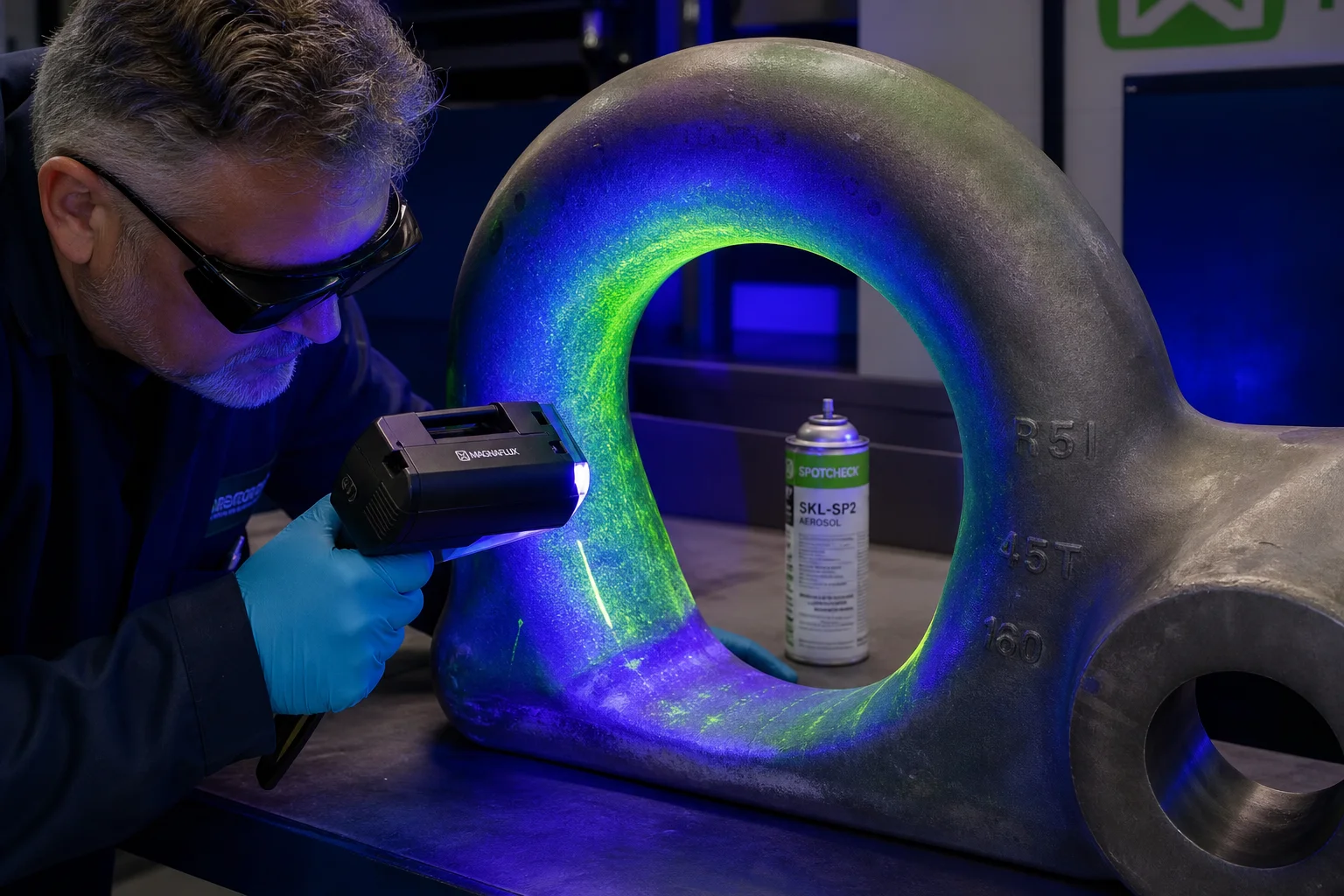
| Magnetic Particle Testing (MT) | ISO 9934 / ASTM E709 (Fluorescent) | 100% inspection of all surface radii, crown bows, and pin holes; Level 1 Zero Cracks |
 |Ultrasonic Testing (UT)|EN 10228-3 Class 3 / IACS UR M3| 100% volumetric scanning of shackle crown and clevis ears; zero internal voids |
7. Offshore Mooring Casting Capabilities at Dandong City Pengxin Machinery Co., Ltd.
Manufacturing Grade R4, R4S, and R5 offshore mooring castings requires verified foundry works approval, clean vacuum induction melting, computerized Q&T heat-treatment facilities, and heavy proof-load testing partnerships.
Dandong City Pengxin Machinery Co., Ltd. delivers fully certified, turnkey finished offshore mooring and anchor connection castings:
- High-Strength Offshore Alloys: Certified production of DNV Grade R3, R4, R4S, and R5 Ni-Cr-Mo cast steels, and low-temperature structural steels (ASTM A352 LCC).
- Heavy Foundry Infrastructure: 80,000 m² heavy casting plant with dual overhead cranes capable of pouring single alloy steel castings from 200 kg up to 25 tons.
- In-House Computerized Heat Treatment: Automated bogie-hearth furnaces with agitated polymer quench tanks delivering verified tensile strength with at .
- Precision CNC Machining: Heavy horizontal boring mills delivering single-setup in-line clevis pin holes with coaxiality .
- Classification Society Approvals: Established testing and inspection protocols for DNV, ABS, Lloyd's Register, BV, and CCS witness testing, providing full EN 10204 3.2 marine certificates and proof pull test logs.
Conclusion
Offshore mooring and deepwater anchor castings operate at the extreme frontier of ocean tension, cyclic wave fatigue, and subsea corrosion. Ensuring 25 years of stationkeeping safety without catastrophic line parting demands ultra-clean Ni-Cr-Mo alloy metallurgy (Grade R4/R5), strict hardness limitation () to prevent hydrogen embrittlement, verified Charpy impact and CTOD fracture toughness, and full-scale hydraulic proof load pull testing.
Partnering with an experienced, integrated heavy casting and precision machining powerhouse ensures that your floating offshore platforms and wind turbines remain securely anchored through the world's most violent ocean storms.
Contact Dandong City Pengxin Machinery Co., Ltd. to submit your offshore mooring hardware drawings or schedule classification society witness testing.
Dandong City Pengxin Machinery Co., Ltd. — Heavy Castings and Precision Machining, Since 1958.
Table of Contents
- 1. Deepwater Mooring Dynamic Stress Fields & Failure Modes
- 2. Metallurgy & Chemical Control for Offshore Mooring Grades R4, R4S, and R5
- 3. High-Integrity Casting Engineering & Directional Solidification
- 4. Multi-Stage Quenching & Tempering (Q&T) Heat Treatment
- 5. Precision CNC Pin-Hole Boring & Profile Machining
- 6. Full-Scale Proof Load Pull Testing & Non-Destructive Quality Standards
- 7. Offshore Mooring Casting Capabilities at Dandong City Pengxin Machinery Co., Ltd.
- Conclusion