
 EN
EN
Meta Description: A complete engineering guide to supercritical and ultra-supercritical (USC) power plant main steam valve and turbine casing castings. Explore creep-resistant Cr-Mo and 9Cr-1Mo-V-Nb steels (ASTM A217 WC9 & C12A / Grade 91), delta-ferrite control, multi-stage PWHT, and ASME Sec III/VIII quality compliance.
In supercritical (SC) and ultra-supercritical (USC) coal-fired, combined-cycle gas turbine (CCGT), and advanced nuclear power generation facilities, main steam stop valves, control valves, reheat valve bodies, and high-pressure steam turbine inner/outer casings operate under extreme thermodynamic conditions:
- Main Steam Operating Temperatures: ()
- Main Steam Operating Pressures: ()
Under these severe pressure-temperature conditions, standard carbon and low-alloy steels lose all structural strength and suffer rapid high-temperature creep void cavitation, grain boundary micro-cracking, steam oxidation exfoliation, and violent thermal cycling fatigue during power grid startup/shutdown cycles.
Surviving a 30-year (250,000-hour) design life without steam rupture demands specialized high-temperature casting metallurgy: casting Creep-Resistant Chromium-Molybdenum Steels (ASTM A217 Grade WC9 / 2.25Cr-1Mo) and advanced Modified 9Cr-1Mo-V-Nb Steels (ASTM A217 Grade C12A / Cast Grade 91 / 1.4903), maintaining strict control over delta-ferrite (), executing automated multi-stage Post-Weld Heat Treatment (PWHT at ), and complying with ASME Boiler and Pressure Vessel Code (BPVC) Section III / Section VIII and EN 12952.
This technical guide provides an exhaustive engineering analysis of creep-resistant alloy metallurgy, thick-to-thin section DFM casting modeling, multi-stage heat treatment, 5-axis CNC steam seal machining, and nuclear/thermal quality compliance standards.
1. Operating Thermodynamic Regimes & High-Temperature Failure Modes
                     ┌──────────────────────────────────────────────┐
                     │ Supercritical Steam (560 °C - 620 °C, 300 bar)│
                     └──────────────────────┬───────────────────────┘
                                            │
        ┌───────────────────────────────────┼───────────────────────────────────┐
        ▼                                   ▼                                   ▼
┌───────────────────────────────┐ ┌───────────────────────────────┐ ┌───────────────────────────────┐
│ Long-Term Creep Rupture       │ │ Thermal Shock Low-Cycle Fatig │ │ Type IV Heat-Affected Cracking│
│ (Diffusion-controlled void    │ │ (Rapid thermal gradients      │ │ (Fine-grained HAZ softening   │
│  formation on prior austenite)│ │  during plant load ramping)   │ │  leading to premature failure)│
└───────────────────────────────┘ └───────────────────────────────┘ └───────────────────────────────┘| Power Plant Component | Steam Condition & Pressure | Critical Failure Mode to Prevent | Material Grade Solution |
|---|---|---|---|
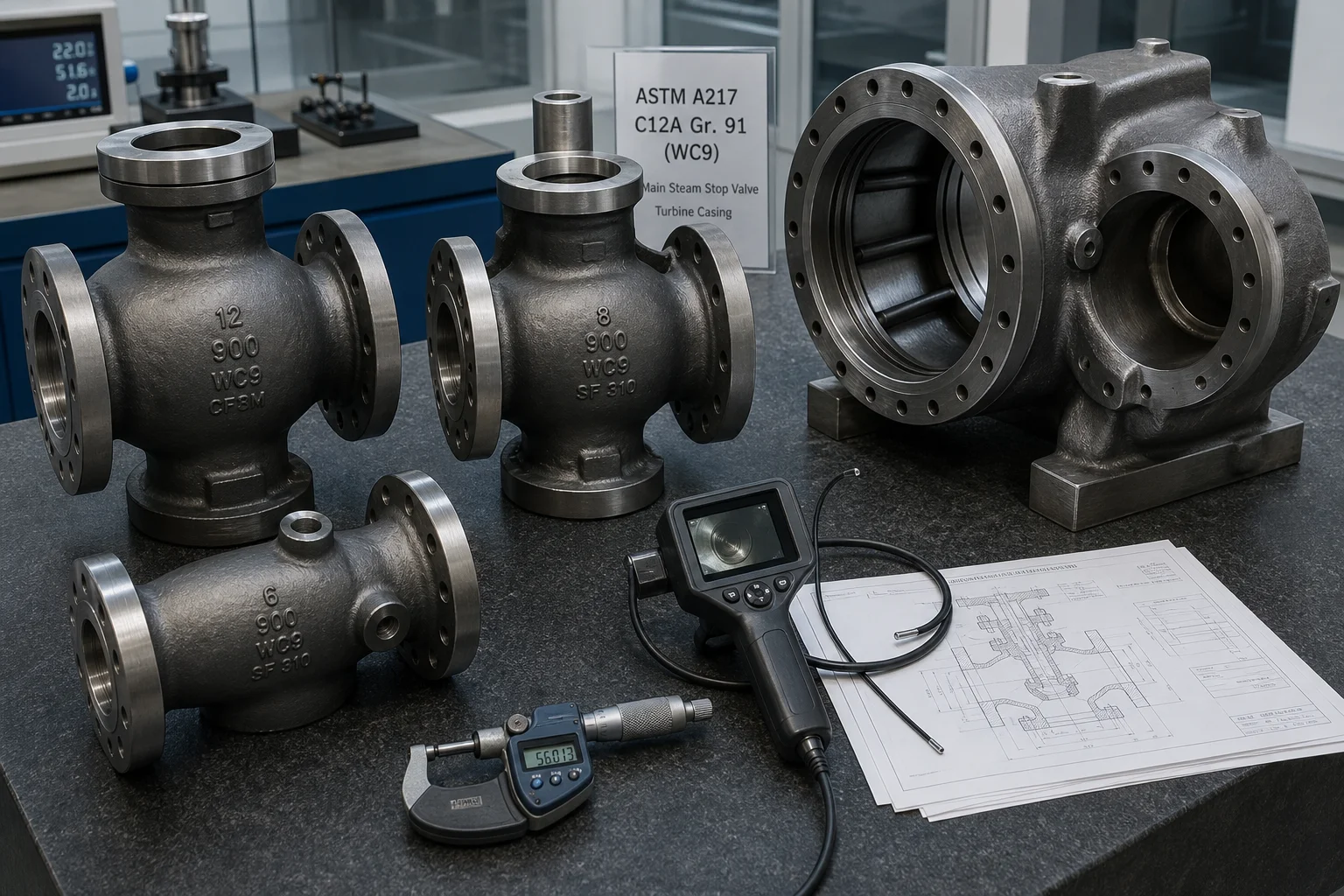
| HP Main Steam Stop & Control Valve Bodies | / | High-temperature creep rupture, seat distortion | Cast Grade 91 (ASTM A217 C12A / 1.4903) |
| Intermediate Pressure (IP) Reheat Valves | / | Thermal fatigue cracking, steam bypass leakage | ASTM A217 Grade C12A / Grade WC9 |
| HP Turbine Inner & Outer Casings | Multi-stage expansion pressure + thermal gradient | Casing split-flange steam leaking, creep sagging | ASTM A217 Grade WC9 (2.25Cr-1Mo) / C12A |
| Boiler Main Feedwater Check Valves | / | High-pressure erosion-cavitation, wall thinning | ASTM A217 Grade WC6 (1.25Cr-0.5Mo) / WCB |
2. Creep-Resistant Alloy Metallurgy & Material Hierarchy
A. ASTM A217 Grade C12A (Cast Modified 9Cr-1Mo-V-Nb / Grade 91)
Grade C12A represents the pinnacle of high-temperature ferritic-martensitic steels for ultra-supercritical steam service up to :
| Chemical Element | Target Range (wt%) | Critical High-Temperature Metallurgical Function |
|---|---|---|
| Carbon (C) | Optimizes primary carbide volume fraction without sacrificing weldability | |
| Chromium (Cr) | Forms protective chromia film resisting steam oxidation scaling | |
| Molybdenum (Mo) | Solid solution strengthening of martensite matrix; enhances creep resistance | |
| Vanadium (V) | Critical: Forms ultra-fine carbonitrides () that pin dislocations | |
| Niobium (Nb) | Forms stable precipitates that prevent prior austenite grain coarsening | |
| Nitrogen (N) | Combines with V and Nb to form MX-type precipitates; maintains creep strength | |
| Nickel + Manganese | Strict Limit: High depresses the transformation temperature below PWHT | |
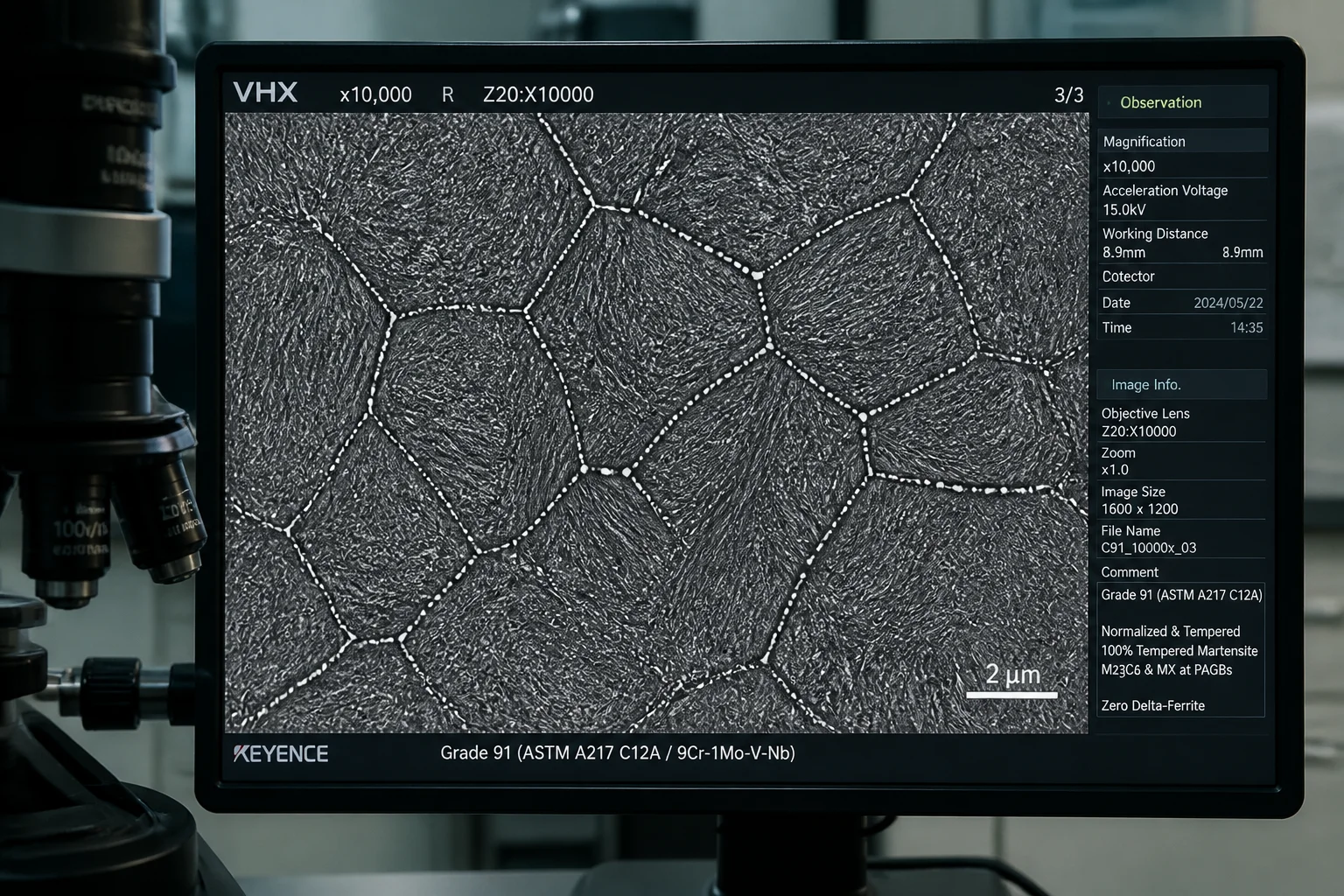
| Delta-Ferrite () | (Strictly Zero) | Delta-ferrite drastically reduces creep rupture strength and impact toughness |
- Microstructural Target: fully tempered martensite with fine lath substructure decorated with boundary carbides and intra-lath precipitates.
B. ASTM A217 Grade WC9 (Cast 2.25Cr-1Mo Steel)
For subcritical and standard supercritical service up to , Grade WC9 (2.25% Cr – 1.0% Mo) provides an outstanding balance of creep ductility, thermal conductivity, and proven weldability:
- Nominal Composition: .
- Mechanical Properties (Normalized & Tempered): .
3. Directional Solidification & Heavy-to-Thin Section DFM Casting
Power plant steam valve bodies and turbine casings feature complex pressure-containing geometries: massive neck flanges ( wall) intersect thinner flow bowls ().
┌─────────────────────────────────────────────────────────────┐
│ 1. 3D Precision Master Tooling & Ceramic Shell/Sand Molding │
│    • High-rigidity molds resist ferrostatic expansion       │
├─────────────────────────────────────────────────────────────┤
│ 2. CAE Solidification Simulation (MAGMA / ProCAST)          │
│    • Predicts internal shrinkage at internal valve seat ribs │
├─────────────────────────────────────────────────────────────┤
│ 3. Insulated Exothermic Feeder Sleeves over Main Flanges    │
│    • High thermal modulus feeder risers maintain liquid feed│
│      pathway into heavy valve neck                          │
├─────────────────────────────────────────────────────────────┤
│ 4. Heavy Steel Chills at Internal Seat Pockets              │
│    • Accelerates freezing at deep internal seat intersections│
│    • Guarantees 100% volumetric soundness (RT Level 1)      │
└─────────────────────────────────────────────────────────────┘
4. Multi-Stage Normalizing & Post-Weld Heat Treatment (PWHT)
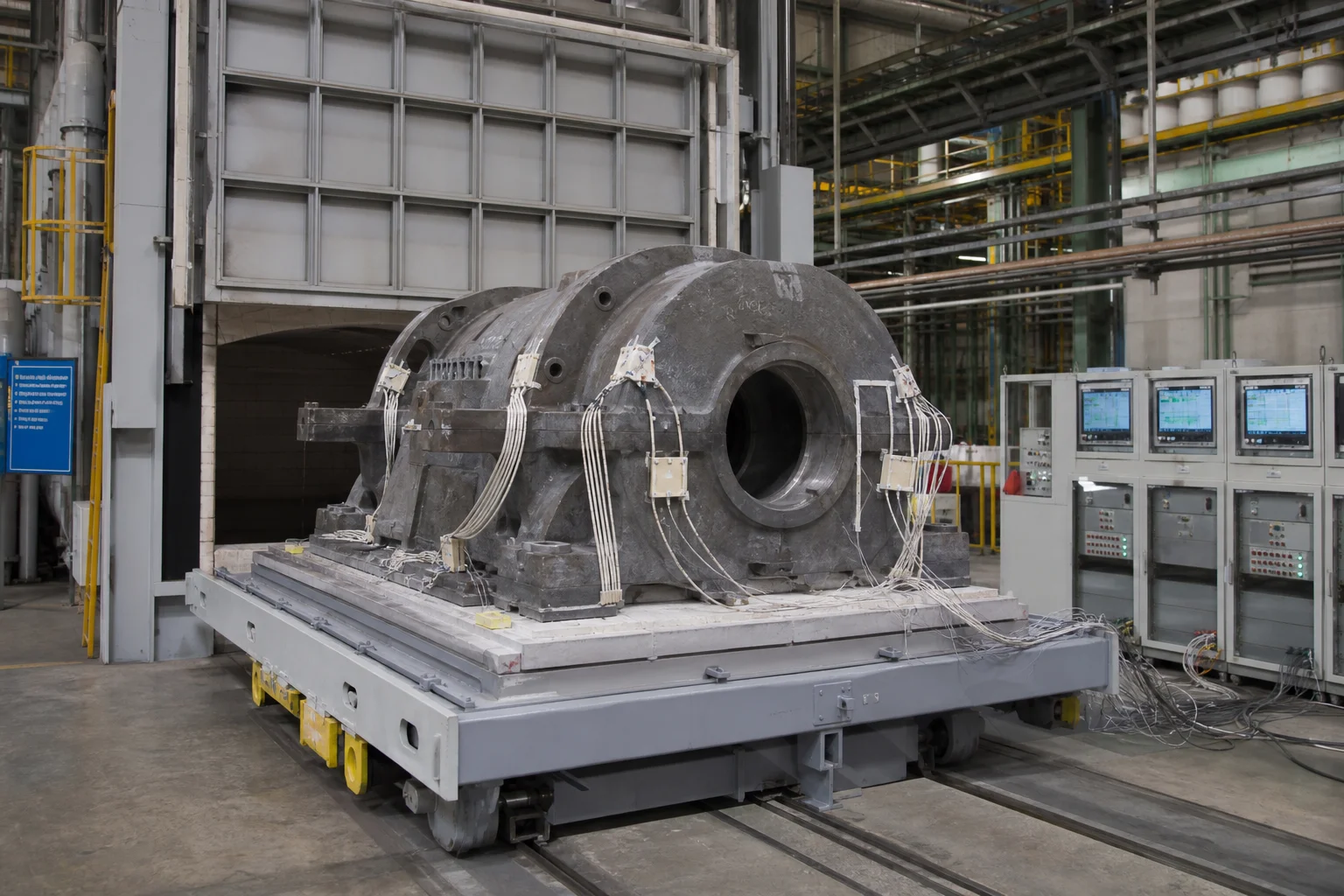
Heat treatment of Grade C12A / Grade 91 cast steel requires strict temperature window control:
As-Cast State: Coarse Untempered Martensite + Delta Ferrite
                   │
                   ▼
┌────────────────────────────────────────────────────────┐
│ 1. High-Temperature Normalizing (1,040 °C – 1,080 °C)  │
│    (Fully dissolves all carbides into single-phase $\gamma$)│
└──────────────────┬─────────────────────────────────────┘
                   │
                   ▼  Forced Air Blast / High-Agitation Quench
┌────────────────────────────────────────────────────────┐
│ 2. Rapid Cooling (Cooling Rate $>5\text{ °C/sec}$)     │
│    (Bypasses ferrite/pearlite nose; forms 100% $\alpha'$) │
└──────────────────┬─────────────────────────────────────┘
                   │
                   ▼
┌────────────────────────────────────────────────────────┐
│ 3. Precision High-Temperature Tempering (730 °C – 760 °C)
│    • Strict window: Must be $>730\text{ °C}$ for creep │
│      stability, but strictly $< Ac_1$ ($790\text{ °C}$)│
│    • Soaked for 4–8 hours; precipitates MX carbonitrides│
└────────────────────────────────────────────────────────┘
5. Multi-Axis CNC Steam Seal & Flange Machining
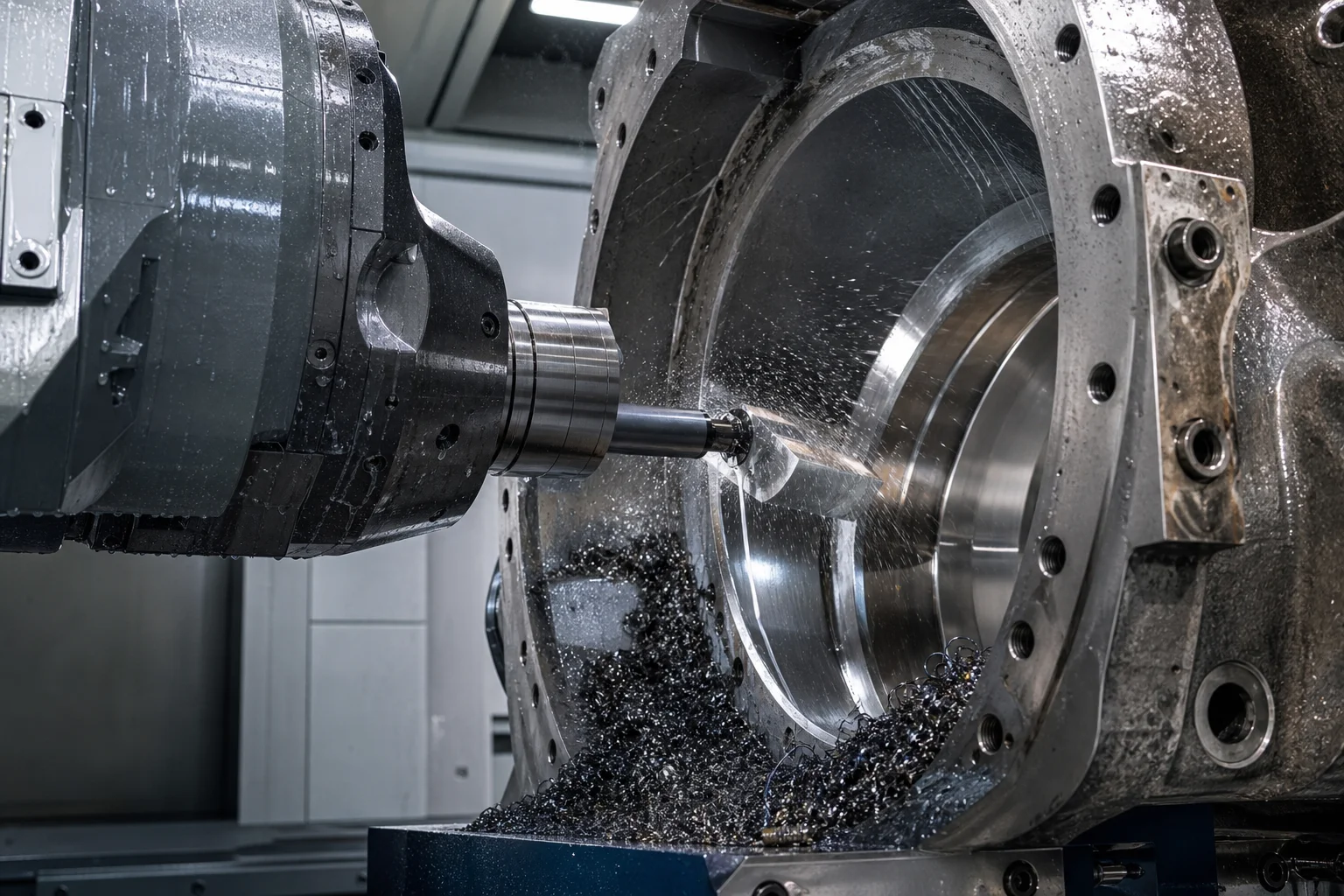
Steam valves operating at 300 bar will suffer high-pressure steam wire-drawing erosion across any minor seat imperfection:
Precision CNC Operations:
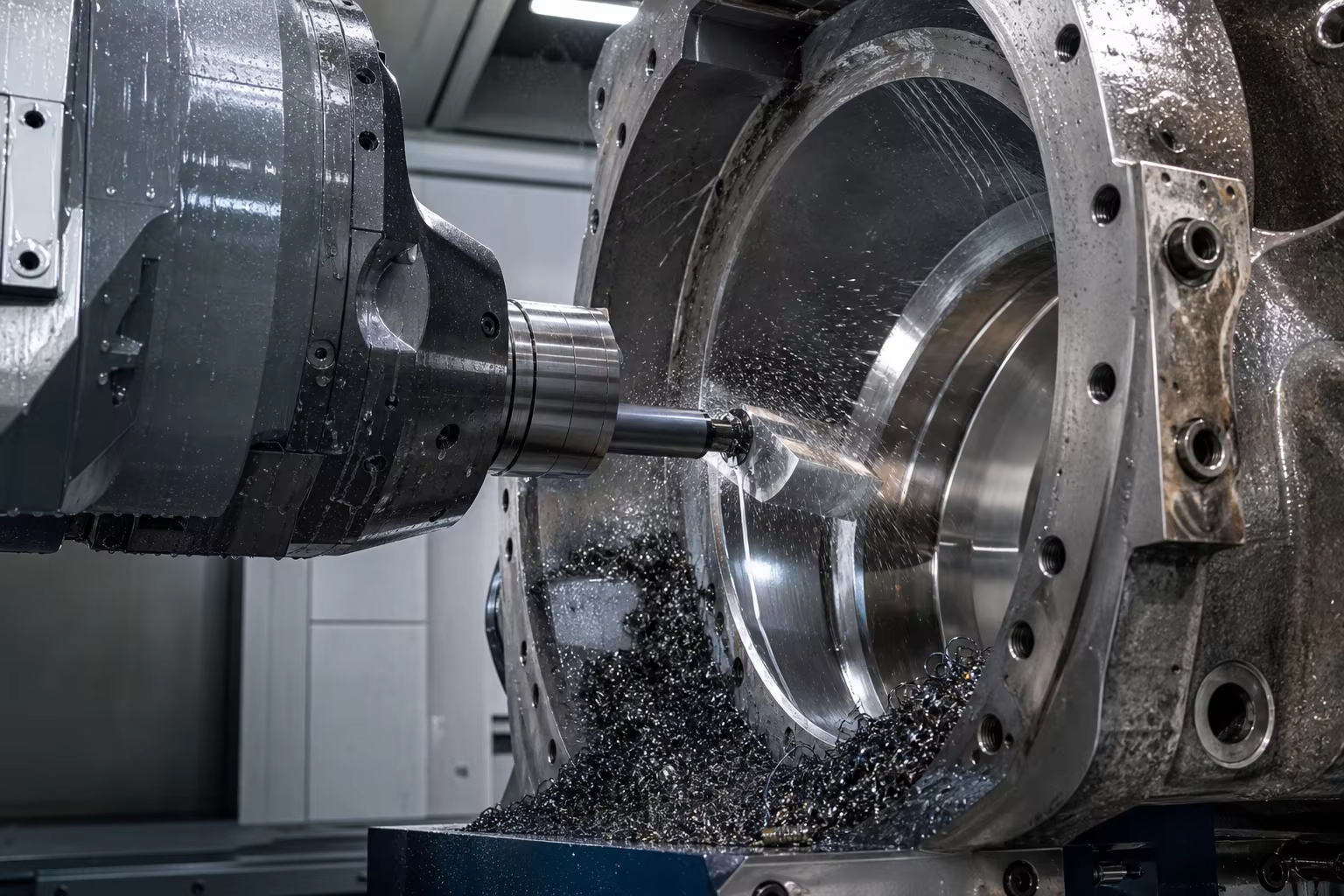
- Internal Seat Ring Pocket Machining: High-rigidity 5-axis CNC horizontal machining centers precision-mill internal valve seat pockets, maintaining runout and squareness within .
- Stellite 6 Hardfacing Overlay: Precision automated PTA (Plasma Transferred Arc) welding of Stellite 6 () hardfacing onto valve seating faces, followed by diamond CNC grinding ().
- Flange Serrated Gasket Faces: ASME B16.5 concentric serrated finish () turned on large vertical boring lathes.
6. Comprehensive Nuclear & Power Quality Assurance Standards
| Inspection Category | Standard / Test Specification | Acceptance Criteria |
|---|---|---|
| Radiographic Testing (RT) | ASME B16.34 / ASTM E446 / ASTM E186 | 100% volumetric radiographic inspection of all pressure-containing walls; Level 1/2 Acceptance |
| Ultrasonic Testing (UT) | EN 12680-3 / ASME Sec V Art 4 | 100% volumetric scan on heavy flanges and seat areas; zero critical linear indications |
| Magnetic Particle Testing (MT) | ASME Sec VIII Div 1 App 6 / ASTM E709 | 100% fluorescent MT on all internal flow bowls, weld preps, and seat fillets; zero cracks |
| High-Temp Tensile & Creep | ASTM E21 () / ASTM E139 Creep Rupture | High-temperature yield strength and creep rupture life verified on attached prolongations |
| Hydrostatic Shell Proof Test | ASME B16.34 / ISO 5208 | cold rated pressure () held for ; zero pressure drop |
7. Steam Power Casting Capabilities at Dandong City Pengxin Machinery Co., Ltd.
Manufacturing high-temperature supercritical power plant castings demands certified high-alloy induction melting, precision ceramic sand molding, computer-controlled PWHT furnaces, and comprehensive NDT facilities.
Dandong City Pengxin Machinery Co., Ltd. delivers fully certified, turnkey finished steam valve and turbine casing castings:
- Extensive Creep-Resistant Alloy Expertise: Certified production of ASTM A217 Grade WC9, WC6, C12A (Cast Grade 91), and EN 10283 1.4903.
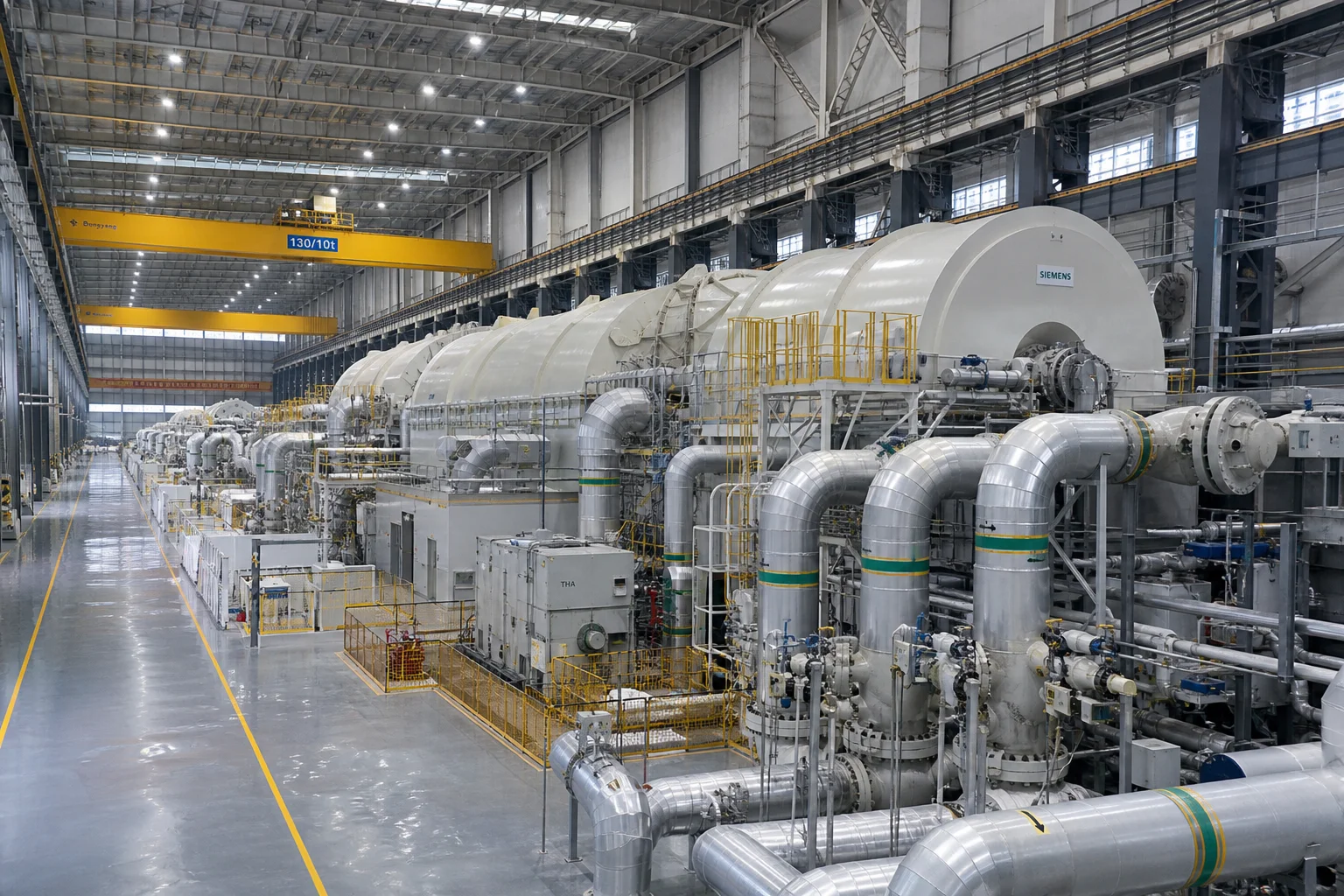
- Heavy Tonnage Infrastructure: 80,000 m² facility with dual overhead cranes capable of pouring single alloy steel castings from 500 kg up to 25 tons.
- Dedicated Computerized PWHT Furnaces: Automated electric and gas heat-treatment furnaces with multi-point thermocouple logging ensuring strict temperature uniformity during tempering.
- Advanced 5-Axis CNC Machining: Large horizontal boring mills and vertical turning lathes delivering finished steam seal faces, Stellite hardfacing overlays, and serrated flanges.
- Nuclear & Thermal Power Certification: ISO 9001 certified, providing full EN 10204 3.1 & 3.2 inspection certificates, 100% RT/UT reports, and high-temperature test data.
Conclusion
Supercritical power main steam valve and turbine casing castings operate at the thermodynamic limits of high-temperature steel metallurgy. Ensuring 250,000 hours of safe operation without creep rupture or steam leakage demands disciplined low-carbon Cr-Mo-V-Nb alloy chemistry (C12A / Grade 91), complete elimination of delta-ferrite, strict computerized PWHT (), and 100% volumetric NDT inspection.
Partnering with an experienced, integrated heavy casting and precision machining powerhouse ensures that your power generation valves and turbines operate at maximum efficiency with uncompromising safety.
Contact Dandong City Pengxin Machinery Co., Ltd. to submit your power plant steam valve or turbine casing drawings.
Dandong City Pengxin Machinery Co., Ltd. — Heavy Castings and Precision Machining, Since 1958.
Table of Contents
- 1. Operating Thermodynamic Regimes & High-Temperature Failure Modes
- 2. Creep-Resistant Alloy Metallurgy & Material Hierarchy
- 3. Directional Solidification & Heavy-to-Thin Section DFM Casting
- 4. Multi-Stage Normalizing & Post-Weld Heat Treatment (PWHT)
- 5. Multi-Axis CNC Steam Seal & Flange Machining
- 6. Comprehensive Nuclear & Power Quality Assurance Standards
- 7. Steam Power Casting Capabilities at Dandong City Pengxin Machinery Co., Ltd.
- Conclusion