 EN
EN
Introduction
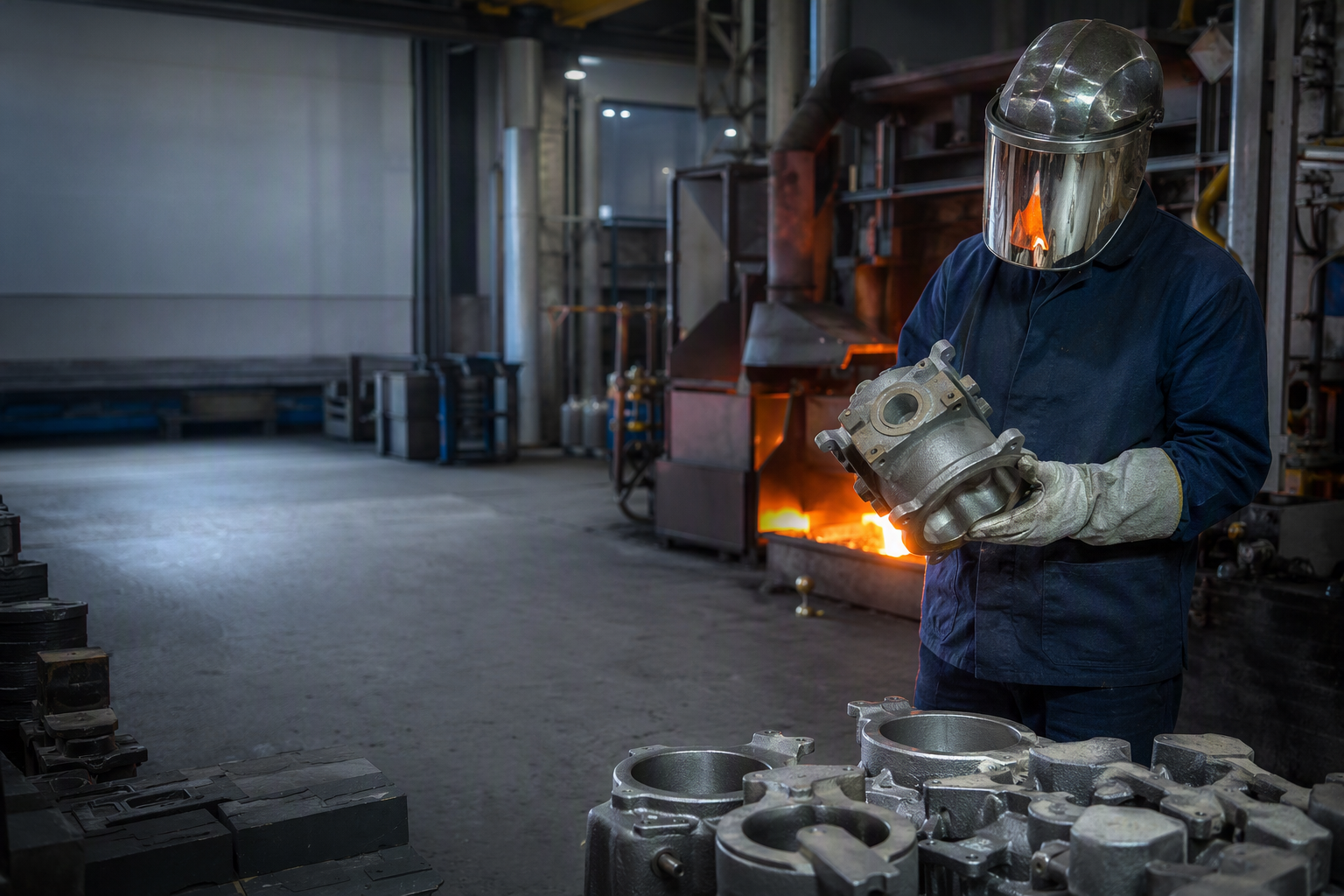
A cast metal component is only as reliable as the process behind it. For industrial buyers, choosing a supplier is not simply a matter of comparing quotations. The right casting and machining partner must understand the relationship between part design, material selection, mould preparation, solidification, machining allowance, inspection, and final delivery.
This is especially important when a component will be installed in machinery that operates under load, vibration, temperature changes, or repeated cycles. A supplier may be able to produce a visually acceptable casting, but that does not automatically mean the finished part will be consistent, machinable, or suitable for long-term industrial use.
This guide explains the practical factors that purchasing teams, product engineers, and maintenance professionals should review when selecting a metal casting manufacturer and CNC machining partner. It also outlines how Dandong Pengxin Machinery Co., Ltd. can be introduced to prospective customers looking for a dependable route from casting requirements to finished industrial components.
1. Start with the Complete Manufacturing Route
The first question should be: can the supplier manage the complete manufacturing route required by the component?
Depending on the design and production volume, a project may involve several stages:
- Review of drawings, 3D models, and technical specifications
- Selection of a suitable casting process
- Pattern, tooling, or mould preparation
- Melting and pouring of the selected metal
- Cooling, shakeout, fettling, and surface cleaning
- Heat treatment when required by the specification
- CNC machining of functional surfaces
- Dimensional and visual inspection
- Protective treatment, packing, and shipment
A connected process reduces handoff risk. When casting and machining are planned together, the team can coordinate machining allowances, datum surfaces, hole locations, wall thickness, and tolerances before production begins. This helps prevent a common problem: a casting that appears acceptable before machining but cannot achieve the required finished dimensions afterward.
A strong supplier should therefore discuss the part as a complete manufacturing project rather than treating casting and machining as unrelated services.
2. Match the Casting Process to the Part Design
Different casting methods serve different engineering priorities. The best choice depends on geometry, section thickness, quantity, surface requirements, dimensional targets, and total project cost.
Sand casting for practical, versatile production
Sand casting is widely used for industrial parts with relatively large dimensions, robust geometry, or moderate production volumes. It offers design flexibility and can be suitable for housings, brackets, bases, frames, and other structural components. The process must still be carefully controlled: mould quality, gating, risering, pouring temperature, and cooling conditions all influence the final result.
Investment casting for intricate geometry
Investment casting can support complex shapes, fine details, and reduced machining requirements in selected applications. It is often considered when the component contains difficult contours, narrow passages, or features that would be costly to create through extensive cutting. However, the process should be evaluated against the part size, production quantity, material, and tolerance requirements rather than chosen solely because it sounds more precise.
Shell moulding for surface and dimensional consistency
Shell moulding can be considered when a project needs a mould with greater rigidity and a more refined mould surface than conventional sand moulding can provide. As with every process, the final result depends on tooling design, metal flow, process control, and inspection—not on the process name alone.
The supplier should explain why a particular process is recommended and how it affects tooling cost, lead time, machining allowance, achievable tolerances, and expected production stability.
3. Evaluate Material Control, Not Just Material Names
A material designation on a quotation is only the beginning. Industrial buyers should ask how the supplier controls the material throughout production.
Important points may include:
- How incoming raw materials are identified and stored
- Whether heat or batch traceability is maintained
- How the chemical composition is verified when required
- Which mechanical or metallurgical requirements apply to the part
- How melt preparation and pouring are controlled
- Whether heat treatment is required and how it is documented
- Which inspection records can accompany the shipment
Material selection should also reflect the working environment. Wear, corrosion, impact, temperature, load, and fatigue can all influence the appropriate choice. A casting and machining partner should be able to ask relevant engineering questions before recommending a material route.
Avoid evaluating a supplier only by the lowest quoted material price. An unsuitable grade, inconsistent chemistry, or poorly controlled process can create machining problems, premature wear, rework, and unplanned downtime.
4. Check How Casting Quality Is Verified Before Machining
Machining can improve a component's dimensions, but it cannot correct every casting problem. Internal discontinuities, shrinkage, porosity, inclusions, cracks, or unsuitable material structure may remain hidden until late in the process—or after the component has entered service.
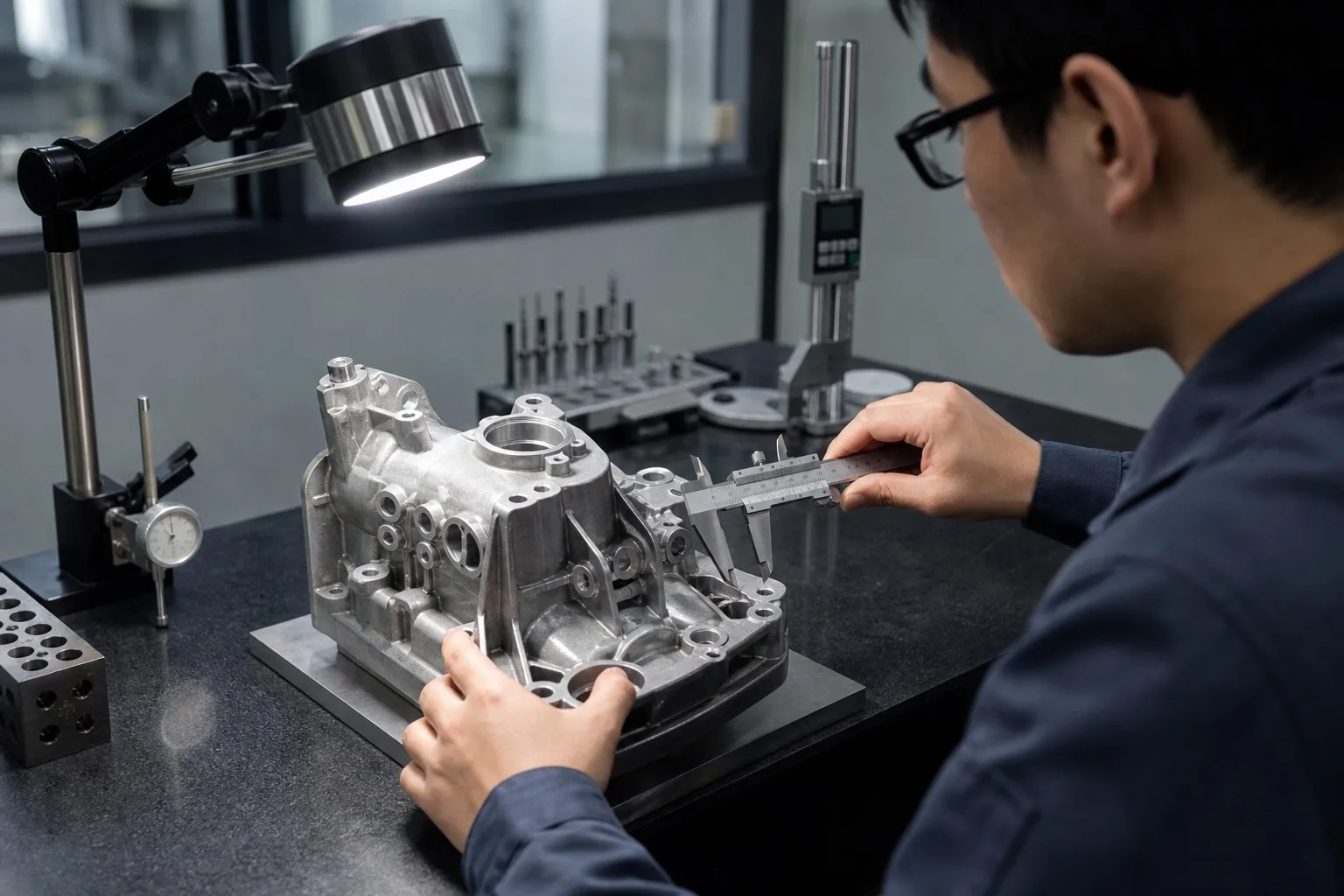
For this reason, quality planning should begin before machining. Depending on the drawing and application, a project may include visual inspection, dimensional checks, chemical analysis, hardness testing, or non-destructive testing. The exact method should be based on the part's risk, specification, and customer requirements.
A reliable supplier should be able to define:
- What characteristics are checked at each stage
- Which dimensions are measured before and after machining
- How nonconforming parts are isolated and reviewed
- How inspection results are recorded
- How drawing revisions and customer changes are controlled
The goal is not to add unnecessary inspection. The goal is to apply the right inspection at the right stage so that defects are identified before they increase cost or affect delivery.
5. Confirm the Machining Plan for Functional Features
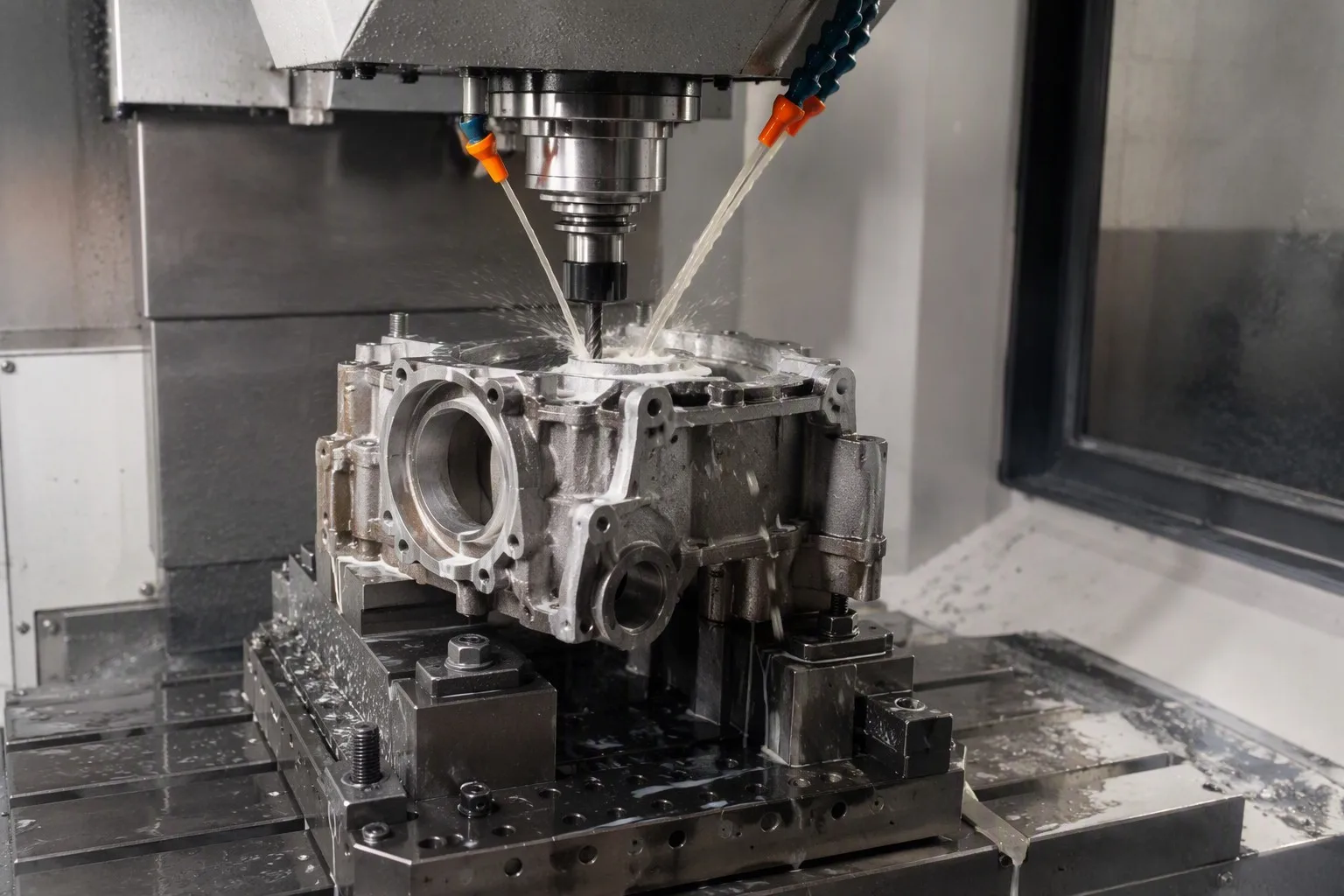
Many castings are designed with non-machined surfaces and a smaller number of critical machined features. These may include mounting faces, bores, threaded holes, sealing surfaces, bearing seats, or alignment datums.
The machining plan should consider:
- Stable workholding and repeatable location
- The relationship between casting datums and finished datums
- Sufficient machining allowance without excessive material removal
- Tool access to internal and external features
- Burr control and edge treatment
- Measurement of critical dimensions after machining
A capable CNC machining partner does more than remove material. The team must understand which surfaces control assembly, how the component will be located in the customer's equipment, and which tolerances are functional rather than cosmetic.
Good communication at this stage can also improve manufacturability. A small change to a radius, datum, hole orientation, or machining allowance may reduce production risk without changing the function of the component.
6. Review Engineering Communication and Documentation
A casting project can fail because of communication even when the workshop has adequate equipment. Drawings, 3D files, revision numbers, material requirements, inspection criteria, packaging instructions, and delivery terms must remain aligned from quotation to shipment.
Before placing an order, clarify:
- Which drawing revision will control production
- Which dimensions are critical to function
- What surface condition is acceptable for as-cast areas
- Which inspection documents are required
- How engineering changes will be reviewed
- How samples or first articles will be approved
- How packaging will protect machined and finished surfaces
A supplier that asks precise questions early is often easier to work with than one that promises everything without discussing technical details. Clear questions demonstrate that the supplier is considering production risk rather than only trying to win the order.
For overseas projects, communication should also cover time-zone coordination, file formats, response timing, shipping documents, and the preferred method for resolving technical changes. These details have a direct effect on project efficiency.
7. Compare Total Cost, Not Only the Unit Price
The quoted unit price is important, but it is not the complete cost of a cast and machined part. A more useful comparison includes tooling, samples, machining, inspection, surface treatment, packaging, freight, rework risk, and the cost of delayed delivery.
A practical supplier comparison should examine:
- Tooling and development charges
- Cost at the expected order quantity
- Machining and inspection scope
- Scrap and rework controls
- Packaging requirements
- Lead-time assumptions
- Payment and shipping terms
- Technical support during development
The lowest initial quote may not be the lowest total-cost solution if it excludes necessary machining, uses an unsuitable process, or creates a high risk of inconsistent parts. A transparent quotation should make the manufacturing scope easy to understand.
8. Build a Supplier Relationship Around Repeatability
The first successful sample is valuable, but repeatability is what supports long-term production. Once a part has been approved, the supplier should maintain a stable process and preserve the information needed to reproduce it.
Useful repeatability practices include controlled drawings, approved material routes, production records, inspection plans, tooling maintenance, and clear handling of revisions. These practices help the customer receive consistent parts across repeat orders and reduce the need to restart technical discussions every time a purchase order is issued.
This is where a specialized company such as Dandong Pengxin Machinery Co., Ltd. can present its value to industrial customers: not only as a source of individual metal parts, but as a potential manufacturing partner for projects that require coordinated casting, machining, inspection, and delivery planning. Any capability, material grade, tolerance, certification, or production quantity should be confirmed against the specific project before it is promised.
A Practical Checklist for Buyers
Before selecting a casting and machining partner, ask the following questions:
- Does the supplier understand the complete route from drawing review to finished part?
- Can the proposed casting process match the component's geometry and quantity?
- How are materials identified, verified, and traced?
- Which inspections are included before and after machining?
- How are critical datums, allowances, and functional tolerances managed?
- Can the supplier explain tooling, lead time, and total project cost clearly?
- How are revisions, nonconforming parts, and corrective actions handled?
- Are packaging and delivery requirements included in the manufacturing plan?
- Can the supplier support repeat orders with a controlled and documented process?
- Can the supplier confirm all technical claims with project-specific evidence?
Conclusion
Selecting a reliable casting and machining partner requires more than comparing photos or unit prices. The strongest evaluation looks at process fit, material control, machining strategy, inspection planning, documentation, communication, and repeatability as one connected system.
For buyers developing custom industrial components, the best next step is to share the part drawing or 3D model together with the material requirement, expected quantity, critical tolerances, application conditions, and inspection expectations. Dandong Pengxin Machinery Co., Ltd. can then be included in the technical discussion and project evaluation for casting and machining requirements.
Request a technical discussion: Send your drawings, specifications, target quantity, and delivery requirements to Dandong Pengxin Machinery Co., Ltd. for an application-specific review.
Table of Contents
- Introduction
- 1. Start with the Complete Manufacturing Route
- 2. Match the Casting Process to the Part Design
- 3. Evaluate Material Control, Not Just Material Names
- 4. Check How Casting Quality Is Verified Before Machining
- 5. Confirm the Machining Plan for Functional Features
- 6. Review Engineering Communication and Documentation
- 7. Compare Total Cost, Not Only the Unit Price
- 8. Build a Supplier Relationship Around Repeatability
- A Practical Checklist for Buyers
- Conclusion