 EN
EN
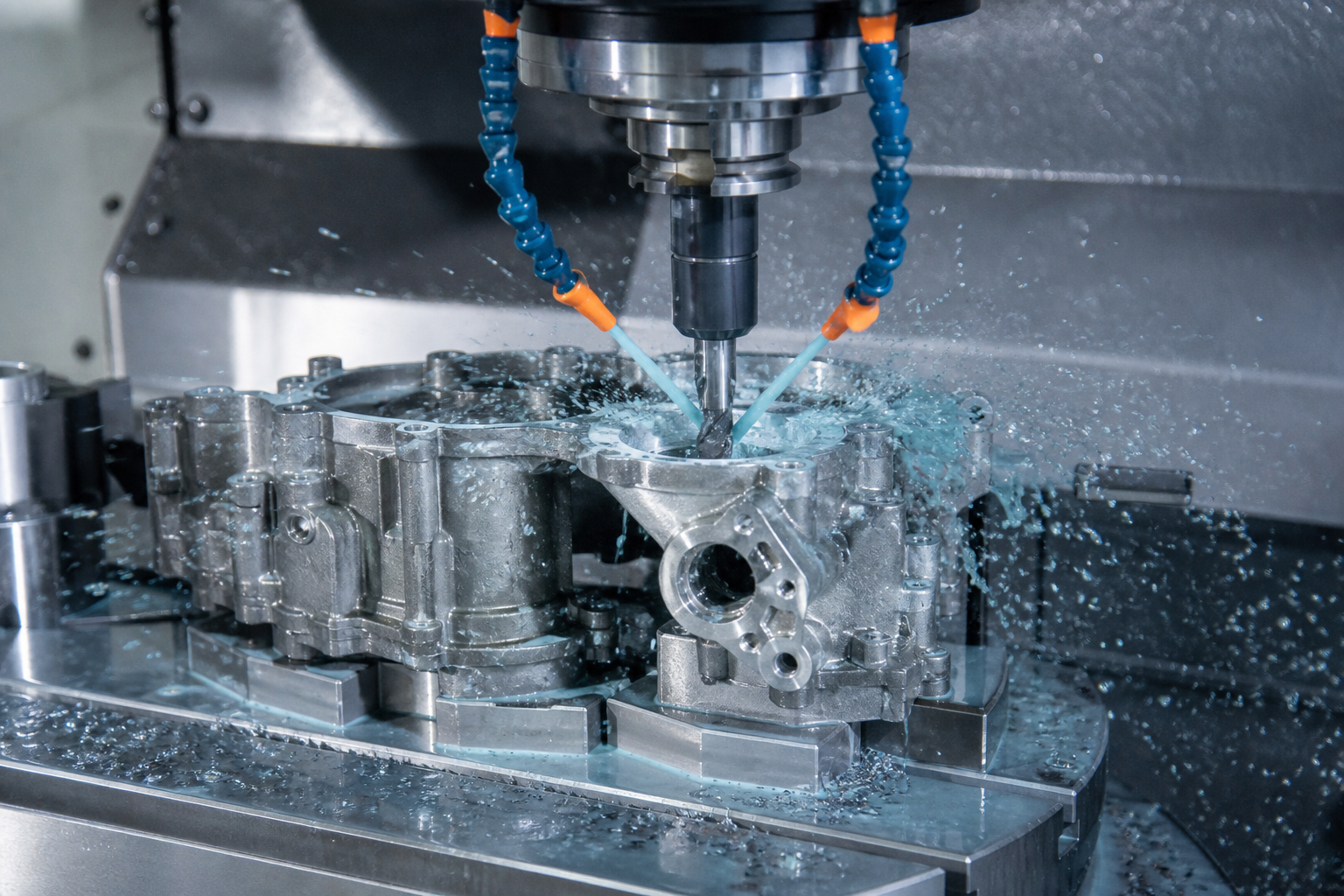
In the world of industrial manufacturing, a raw casting is often just the beginning of a component's journey. While processes like sand casting or investment casting can produce complex shapes and near-net geometries, many functional applications require a level of precision that casting alone cannot achieve.
Whether it is a bearing seat that must be perfectly round or a mounting flange that requires absolute flatness, precision CNC machining is the bridge between a rough metal part and a high-performance engineering component. At Dandong Pengxin Machinery Co., Ltd., we understand that achieving critical tolerances is not just about having the right machines—it is about the synergy between casting knowledge and machining expertise.
Why Castings Require Precision Machining
Metal casting is a thermal process. As molten metal cools and solidifies, it naturally undergoes shrinkage and slight distortion. Even with advanced mould designs, these physical realities limit the dimensional accuracy and surface finish that can be reached in the "as-cast" state.
Precision machining is required to:
- Achieve Tight Tolerances: Features such as bores, grooves, and mating surfaces often require tolerances measured in microns (μm), which are far beyond the reach of standard casting methods.
- Improve Surface Finish: Machining removes the surface irregularities of the casting, providing the smooth finish necessary for seals, gaskets, and moving parts.
- Create Complex Internal Features: High-precision CNC centers can thread holes, cut internal splines, and create geometric features that would be impossible to cast reliably.
The Role of CNC Technology in Tolerance Control
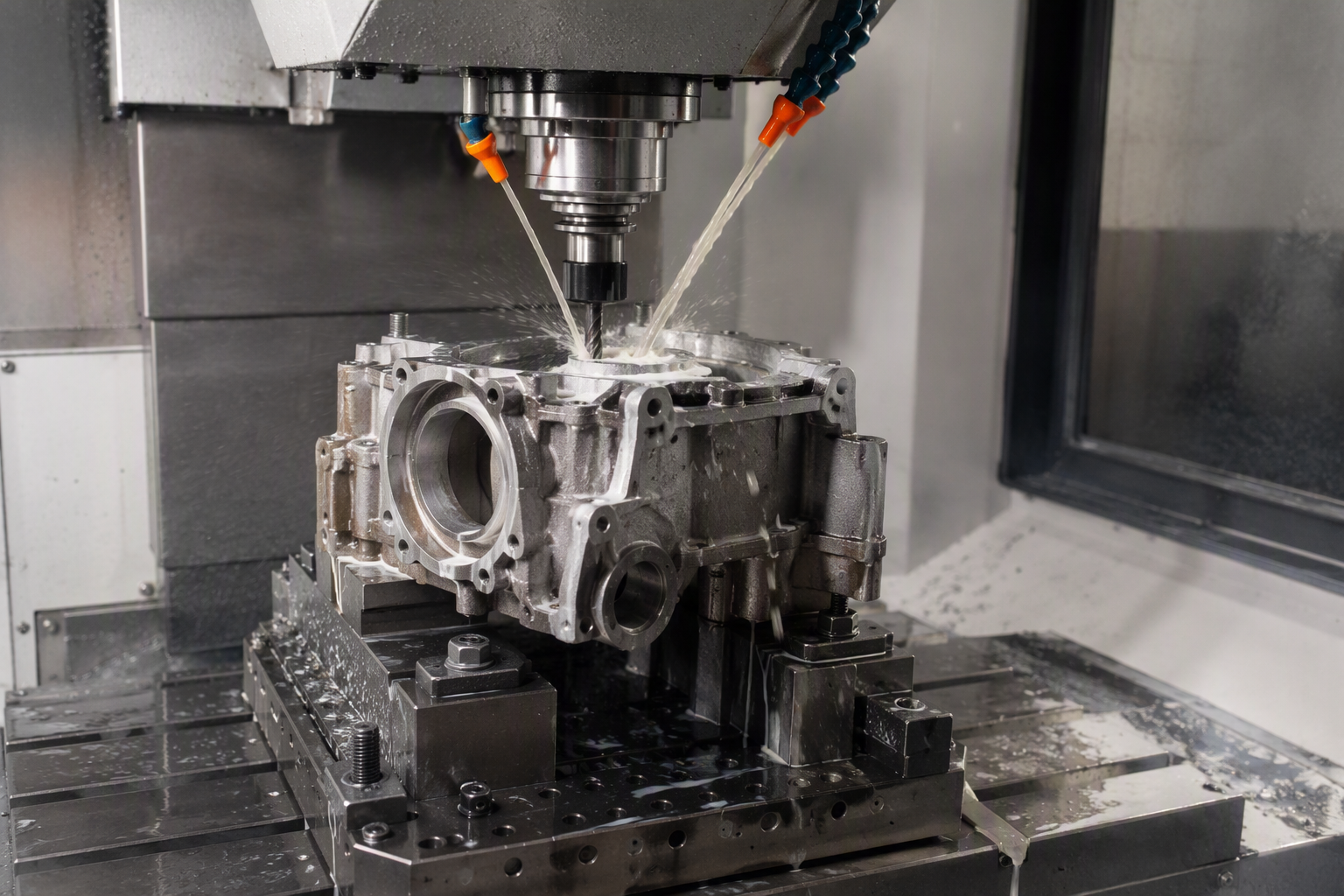
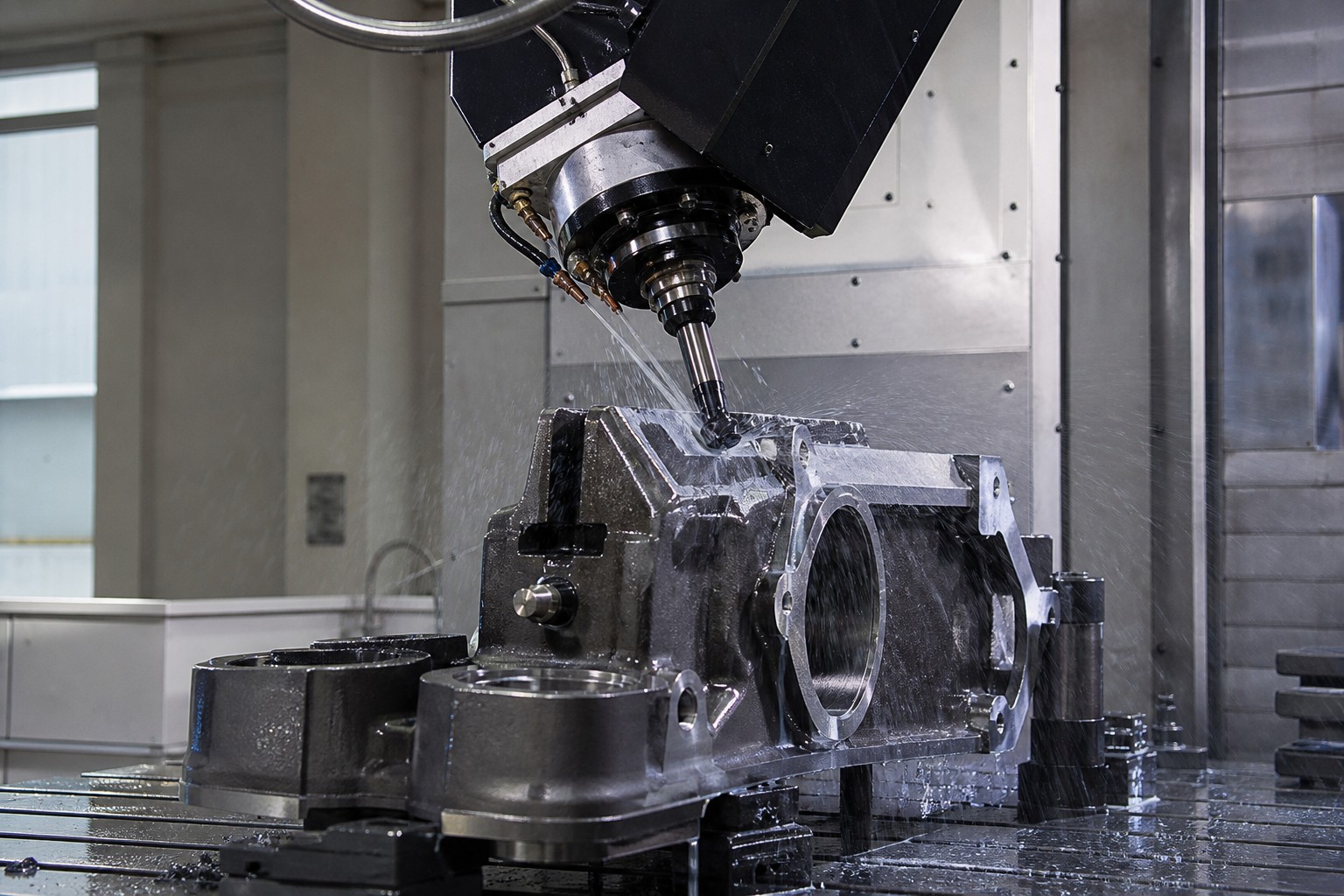
The shift from manual machining to Computer Numerical Control (CNC) has revolutionized how cast parts are finished. CNC technology allows for repeatable, high-accuracy cutting that eliminates human error and ensures every part in a batch meets the exact same specification.
At Dandong Pengxin Machinery Co., Ltd., our machining strategy focuses on:
- Rigid Workholding: Because castings can have irregular outer surfaces, custom jigs and fixtures are essential to hold the part securely without causing deformation during the cutting process.
- Multi-Axis Capability: Using 4-axis and 5-axis CNC centers allows us to machine multiple sides of a casting in a single setup. This maintains the geometric relationship between different features, such as the parallelism between two opposite faces.
- Thermal Stability: Modern CNC machines are designed to compensate for thermal expansion, ensuring that the critical tolerances stay consistent even during long production runs.
Overcoming Challenges in Machining Complex Castings
Machining a casting is different from machining a solid block of steel. Castings often have "machining allowances"—extra material added specifically to be removed. However, if the casting has shifted slightly in the mould, the machining allowance might not be centered.
Expert machinists must be able to "balance" the casting. This involves inspecting the raw part and adjusting the CNC program or the fixture to ensure that all finished surfaces can be reached while maintaining uniform wall thickness. This level of technical oversight is a hallmark of the service provided by Dandong Pengxin Machinery Co., Ltd., ensuring that even complex geometries are finished without compromise.
Quality Assurance: Measuring Precision in Every Part
Precision is meaningless if it cannot be verified. A reliable casting and machining partner must back up their work with rigorous dimensional inspection.
Using calibrated tools—from digital micrometers to Coordinate Measuring Machines (CMM)—every critical dimension is checked against the engineering drawing. This process ensures that when the component arrives at the customer's facility, it is ready for immediate assembly into the final machine.
Partnering with Dandong Pengxin Machinery Co., Ltd. for Finished Components
Choosing a single-source supplier for both casting and machining simplifies your supply chain and reduces risk. When the foundry and the machine shop work under the same technical management, the machining requirements are built into the casting design from day one.
Dandong Pengxin Machinery Co., Ltd. provides this integrated approach, offering customers a dependable route to high-precision metal parts. We don't just supply castings; we deliver finished industrial solutions that meet the most demanding technical standards.
Conclusion
Precision CNC machining is the final, vital step in creating industrial components that perform reliably under pressure. By combining deep casting expertise with advanced CNC technology, manufacturers can achieve the critical tolerances required for modern machinery.
For your next project requiring precision-finished metal parts, contact Dandong Pengxin Machinery Co., Ltd. for a technical consultation. We are ready to help you bridge the gap from raw casting to finished precision.